
Category Archives: Accounting for CPA Firms

How to Handle Security Deposits in Property Management Accounting?

Handle Security Deposits in Property Management Accounting

Security deposits are an important part of managing rental properties, but handling them correctly requires more than simply collecting money from tenants. Property Management Security Deposit Accounting helps property managers record deposits accurately, maintain separate tenant balances, track refunds, and document any permitted deductions. A well-organized accounting process also helps property managers maintain transparent financial records and avoid errors when tenants move out.

For US property managers, security deposit requirements can vary depending on state and local regulations. Therefore, managers need a consistent accounting system that records every deposit, monitors its balance, and supports accurate financial reporting. In this guide, we will explain how to handle security deposits, which accounting practices to follow, and how to maintain reliable records throughout the rental process.

What Are Security Deposits in Property Management?

A security deposit is an amount collected from a tenant at the beginning of a rental agreement. It is generally held to cover certain tenant obligations, such as unpaid rent or eligible property damage, subject to the lease agreement and applicable laws.

Unlike regular rental payments, refundable security deposits are generally not treated as earned rental income when received. They represent an amount that may need to be returned to the tenant or applied toward permitted charges when the tenancy ends.

Property managers should maintain accurate records of:

  • Security deposits received from tenants.
  • The property and rental unit associated with each deposit.
  • The date and amount of each payment.
  • The account where the deposit is held.
  • Any applicable interest or adjustments.
  • Authorized deductions and refunds.
  • The remaining balance owed to each tenant.

Maintaining these details makes it easier to review deposit activity and prepare accurate financial reports.

Why Is Proper Security Deposit Accounting Important?

Handling tenant deposits correctly is essential for maintaining reliable property management records. When deposits are not tracked properly, property managers may face financial discrepancies, tenant disputes, and difficulties during move-out procedures.

Here are some important reasons to maintain an organized accounting process.

1. Maintains Accurate Financial Records

Recording deposits correctly helps property managers distinguish tenant liabilities from rental income. This prevents financial reports from showing refundable deposits as business revenue.

2. Improves Financial Transparency

Individual tenant records make it easier to identify how much money has been collected, how much has been refunded, and what balance remains outstanding.

3. Supports Better Reconciliation

When security deposit records are maintained separately, property managers can compare accounting balances with bank statements and identify missing or incorrect transactions.

4. Helps Manage Tenant Move-Outs

Accurate deposit records make it easier to calculate the amount potentially refundable to a tenant after reviewing the lease, property condition, outstanding obligations, and applicable legal requirements.

5. Supports Regulatory Compliance

Security deposit rules may cover deposit limits, account arrangements, interest, notices, permitted deductions, and refund deadlines. Following the requirements applicable to each property helps property managers maintain an organized process.

How Should Property Managers Record Security Deposits?

The first step in Property Management Security Deposit Accounting is creating a consistent process for recording every deposit received from a tenant.

A deposit should not be recorded as ordinary rental income simply because the money has entered the business’s bank account. Its accounting treatment should reflect the property’s actual obligations and applicable requirements.

Property managers can follow these steps:

Step 1: Record the Deposit When It Is Received

Enter the deposit into the accounting system as soon as it is received. Include the tenant’s name, property address, unit number, payment date, amount, and payment method.

For example, if a tenant pays a $1,500 security deposit, the transaction should identify the tenant and the rental property associated with that payment.

Step 2: Use an Appropriate Liability Account

Refundable security deposits are generally recorded as liabilities because the property manager may be required to return the funds to the tenant.

A simplified accounting entry may look like this:

Account Debit Credit
Security Deposit Bank Account $1,500 —
Tenant Security Deposit Liability — $1,500

Illustrative example only. The exact accounting entry depends on the account structure and applicable requirements.

Step 3: Maintain Individual Tenant Records

Each tenant should have a separate deposit record. This makes it easier to track payments, adjustments, deductions, and refunds without confusing one tenant’s balance with another.

Step 4: Reconcile Deposit Records Regularly

Compare the security deposit bank account with the accounting ledger and individual tenant records. Investigate any unexplained differences and correct errors with supporting documentation.

Should Security Deposits Be Kept in a Separate Bank Account?

Property managers should determine the appropriate bank account arrangement by reviewing the regulations applicable to the property and the type of funds being held.

Some jurisdictions require specific trust or escrow account arrangements, while other requirements may differ. Managers should not assume that one account structure applies across every US state.

When reviewing account arrangements, consider:

  • Whether a separate security deposit account is required.
  • Whether the account must be designated as a trust or escrow account.
  • Whether interest must be paid to tenants.
  • Whether specific financial institutions or account types are permitted.
  • Who can authorize withdrawals and transfers.
  • How deposit balances will be reconciled and documented.

Keeping deposit funds appropriately separated from the company’s operating money can improve financial organization and reduce the risk of incorrect fund usage.

For additional guidance on managing financial responsibilities, property managers can also explore outsourced accounting services for US small businesses.

How Can Property Managers Handle Security Deposit Deductions?

When a tenant moves out, the property manager may need to review whether any deductions are permitted under the lease and applicable state or local laws.

However, not every repair or property expense can automatically be deducted from a security deposit. Managers should verify the applicable rules and maintain supporting documentation before making adjustments.

A reliable deduction process generally includes the following steps:

1. Review the Lease Agreement

Check the lease terms to understand the tenant’s responsibilities and the conditions under which deductions may be permitted.

2. Conduct a Move-Out Inspection

Review the property’s condition after the tenant vacates. Compare it with available move-in inspection records and identify any documented damage beyond ordinary wear and tear, where relevant under applicable law.

3. Collect Supporting Documents

Maintain invoices, repair estimates, inspection reports, photographs, and other relevant records to support any proposed deductions.

4. Calculate the Permitted Deductions

Review each expense carefully and confirm that it is eligible for deduction under the lease and applicable requirements.

5. Update the Tenant’s Accounting Record

Record each approved deduction against the tenant’s deposit liability. Keep the original deposit amount, deductions, and remaining balance clearly documented.

6. Prepare the Refund

Calculate the remaining amount due to the tenant and process the refund within the applicable legal deadline. Provide any required itemized statement or notice.

How Should Security Deposit Refunds Be Recorded?

Refunds are another important part of security deposit accounting. Property managers should ensure that the amount returned to the tenant matches the final approved calculation.

Consider this simplified example:

Description Amount
Original security deposit $1,500
Documented eligible deduction $200
Remaining refundable balance $1,300

In this example, the tenant’s refundable balance is $1,300, assuming the deduction is permitted and properly supported.

When processing the refund, property managers should:

  • Verify the tenant’s final deposit balance.
  • Confirm that deductions are authorized and documented.
  • Check the applicable refund deadline.
  • Record the refund date and payment method.
  • Update the tenant’s liability balance.
  • Retain payment confirmation and relevant correspondence.

These steps help ensure that tenant records remain accurate after the lease ends.

What Common Security Deposit Accounting Mistakes Should Property Managers Avoid?

Even experienced property managers can make mistakes when deposit records are not reviewed regularly. Some errors can affect financial statements, tenant balances, and the overall accounting process.

Here are common issues to avoid:

1. Recording Refundable Deposits as Rental Income

This can overstate rental revenue and understate tenant-related liabilities. Record refundable deposits according to their appropriate accounting treatment.

2. Mixing Tenant Deposits With Operating Funds

Using an incorrect account arrangement can make it difficult to identify which funds belong to tenants. Follow the applicable account requirements and maintain clear records.

3. Failing to Maintain Individual Tenant Ledgers

Without tenant-level records, property managers may struggle to identify the correct deposit balance when a tenant moves out.

4. Making Unsupported Deductions

Every deduction should be reviewed against applicable rules and supported by appropriate documentation. Avoid making adjustments without a clear record of the reason.

5. Delaying Deposit Reconciliation

Waiting too long to review account balances can make missing transactions and incorrect entries harder to identify.

For more guidance on avoiding property accounting errors, read our related article on common property management bookkeeping mistakes and how to avoid them.

What Are the Best Practices for Managing Security Deposits?

A consistent process can make deposit management easier, especially for companies handling multiple rental properties and tenants.

Property managers should consider following these practices:

  • Record every deposit as soon as it is received.
  • Maintain individual tenant deposit ledgers.
  • Use the appropriate liability accounts.
  • Follow state and local deposit requirements.
  • Reconcile deposit accounts regularly.
  • Keep inspection reports and supporting documents.
  • Document all approved deductions and refunds.
  • Review outstanding tenant balances.
  • Restrict account access to authorized employees.
  • Use accounting software with tenant-level tracking and reporting features.

These practices can improve record accuracy and help property managers maintain better control over tenant funds.

How Can Accounting Software Simplify Security Deposit Management?

Managing deposits manually can become challenging when a property management company handles multiple properties, tenants, and payment transactions.

Accounting and property management software can help organize deposit-related information and reduce repetitive administrative work.

Useful features may include:

  • Tenant-wise security deposit tracking.
  • Property-level financial records.
  • Automated payment recording.
  • Liability account management.
  • Bank reconciliation tools.
  • Refund and deduction tracking.
  • Financial reports and transaction histories.
  • Document storage and audit trails.

Property managers should select software based on their portfolio size, existing accounting processes, reporting requirements, and system compatibility. Software can support recordkeeping, but it does not replace the need to review transactions and follow applicable regulations.

How Can Accountant Anywhere Support Property Management Accounting?

Managing security deposits alongside rental income, vendor payments, bank reconciliations, and owner reporting requires consistent financial attention. As a property portfolio grows, these responsibilities can take time away from daily operations.

Accountant Anywhere provides outsourced accounting support for property management businesses, including accounts payable processing, bank reconciliations, journal entries, monthly financial statements, and other property-related accounting tasks.

With organized accounting workflows and regular financial reviews, property managers can improve the accuracy of their records and maintain better visibility into their financial activities.

You can visit the Accountant Anywhere homepage to explore its outsourced accounting solutions and learn more about the business.

To understand the company’s background and approach, visit the About Us page. You can also explore the Accountant Anywhere blog for more accounting insights and practical guidance.

Frequently Asked Questions About Security Deposit Accounting

1. How should security deposits be recorded in property management accounting?

Refundable security deposits are generally recorded as liabilities rather than rental income. Property managers should maintain individual tenant records and use the appropriate accounting accounts.

2. Are security deposits considered rental income?

Generally, refundable security deposits are not treated as earned rental income when received. Their accounting treatment may change if an amount is legally applied toward an eligible charge, depending on the circumstances and applicable requirements.

3. Should property managers maintain a separate security deposit account?

The required account arrangement depends on state and local regulations. Property managers should confirm whether separate trust, escrow, or other designated accounts are required.

4. How often should security deposit accounts be reconciled?

Regular reconciliation is important for identifying missing entries and balance differences. Monthly reconciliation is a common accounting practice, but property managers should follow any stricter applicable requirements.

5. Can property managers deduct repair costs from security deposits?

Some repair costs may be eligible for deduction, depending on applicable laws, lease terms, and the circumstances. Property managers should document the property’s condition and verify that each deduction is permitted.

6. What records should property managers maintain for security deposits?

Records should generally include deposit receipts, tenant details, property information, account balances, inspection reports, supporting invoices, deduction details, refund confirmations, and relevant notices.

7. Why is security deposit tracking important for property managers?

Accurate tracking helps property managers identify tenant liabilities, prepare correct refunds, reconcile bank accounts, and maintain organized financial reports.

Final Thoughts

Handling security deposits properly is an important responsibility in rental property management. Accurate recording, appropriate account arrangements, tenant-level tracking, regular reconciliation, and documented refunds help property managers maintain reliable financial records.

By following consistent accounting procedures and reviewing applicable state and local requirements, property management businesses can reduce errors and improve financial transparency. Whether managing a few rental units or a large property portfolio, an organized security deposit accounting process supports better financial control and smoother tenant management.
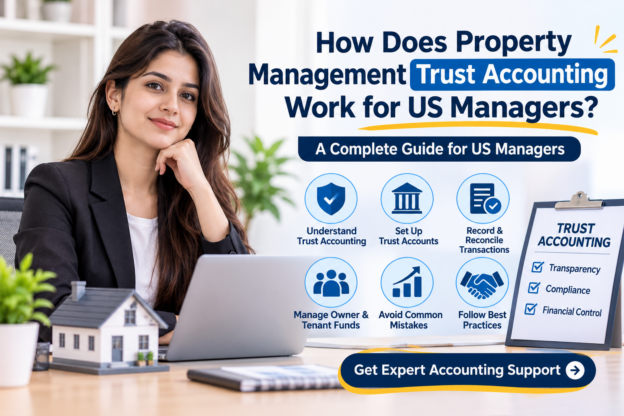

How Does Property Management Trust Accounting Work for US Managers?

Property management trust accounting guide for US managers

Managing rental properties involves more than collecting rent, coordinating maintenance, and communicating with tenants. Property managers are also responsible for handling significant amounts of money that belong to property owners and tenants. These funds may include monthly rent payments, security deposits, advance rent, maintenance reserves, and other property-related collections. Keeping these transactions accurate, separate, and properly documented is essential for maintaining financial transparency and meeting regulatory requirements.

Property Management Trust Accounting is an important part of managing these financial responsibilities. It helps property managers track funds held on behalf of others, maintain accurate records, and prevent the misuse or accidental mixing of client money with business operating funds. Whether managing a few rental units or a large residential portfolio, having a reliable trust accounting process can improve financial control and build confidence among property owners and tenants.

In this guide, we explain how trust accounting works, why it matters, which records property managers should maintain, common mistakes to avoid, and how professional accounting support can simplify financial management.

What Is Property Management Trust Accounting?

Trust accounting is the process of recording, holding, and managing money that a property manager receives on behalf of property owners or tenants. These funds do not automatically become the property management company’s business income. Instead, they must be handled according to the applicable management agreement, state regulations, and other legal requirements.

For example, when a tenant pays monthly rent, the property manager may receive the payment before transferring the owner’s share after authorized expenses and management fees. Similarly, a security deposit may need to remain in a designated account until it is legally returned or applied to permitted charges.

A properly maintained trust accounting system helps property managers identify who owns each amount, where the funds are held, and when transactions take place.

Common funds handled through trust accounts include:

  • Rental Payments: Rent collected from tenants on behalf of property owners.
  • Security Deposits: Refundable deposits collected according to applicable state laws and lease agreements.
  • Advance Rent: Payments received before the rental period begins.
  • Owner Reserves: Funds maintained for approved maintenance, repairs, and property-related expenses.
  • Tenant Credits: Refunds, overpayments, and other amounts that may need to be returned or adjusted.
  • Property Expenses: Authorized payments made from funds held for property operations.

The exact treatment of each category depends on applicable laws, contractual arrangements, and the nature of the funds.

Why Is Trust Accounting Important for US Property Managers?

Handling money that belongs to owners and tenants creates financial and legal responsibilities. Without a structured accounting process, property managers may experience reporting errors, unexplained account balances, or compliance problems.

Here are some important reasons why trust accounting deserves regular attention.

1. Protects Owner and Tenant Funds

Keeping client funds separate from business operating money helps reduce the risk of accidental misuse. It also makes it easier to identify which funds belong to individual property owners and tenants.

2. Supports State-Level Compliance

Trust accounting requirements are not identical across the United States. Different states may have specific rules regarding account structures, deposit handling, record retention, interest, reconciliation, and reporting.

Property managers should understand the requirements that apply to their location and property management activities.

3. Improves Financial Transparency

Property owners expect accurate information about rent collections, expenses, outstanding payments, and available balances. Organized accounting records make it easier to explain how their funds have been handled.

4. Reduces Financial Errors

Regular transaction reviews and bank reconciliations help identify duplicate entries, missing deposits, incorrect transfers, and unauthorized deductions before they become larger problems.

5. Builds Professional Credibility

Consistent financial reporting demonstrates accountability. It can strengthen relationships with owners, improve communication, and support long-term business growth.

How Does Property Management Trust Accounting Work?

A structured accounting process helps property managers handle client funds consistently. Although the exact procedures may vary by state and business arrangement, the following steps provide a useful operational framework.

Step 1: Establish Appropriate Trust Accounts

Start by identifying the types of funds your business receives and determining the appropriate bank account arrangements under applicable state requirements.

Trust accounts should be clearly designated and maintained separately from the company’s operating accounts wherever required.

Property managers should also confirm:

  • Whether separate accounts are required for specific fund categories.
  • Which financial institutions and account types are permitted.
  • Whether interest-bearing accounts are allowed or required.
  • Who is authorized to access and approve transactions.
  • How account ownership and beneficiary information should be documented.

Step 2: Record Every Financial Transaction

Every payment received or made should be recorded accurately and supported by appropriate documentation.

For example, when rent is collected, the transaction should identify the tenant, rental property, owner, payment date, amount, and applicable accounting category.

Maintain records for:

  • Rent payments and late fees.
  • Security deposit receipts and refunds.
  • Owner contributions and distributions.
  • Maintenance and repair payments.
  • Management fees and authorized deductions.
  • Vendor payments and other property-related expenses.

A consistent transaction recording process helps prevent missing entries and makes financial reviews easier.

Step 3: Maintain Separate Records for Each Owner and Property

When managing multiple properties, combining financial information can create confusion. Each property and owner should have an identifiable ledger or subledger showing the relevant financial activity.

A property-level ledger should generally include:

  • Beginning balance.
  • Funds received during the period.
  • Payments and authorized deductions.
  • Transfers and adjustments.
  • Ending balance.

Tenant-level records should also be maintained where needed, particularly for security deposits and other individual tenant liabilities.

This structure helps property managers determine exactly how much money is held for each owner or tenant.

Step 4: Reconcile Trust Accounts Regularly

Bank reconciliation is one of the most important parts of maintaining accurate trust accounting records.

Property managers should compare bank statements with their accounting records to confirm that the recorded transactions match the actual account activity.

A useful reconciliation process involves three key records:

  1. Bank Statement: The actual balance and transactions reported by the financial institution.
  2. Trust Account Ledger: The accounting record showing deposits, withdrawals, and adjustments.
  3. Individual Owner and Tenant Ledgers: The detailed balances showing how much belongs to each beneficiary.

The combined individual ledger balances should agree with the trust account balance after accounting for properly documented timing differences and outstanding transactions.

Any unexplained difference should be investigated promptly rather than carried forward without review.

Step 5: Process Owner Distributions Correctly

After receiving rent and reviewing authorized property expenses, property managers may distribute the remaining available funds to owners.

Before processing a distribution, verify:

  • Rental payments have been received and recorded.
  • Authorized expenses have been accounted for.
  • Management fees follow the signed agreement.
  • Required reserves are maintained.
  • Outstanding obligations and restrictions are considered.
  • The available owner balance is accurate.

Distributions should never be based solely on the amount visible in a bank account without checking the corresponding accounting records.

Step 6: Handle Security Deposits Carefully

Security deposits require particular attention because they generally represent money held subject to tenant-related obligations rather than ordinary property management revenue.

Property managers should maintain clear records of deposits received, account balances, applicable interest where required, permitted deductions, and refunds.

State laws may establish specific rules regarding deposit limits, account arrangements, notices, inspections, deductions, and refund deadlines. Managers should follow the requirements applicable to each property rather than assuming one national process applies everywhere.

Step 7: Prepare Regular Financial Reports

Regular reporting allows property managers and owners to review financial activity and identify issues before they affect property operations.

Useful reports include:

  • Trust account balance reports.
  • Individual owner ledger statements.
  • Tenant security deposit reports.
  • Rental income and expense reports.
  • Bank reconciliation reports.
  • Outstanding payment reports.
  • Owner distribution summaries.

For additional guidance on presenting financial information clearly, read our guide on how to prepare monthly owner statements for rental properties.

Common Trust Accounting Mistakes Property Managers Should Avoid

Even experienced property managers can make accounting mistakes when financial processes are not properly organized.

Here are some common issues to watch for.

1. Mixing Personal, Business, and Client Funds

Using the same account for operating expenses and client funds can create serious accounting and compliance problems. Maintain appropriate separation according to applicable regulations.

2. Delaying Bank Reconciliation

Waiting several months to reconcile accounts makes it harder to identify missing transactions and unexplained differences. Establish a regular reconciliation schedule.

3. Incorrectly Recording Security Deposits

Recording refundable tenant deposits as rental income can distort financial reports. These amounts should be tracked according to their actual accounting and legal treatment.

4. Failing to Maintain Individual Ledgers

Without separate owner and tenant records, property managers may struggle to identify the correct balance associated with each property.

5. Making Unauthorized Deductions

Management fees, repair costs, and other deductions should be supported by the management agreement, applicable approvals, and relevant documentation.

6. Poor Documentation

Missing invoices, receipts, bank records, and payment confirmations can make financial reviews difficult. Maintain organized supporting documents for every significant transaction.

Best Practices for Effective Trust Account Management

A reliable accounting system depends on consistent procedures rather than occasional financial reviews.

Property managers can improve their processes by following these practices:

  • Maintain separate and appropriately designated bank accounts.
  • Record transactions as soon as practical after they occur.
  • Keep individual owner and tenant ledgers updated.
  • Reconcile trust accounts regularly.
  • Review outstanding balances and unresolved transactions.
  • Maintain invoices, receipts, and supporting documentation.
  • Restrict account access to authorized personnel.
  • Establish clear payment approval procedures.
  • Review state-specific regulatory requirements regularly.
  • Prepare accurate financial reports for property owners.

Property managers handling larger portfolios should also consider using accounting software that supports property-level tracking, transaction categorization, bank reconciliation, and detailed financial reporting.

How Can Accounting Software Simplify Trust Accounting?

Managing trust accounts manually can become increasingly difficult as a property portfolio grows. Accounting software can help organize financial information, reduce repetitive work, and improve reporting accuracy.

Depending on the platform and configuration, useful features may include:

  • Separate tracking for multiple properties and owners.
  • Automated rent and payment recording.
  • Security deposit tracking.
  • Vendor invoice management.
  • Bank reconciliation tools.
  • Financial report generation.
  • Transaction histories and audit trails.
  • User permissions and approval workflows.

Popular property management platforms such as AppFolio, Buildium, and Yardi offer financial management features that can support property management operations.

However, using software does not automatically guarantee compliance. Property managers must configure their systems correctly, review transactions, maintain supporting records, and follow applicable state requirements.

How Accountant Anywhere Can Support Property Management Accounting

Managing trust account records, rental income, owner balances, expenses, and monthly reconciliations requires consistent attention. As property portfolios expand, these responsibilities can take valuable time away from daily property operations.

Accountant Anywhere provides outsourced accounting support for property management businesses, helping them organize financial transactions, manage accounts payable, complete bank reconciliations, record journal entries, and prepare monthly financial statements.

With professional accounting support, property managers can improve the organization of their financial records, maintain consistent reporting processes, and focus more on managing properties and supporting owners.

Learn more about our property management accounting services and explore how our accounting solutions can support your business.

To understand the company, its experience, and its approach to outsourced accounting, visit the About Us page.

You can also visit Accountant Anywhere to explore its accounting solutions for businesses. For more useful information and practical guidance, browse the Accountant Anywhere blog.

Frequently Asked Questions About Property Management Trust Accounting

1. What is trust accounting in property management?

Trust accounting is the process of recording and managing money that property managers hold on behalf of property owners and tenants. It helps ensure that these funds are properly tracked, separated, and handled according to applicable legal requirements.

2. Do all US property managers need a trust account?

Requirements vary by state, property management activity, licensing status, and the type of funds being handled. Property managers should review their state’s real estate regulations and applicable laws to determine the required account arrangements.

3. What funds are generally held in property management trust accounts?

These may include rental payments, security deposits, advance rent, owner reserves, and other client funds received for property-related purposes. The appropriate treatment depends on the nature of the funds and applicable regulations.

4. How often should property management trust accounts be reconciled?

Property managers should follow the reconciliation frequency required by applicable state regulations and establish regular internal reviews. Monthly reconciliation is a common operational practice, but some jurisdictions may require more frequent reviews.

5. What is the difference between a trust account and an operating account?

A trust account holds money belonging to clients or other beneficiaries, subject to applicable rules. An operating account holds the property management company’s own business funds, such as earned management fees and operating revenue.

6. Can property management trust accounting be outsourced?

Yes. Property management businesses can outsource accounting tasks such as transaction recording, accounts payable, bank reconciliations, ledger maintenance, and financial reporting. However, the property manager remains responsible for ensuring that funds are handled in accordance with applicable laws and contractual obligations.

7. Why is bank reconciliation important for trust accounting?

Bank reconciliation helps confirm that the actual bank balance agrees with the accounting records and individual owner or tenant balances. It also helps identify missing transactions, duplicate entries, and unexplained differences.

Final Thoughts

Accurate trust accounting is essential for property managers who handle rental income, security deposits, owner funds, and other client-related transactions. A structured accounting process helps maintain financial transparency, reduce errors, and support compliance with state-specific requirements.

By maintaining separate records, reconciling accounts regularly, documenting transactions, and preparing reliable financial reports, property managers can build a stronger financial management system.

As property portfolios grow, professional accounting support can make these processes easier to manage. With the right systems and experienced accounting professionals, property managers can spend less time handling financial administration and more time focusing on business growth and property operations.

Signs Your Property Management Company Needs Outsourced Accounting

A property management professional reviewing financial reports and owner statements

Running a property management company involves much more than leasing properties and handling tenant requests. Behind daily operations, teams must manage rent collections, vendor invoices, property expenses, bank reconciliations, owner statements, and monthly financial reports. As a portfolio grows, these accounting responsibilities can become increasingly difficult to manage with a small internal team.

When financial tasks begin affecting daily operations, it may be time to consider outsourced property management accounting. The right accounting support can help property managers improve reporting processes, manage recurring financial tasks, and create more time to focus on properties, tenants, and business growth.

But how can you tell when your company needs additional accounting support? Here are some common signs to watch for.

1. Your Monthly Financial Closing Takes Too Long

Monthly financial closing involves reviewing transactions, recording expenses, reconciling bank accounts, processing invoices, and preparing financial statements.

If your team regularly struggles to complete these tasks on schedule, your accounting workflow may need attention.

Common warning signs include:

  • Monthly reports are consistently delayed.
  • Bank reconciliations remain incomplete.
  • Vendor invoices are waiting to be processed.
  • Owner statements require repeated corrections.
  • Financial information is not ready when management needs it.

Delays in the month-end close can affect decision-making and create additional work in the following reporting period. External accounting support can help establish a consistent process for completing recurring tasks on time.

2. Bank Reconciliations and Financial Records Are Falling Behind

Property management companies handle transactions across multiple properties, bank accounts, tenants, owners, and vendors. Maintaining accurate records becomes harder when transaction volumes increase.

If your team has a growing list of unreconciled transactions, unexplained differences, or old outstanding items, it may indicate that the existing process is not keeping pace with the business.

Regular reconciliation helps identify:

  • Missing rent deposits.
  • Duplicate or incorrectly recorded payments.
  • Unmatched vendor transactions.
  • Bank charges that have not been recorded.
  • Differences between accounting records and bank balances.
  • Issues involving tenant, owner, or security deposit ledgers.

A structured reconciliation process helps keep financial records reliable. Where trust or security deposit accounts are involved, companies should also follow applicable state requirements and maintain the necessary separation and documentation.

3. Property Owners Frequently Question Their Statements

Owner statements help property owners understand rental income, maintenance expenses, management fees, distributions, and outstanding balances.

When statements contain errors, arrive late, or lack clear transaction details, property owners may begin requesting frequent explanations.

For example, an owner may question why a maintenance expense was deducted, why a payment is missing, or why the reported balance does not match the expected distribution.

These issues may indicate problems with transaction coding, documentation, reconciliation, or the statement preparation process.

Reliable outsourced property management accounting support can help property managers organize financial information, review transactions, and prepare consistent monthly reports. Clear reporting also helps improve communication between property managers and owners.

4. Vendor Invoices and Accounts Payable Are Piling Up

Property management companies regularly work with maintenance contractors, cleaning services, landscapers, utility providers, and other vendors.

As the number of properties increases, processing invoices and tracking payment deadlines can become difficult.

Some common signs of an accounts payable backlog include:

  • Invoices remain unrecorded for several days or weeks.
  • Payment deadlines are frequently missed.
  • The same invoice is entered more than once.
  • Vendor statements do not match internal records.
  • Managers spend too much time following up on payment status.

An organized accounts payable process should include invoice verification, correct property coding, approval checks, payment scheduling, and proper recordkeeping.

Outsourcing selected accounts payable activities can provide additional processing capacity while your internal team retains control over approvals and payment authorization.

5. Your Property Portfolio Is Growing Faster Than Your Accounting Team

Business growth is positive, but every new property adds financial activity.

A larger portfolio may involve more tenant records, rent transactions, supplier invoices, maintenance expenses, reimbursements, and owner reports.

An accounting team that managed a smaller portfolio successfully may struggle when the workload increases significantly.

You may notice that:

  • Existing staff are spending more time on data entry.
  • New properties take longer to set up in the accounting system.
  • Financial reports are becoming harder to prepare.
  • Management needs more detailed property-level information.
  • Additional accounting employees may be required.

This is one situation where outsourced property management accounting can provide flexible support. Depending on the provider’s capacity and agreed scope, selected accounting activities can be assigned externally without immediately expanding the internal team.

6. Your Team Depends Too Much on One Accounting Employee

Some property management companies depend heavily on one employee who understands the accounting software, transaction procedures, reconciliations, and reporting process.

This creates operational risk. When that employee is unavailable or leaves the company, important tasks may be delayed because other team members do not have enough knowledge to complete them.

A more dependable accounting workflow should include:

  • Documented accounting procedures.
  • Organized access to financial records.
  • Standardized reconciliation steps.
  • Clear responsibility for each activity.
  • Review and approval processes.
  • Regular reporting schedules.

An external accounting team can provide additional working capacity and documented processes, subject to a clear division of responsibilities and appropriate internal oversight.

7. Your Property Managers Spend More Time on Accounting Than Operations

Property managers should have enough time to handle leasing, tenant communication, maintenance coordination, property inspections, and portfolio development.

However, when accounting responsibilities become overwhelming, managers may spend a significant part of their day reviewing invoices, correcting entries, following up on payments, and preparing reports.

This can affect operational efficiency and reduce the time available for business development.

Outsourcing recurring financial tasks can help redistribute the workload. Your internal team can remain responsible for property decisions, approvals, and client communication while an external accounting team handles agreed accounting activities.

8. Hiring and Maintaining an In-House Accounting Team Is Becoming Expensive

Maintaining an internal accounting department involves more than employee salaries. Businesses may also need to consider recruitment, training, software, employee benefits, and additional resources.

For companies experiencing fluctuating workloads, maintaining enough internal accounting capacity can be challenging.

An outsourcing arrangement may provide access to additional accounting resources without requiring the company to hire for every task internally.

However, the financial benefit depends on the provider’s fees, the services included, transaction volumes, and the level of internal supervision required. Property managers should compare the total cost and service scope before making a decision.

How Outsourced Accounting Can Support Property Management Companies

When several of these signs appear together, outsourced property management accounting may be worth evaluating.

Depending on the provider and the agreed responsibilities, outsourced accounting support can help with:

Accounting Task How It Supports Your Business
Accounts payable processing Organizes vendor invoices and payment records
Bank reconciliations Helps identify and resolve transaction differences
Journal entries Supports accurate recording of financial activity
Property setup Helps create and maintain property records in accounting systems
Monthly financial statements Supports regular property-level reporting
Annual budgeting Helps organize planned property income and expenses
Billing and reimbursements Supports accurate posting of charges and reimbursements
Tenant information reporting Helps organize tenant data and generate relevant reports
Payroll entries Supports the recording of payroll-related accounting entries

Outsourcing does not mean giving up financial control. Property managers should retain appropriate approval authority, review reports, establish access permissions, and monitor the quality of the work.

What Should You Check Before Choosing an Outsourced Accounting Partner?

Selecting an accounting partner requires more than comparing service prices. Your provider should understand the financial workflows and reporting requirements of property management businesses.

Consider the following factors before making a decision:

1. Experience in Property Management Accounting

Look for a provider familiar with property-level transactions, rent records, vendor invoices, owner statements, and monthly reporting requirements.

2. Software Compatibility

Check whether the accounting team can work with your existing systems. Accountant Anywhere’s property management service information mentions experience with platforms such as AppFolio and Yardi Payscan.

3. Clearly Defined Responsibilities

Agree on which activities the external team will handle and which responsibilities will remain with your internal staff. Define approval procedures, payment authorization, reporting deadlines, and escalation processes.

4. Reporting and Communication

Choose a provider with an agreed reporting schedule and a clear process for handling missing documents, reconciliation differences, and urgent financial queries.

5. Data Security and Access Controls

Discuss how financial documents will be shared, who can access accounting systems, and how sensitive business and tenant information will be protected.

How Accountant Anywhere Supports Property Management Businesses

Managing accounting for residential properties, commercial properties, and homeowners’ associations requires organized processes and reliable financial reporting.

Accountant Anywhere provides outsourced accounting support tailored to US-based property management companies. Its service offerings include accounts payable processing, bank reconciliations, journal entries, setting up new properties in accounting systems, monthly financial statements, and annual budgets.

The company also describes support for billing statements, reimbursements, expense voucher postings, payroll entries, tenant information exports, and rent increase updates. Its property management accounting services mention experience with systems such as AppFolio and Yardi Payscan.

Explore Accountant Anywhere’s Property Management Accounting Services to learn more about the available support.

You can also visit the Accountant Anywhere homepage to explore its broader outsourced accounting solutions for businesses.

For more practical guidance, read the related article Property Management Bookkeeping Checklist for Monthly Financial Close.

Frequently Asked Questions

1. When should a property management company outsource accounting?

A company may consider outsourcing when monthly financial closing is regularly delayed, reconciliations are falling behind, owner statements require frequent corrections, or the internal team cannot manage the growing transaction volume.

2. What accounting tasks can property managers outsource?

Depending on the provider and agreed scope, property managers may outsource accounts payable processing, bank reconciliations, journal entries, property setup, monthly financial statements, budget preparation, billing, and other recurring accounting activities.

3. Is outsourced accounting suitable for small property management companies?

Yes. Smaller companies may use outsourcing to access additional accounting support without building a large internal department. The suitable arrangement depends on the company’s transaction volume, budget, software, and reporting requirements.

4. Can an outsourced accounting team work with AppFolio or Yardi?

This depends on the provider’s software experience and access arrangements. Accountant Anywhere’s property management accounting service page specifically mentions experience with AppFolio and Yardi Payscan.

5. Will a property management company lose control of its finances after outsourcing?

No. Outsourcing selected accounting tasks does not remove management oversight. The company should retain control over approvals, payment authorization, financial decisions, access permissions, and review of completed reports.

6. How can a company evaluate whether outsourcing is cost-effective?

Compare the total cost of the current internal process with the proposed outsourcing fees. Include staffing, training, software, management time, transaction volume, service scope, and review requirements in the comparison.

Conclusion

A growing property management company needs accounting processes that can keep pace with its portfolio and daily financial activity. Delayed monthly closing, unreconciled accounts, repeated owner statement corrections, invoice backlogs, and increasing staffing pressure are all signs that the existing accounting setup may need additional support.

Evaluating outsourced property management accounting can help businesses identify opportunities to improve workflow, organize recurring financial tasks, and maintain more consistent reporting.

The right approach is to define the required services, establish clear responsibilities, protect financial information, and maintain regular internal reviews. With an organized accounting process and the right support, property management companies can dedicate more time to operations, property owners, and long-term growth.

Visit Accountant Anywhere to explore its property management accounting solutions and discuss your business requirements.

How to Prepare Monthly Owner Statements for Rental Properties

property management professional reviewing a monthly rental property owner statement and financial reports

Managing rental properties involves more than collecting rent and paying maintenance bills. Property managers must also maintain accurate financial records, track property-related expenses, reconcile transactions, and provide owners with clear monthly financial updates. A well-prepared owner statement helps property owners understand how their investments are performing and how much income is available after expenses.

Preparing accurate rental property owner statements requires a consistent accounting process. Property managers need to collect the correct financial information, verify transactions, categorize expenses, and present the results in an easy-to-understand format.

In this guide, we explain how to prepare monthly owner statements, which details to include, common mistakes to avoid, and how professional property management accounting can simplify the process.

What Is a Monthly Owner Statement?

A monthly owner statement is a financial report that summarizes the income and expenses associated with a rental property during a specific reporting period. It gives property owners a clear overview of rent collected, expenses paid, management fees, outstanding items, and the resulting property balance.

Depending on the property management agreement and reporting requirements, the statement may include:

  • Rental income collected during the month
  • Tenant payments and outstanding rent balances
  • Maintenance and repair expenses
  • Property management fees
  • Utility costs and other operating expenses
  • Vendor payments and reimbursements
  • Owner contributions or distributions
  • Beginning and ending account balances

For portfolios with multiple properties, statements can be prepared separately for each property and combined into a portfolio-level summary when required.

Why Are Monthly Owner Statements Important?

Accurate owner reporting supports transparency between property managers and property owners. It also helps owners understand financial performance and identify transactions that may require further review.

1. Better Financial Visibility

Monthly reporting helps owners understand how much rental income was collected and how much was spent on property operations. Consistent reporting makes it easier to compare performance across reporting periods.

2. Improved Expense Monitoring

Itemized expenses allow owners and managers to identify maintenance costs, recurring service charges, and other operating expenses. Reviewing these costs regularly can support better budgeting and spending decisions.

3. Clearer Communication

A well-organized statement reduces confusion about payments, deductions, and outstanding balances. Owners can review the financial activity without having to request details for every transaction.

4. More Organized Accounting Records

Preparing reports monthly encourages property managers to maintain current records and investigate discrepancies before they accumulate. These records can also support year-end reporting and discussions with accounting professionals.

How to Prepare Monthly Owner Statements for Rental Properties

Following a repeatable month-end process can improve the accuracy and consistency of owner reporting.

Step 1: Collect All Financial Transactions

Start by gathering the financial records for the reporting period. These may include bank statements, rent collection reports, tenant ledgers, vendor invoices, receipts, management fee records, and details of owner-related transactions.

Ensure each transaction has sufficient supporting documentation and is associated with the correct property and reporting period.

Step 2: Verify Rental Income

Review the rent ledger and payment records to confirm which payments were received during the month. Record rental income against the correct property and tenant account.

Check for partial payments, late payments, unapplied receipts, credits, and outstanding balances. Avoid treating unpaid rent as collected cash.

Step 3: Record Property Expenses

Identify and categorize expenses incurred or paid during the reporting period according to the property’s accounting policy.

Common categories include:

  • Repairs and maintenance
  • Landscaping and cleaning
  • Property management fees
  • Utilities and service charges
  • Insurance expenses
  • Property-related administrative costs
  • Vendor and contractor invoices

Confirm that expenses belong to the correct property and have the necessary invoice or receipt. The statement should distinguish between amounts paid and amounts still payable when that distinction is relevant to the reporting method.

Step 4: Calculate Management Fees and Other Deductions

Review the management agreement to determine the applicable fees and authorized deductions. Management fees may be calculated using an agreed percentage of rent collected or another contractual arrangement.

Check the calculation against the agreement and record the deduction separately. Other deductions should be supported by the relevant invoice, approval, or transaction record.

Step 5: Reconcile Bank and Accounting Records

Compare the accounting ledger with the relevant bank statements and transaction reports. Investigate missing deposits, duplicate entries, bank charges, unrecorded payments, and other differences.

Where applicable, review tenant deposits and other funds separately according to the property’s accounting requirements. Do not include restricted funds as freely available owner income without confirming the appropriate treatment.

Step 6: Calculate the Net Owner Balance

After verifying income, expenses, fees, and other adjustments, calculate the balance to be reported to the owner.

A simplified example is shown below. The figures are illustrative and do not represent a recommended accounting treatment for every property.

Description Amount
Rental income collected $2,500
Repairs and maintenance $200
Property management fee $250
Other operating expenses $100
Net amount before other adjustments $1,950

The final amount available for distribution may differ if there are unpaid bills, reserves, prior-period balances, owner contributions, or other adjustments under the management agreement.

Step 7: Prepare the Statement in a Clear Format

Present the financial information in a logical order. Include the property name, owner details, reporting period, opening balance where applicable, itemized income, itemized expenses, management fees, other adjustments, and closing balance.

Add notes for unusual transactions or unresolved items that need the owner’s attention. Keep descriptions clear so owners can understand the purpose of each entry without reviewing the entire accounting ledger.

Step 8: Review and Deliver the Statement

Before sending the statement, verify the calculations, confirm that the figures agree with the underlying accounting records, and check that all required transactions are included.

Follow the agreed reporting schedule and use an appropriate secure method to share financial documents. Retain the final statement and supporting records according to the company’s recordkeeping procedures.

Common Mistakes to Avoid

Even a regular reporting process can produce errors if transactions are not reviewed carefully. Property managers should watch for the following issues:

  • Mixing transactions between properties: Always assign income and expenses to the correct property and owner.
  • Recording unpaid rent as collected income: Clearly distinguish between rent charged and rent received.
  • Missing vendor invoices: Review expense records and outstanding bills before finalizing the report.
  • Incorrect management fee calculations: Verify the fee against the management agreement.
  • Ignoring reconciliation differences: Investigate discrepancies rather than carrying unexplained balances forward.
  • Omitting transaction details: Provide enough information for owners to understand significant expenses and adjustments.
  • Sending reports without a final review: Use a documented approval or quality-check process before distribution.

How Accounting Software Can Simplify Owner Reporting

Suitable property management and accounting software can help organize rental transactions, track tenant balances, categorize expenses, and generate financial reports.

Depending on the system and configuration, useful features may include:

  • Property-level income and expense tracking
  • Tenant payment and receivable reports
  • Vendor invoice management
  • Bank reconciliation tools
  • Management fee calculations
  • Monthly financial statement generation
  • Document storage and reporting exports

Software can reduce repetitive manual work, but the underlying records still need to be reviewed. Property managers should confirm that reports use the correct accounting settings and reflect the agreed reporting requirements.

How Accountant Anywhere Can Help

Preparing monthly reports for multiple rental properties can become time-consuming as a property management portfolio grows. Consistent transaction coding, reconciliations, expense tracking, and month-end reporting help maintain reliable financial information.

Accountant Anywhere provides accounting support for property management businesses, including accounts payable processing, bank reconciliations, journal entries, monthly financial statements, and annual budgeting support. The exact scope depends on the services agreed with each client.

Explore Accountant Anywhere’s Property Management Accounting Services to learn more about its accounting support for property management companies.

With a structured reporting process and appropriate accounting support, property managers can spend less time assembling financial information and more time managing properties and supporting owners.

Frequently Asked Questions

1. What should a monthly rental property owner statement include?

It typically includes rental income collected, property expenses, management fees, other adjustments, outstanding items where relevant, and the resulting owner balance. The exact format depends on the management agreement and reporting requirements.

2. How often should owner statements be prepared?

Many property managers prepare statements monthly so owners receive regular financial updates. The reporting schedule should be established in the management agreement or service arrangement.

3. What is the difference between an owner statement and a profit and loss report?

An owner statement focuses on the financial activity and balance associated with a particular owner or property under management. A profit and loss report summarizes income and expenses over a period according to the business’s accounting policies. Their contents may overlap, but they serve different reporting purposes.

4. Why is bank reconciliation important before sending an owner statement?

Bank reconciliation helps identify missing transactions, duplicate entries, and differences between accounting records and bank activity. Completing the relevant checks before finalizing a statement improves the reliability of the reported figures.

5. Can property management accounting be outsourced?

Yes. Depending on the provider and agreed scope, property managers may outsource recurring tasks such as transaction processing, accounts payable, bank reconciliations, and monthly financial reporting. Responsibilities, access controls, review procedures, and reporting deadlines should be agreed in advance.

Conclusion

Preparing reliable rental property owner statements requires accurate transaction records, verified rental income, properly categorized expenses, correct fee calculations, and regular reconciliation. A consistent month-end workflow helps property managers present financial information clearly and identify discrepancies before reports are finalized.

By using suitable accounting software, maintaining supporting documentation, and establishing a clear review process, property management businesses can make monthly reporting more efficient and dependable. For additional support with property-level accounting and financial reporting, explore Accountant Anywhere’s Property Management Accounting Services.

Travel Agency Accounting: Managing Cash Flow and Reconciliations

A travel agency professional reviewing financial reports and cash flow records

Running a travel agency involves managing multiple financial transactions, including customer bookings, supplier payments, airline tickets, hotel reservations, travel packages, commissions, refunds, and foreign currency payments. These transactions often happen at different times, making it challenging to maintain accurate financial records and manage available cash.

Effective travel agency accounting services help travel businesses organize financial transactions, monitor incoming and outgoing payments, reconcile accounts, and prepare reliable financial reports. A structured accounting process also helps agency owners understand their financial position and plan for seasonal changes in business activity.

In this guide, we explore how travel agencies can manage cash flow, maintain accurate reconciliations, track supplier payments, and improve their overall financial processes.

Key Takeaways

  • Monitor customer payments, supplier invoices, and booking-related transactions regularly.
  • Maintain accurate records of commissions, refunds, and service charges.
  • Reconcile bank accounts, credit cards, and payment processor transactions.
  • Prepare cash flow forecasts to manage seasonal business fluctuations.
  • Track foreign currency transactions and exchange rate differences.
  • Review outstanding customer and supplier balances.
  • Use appropriate accounting software to organize financial information.
  • Establish a consistent monthly financial reporting process.

What Is Travel Agency Accounting?

Travel agency accounting involves recording, organizing, and reviewing the financial activities associated with travel businesses. These activities may include customer bookings, airline and hotel payments, supplier invoices, travel commissions, refunds, and operating expenses.

Unlike some other businesses, travel agencies may handle transactions involving several parties. For example, a customer may pay an agency for a holiday package, while the agency must separately settle amounts owed to airlines, hotels, transportation companies, and other travel suppliers.

This makes accurate transaction recording especially important.

Common accounting responsibilities for travel agencies include:

  • Recording customer payments and booking revenue.
  • Processing supplier invoices and payments.
  • Tracking travel agent commissions.
  • Managing accounts payable and receivable.
  • Reconciling bank and credit card accounts.
  • Recording refunds, cancellations, and adjustments.
  • Monitoring foreign currency transactions.
  • Preparing monthly and annual financial statements.
  • Tracking operating expenses and cash flow.

The exact accounting requirements depend on the agency’s business model, booking arrangements, supplier agreements, and accounting policies.

Why Is Cash Flow Management Important for Travel Agencies?

Cash flow refers to the movement of money into and out of a business. For travel agencies, maintaining a healthy cash position is important because customer payments and supplier obligations may not occur at the same time.

An agency may receive a customer deposit today but need to pay an airline or hotel supplier before the customer completes the remaining payment.

Without proper cash flow monitoring, even an agency with strong booking activity can experience payment difficulties.

1. Manage Seasonal Business Fluctuations

Travel demand often changes throughout the year. Holiday seasons, school vacations, festivals, and other travel periods may increase bookings, while quieter months can reduce incoming revenue.

Agencies should review previous booking patterns and prepare cash flow forecasts to estimate upcoming income and expenses.

2. Plan Supplier Payments

Travel agencies work with airlines, hotels, tour operators, transportation providers, and other suppliers. Missing payment deadlines can affect business relationships and future booking arrangements.

Maintaining an updated supplier payment schedule helps agencies plan their available funds and avoid unnecessary delays.

3. Monitor Customer Deposits and Outstanding Balances

Some travel bookings require advance deposits, while the remaining balance may be collected closer to the departure date.

Agencies should maintain clear records of deposits received, remaining customer balances, refund obligations, and booking-related adjustments.

4. Prepare for Unexpected Expenses

Cancellations, booking changes, emergency arrangements, and supplier price adjustments can create unexpected financial requirements.

Maintaining a realistic cash reserve and reviewing upcoming obligations can help agencies manage these situations more effectively.

Essential Cash Flow Management Practices for Travel Agencies

A consistent financial process helps travel businesses understand their cash position and prepare for upcoming payments.

1. Track All Customer Payments

Record every customer payment against the relevant booking or invoice. Include payment dates, amounts, payment methods, outstanding balances, and any adjustments.

This makes it easier to identify unpaid bookings and avoid confusion when customers make multiple payments.

2. Monitor Supplier Payments

Maintain a supplier-wise record of amounts payable to airlines, hotels, tour operators, and other service providers.

Include invoice references, payment deadlines, currency details, and payment status. Review outstanding obligations regularly so that important supplier payments are not overlooked.

3. Prepare Regular Cash Flow Forecasts

A cash flow forecast estimates expected money coming into and going out of the business over a particular period.

For a travel agency, the forecast may include:

  • Expected customer deposits.
  • Remaining booking payments.
  • Airline and hotel supplier payments.
  • Commission receipts.
  • Payroll and office expenses.
  • Refunds and cancellation-related payments.
  • Software and administrative costs.

Review forecasts regularly and update them when booking volumes, supplier deadlines, or customer payment schedules change.

4. Separate Customer Funds from Operating Funds Where Required

Travel agencies should understand their contractual and legal responsibilities regarding customer deposits and other funds collected for future travel services.

Where applicable, maintain appropriate records and accounts for customer-related funds rather than treating all cash received as immediately available business income.

The correct accounting treatment depends on the agency’s arrangements, applicable rules, and when revenue is recognized.

5. Review Cash Flow Reports Monthly

Monthly cash flow reports help agency owners compare expected and actual cash movements.

Reviewing these reports can highlight delayed customer payments, unexpected supplier costs, seasonal changes, and potential cash shortages.

What Is Bank Reconciliation in Travel Agency Accounting?

Bank reconciliation is the process of comparing the transactions recorded in accounting records with those appearing on bank statements.

It helps confirm that deposits, payments, fees, and other transactions have been recorded correctly.

For travel agencies, reconciliation may involve several financial accounts and payment channels, including:

  • Business bank accounts.
  • Credit card accounts.
  • Online payment gateways.
  • Booking platform settlements.
  • Foreign currency accounts.
  • Supplier payment accounts.

Regular reconciliation helps identify missing transactions, duplicate entries, bank charges, payment processing fees, and differences between recorded and actual balances.

Important Reconciliation Tasks for Travel Agencies

1. Bank Account Reconciliation

Compare deposits and withdrawals in the accounting system with the corresponding bank statement entries.

Investigate outstanding payments, missing deposits, unexpected charges, and transactions recorded with incorrect amounts.

2. Credit Card Reconciliation

Travel agencies may use credit cards for airline bookings, hotel reservations, advertising, subscriptions, and other business expenses.

Compare credit card statements with accounting records and supporting receipts. This helps identify duplicate charges, missing transactions, and expenses assigned to the wrong category.

3. Payment Gateway Reconciliation

Online bookings often involve payment processors that deduct transaction fees before transferring funds to the agency’s bank account.

For example, if a customer pays $1,000 and the payment processor deducts a $30 fee, the bank may receive only $970.

The accounting records should account for the gross payment, processing fee, and net settlement correctly. Recording only the bank deposit as revenue may result in incomplete financial information.

4. Supplier Statement Reconciliation

Compare supplier statements with invoices and payment records to verify outstanding balances.

This is particularly useful when an agency handles a high volume of bookings across different airlines, hotels, and travel service providers.

5. Foreign Currency Reconciliation

Travel agencies may receive payments or settle invoices in different currencies.

Record the relevant transaction amounts, currencies, exchange rates, and settlement values according to the applicable accounting policy.

Exchange rate differences should be reviewed and recorded appropriately rather than treated as unexplained discrepancies.

Common Accounting Challenges Faced by Travel Agencies

Travel businesses can experience several financial challenges as their booking volumes and supplier relationships increase.

Complex Booking Transactions

A single travel package may involve multiple services, suppliers, deposits, commissions, and payment dates. Recording these transactions incorrectly can make financial reporting difficult.

Delayed Customer Payments

Customers may delay final payments or request changes to existing bookings. Agencies need an organized process for tracking outstanding balances and payment deadlines.

Supplier Payment Differences

Supplier invoices, booking confirmations, and actual payment amounts may not always match. Regular statement reconciliation helps identify these differences.

Refunds and Cancellations

Cancelled bookings may involve customer refunds, supplier cancellation charges, and adjustments to previously recorded transactions. Each adjustment should be supported by appropriate documentation.

Foreign Currency Transactions

International travel arrangements may involve multiple currencies and exchange rate movements. Agencies need consistent procedures for recording and reconciling these transactions.

High Transaction Volumes

A growing agency may process hundreds or thousands of booking-related transactions. Manual accounting can become time-consuming and increase the possibility of errors.

How Accounting Software Helps Travel Agencies

Using suitable accounting software can make it easier to organize financial information and maintain consistent records.

Depending on the agency’s requirements, useful features may include:

  • Customer invoice and payment tracking.
  • Supplier invoice management.
  • Bank and credit card reconciliation.
  • Multi-currency transaction support.
  • Accounts payable and receivable reports.
  • Commission tracking.
  • Expense categorization.
  • Monthly financial statement generation.
  • Integration with booking and payment systems.

Travel agencies may also use industry-specific platforms such as Dolphin, BMM, Converga, and Axion. Accountant Anywhere’s travel industry service information describes experience with these systems. The right platform depends on the agency’s workflow and existing technology.

Accounting software should support accurate financial processes rather than replace regular transaction reviews and reconciliations.

In-House vs. Outsourced Accounting for Travel Agencies

Travel agencies can manage their accounting internally or work with an external accounting provider. Both approaches have advantages depending on the business’s size, workload, and financial requirements.

Factor In-House Accounting Outsourced Accounting
Staffing Requires internal accounting employees Uses an external accounting team
Workload Managed by available internal staff Selected tasks can be assigned externally
Expertise Depends on the skills of hired employees Depends on the provider’s experience
Cost Includes salaries, benefits, and software Based on agreed service fees
Flexibility Additional work may require more staff Scope can be adjusted by agreement
Oversight Direct internal supervision Requires clear communication and review procedures

Outsourcing may be useful when an agency needs additional accounting capacity or support with recurring financial tasks. However, responsibilities, access permissions, reporting deadlines, and approval procedures should be clearly defined.

How to Improve Travel Agency Accounting and Reconciliation

Travel agencies can strengthen their financial processes through these practical steps:

  1. Maintain organized booking records: Connect customer payments, invoices, refunds, and supplier costs with the correct booking.
  2. Reconcile accounts regularly: Review bank, credit card, payment gateway, and supplier transactions.
  3. Monitor outstanding balances: Track customer receivables and supplier payables.
  4. Prepare cash flow forecasts: Estimate upcoming payments and expected collections.
  5. Record commissions accurately: Maintain clear records of commission income and related adjustments.
  6. Review foreign currency transactions: Check exchange rates and settlement differences.
  7. Prepare monthly reports: Review income, expenses, cash flow, and outstanding balances.
  8. Maintain supporting documents: Store invoices, payment confirmations, booking records, and reconciliation reports securely.

These practices help travel agencies maintain more reliable financial information and improve control over their day-to-day operations.

How Accountant Anywhere Can Help Travel Businesses

Managing travel-related transactions, supplier invoices, customer payments, and bank reconciliations can become challenging as an agency grows.

Accountant Anywhere provides accounting support tailored to travel businesses. Its travel industry accounting service includes accounts payable and receivable processing, financial reporting, and the preparation of monthly and annual financial statements.

The company also describes experience supporting travel businesses with invoice processing, supplier reconciliations, bank and credit card reconciliations, annual financial statements, and other accounting tasks.

Explore Accountant Anywhere’s Travel Industry Accounting Services to understand the available support.

For additional insights, read How an Accountant for Travel Agents Can Save Your Time & Taxes, which discusses accounting support, payment processing, financial reporting, and other travel agency accounting needs.

Frequently Asked Questions

1. Why is accounting important for travel agencies?

Accounting helps travel agencies track customer payments, supplier expenses, commissions, refunds, and operating costs. Accurate financial records support cash flow management and reliable business reporting.

2. How can travel agencies improve cash flow management?

Agencies can improve cash flow by monitoring customer deposits, tracking outstanding payments, preparing cash flow forecasts, planning supplier payments, and reviewing financial reports regularly.

3. What is reconciliation in travel agency accounting?

Reconciliation involves comparing accounting records with bank statements, credit card statements, payment gateway settlements, and supplier records to identify and resolve differences.

4. How often should travel agencies reconcile their accounts?

Many travel agencies perform bank and credit card reconciliations monthly. However, businesses with high transaction volumes may benefit from more frequent reconciliation to identify errors and discrepancies earlier.

5. Can accounting software help travel agencies manage finances?

Yes. Suitable accounting software can support payment tracking, invoice management, bank reconciliation, expense categorization, multi-currency accounting, and financial reporting.

6. What accounting tasks can be outsourced by a travel agency?

Depending on the provider’s services, agencies may outsource accounts payable and receivable processing, bank and credit card reconciliation, invoice processing, financial reporting, and other recurring accounting tasks.

Conclusion

Effective financial management is essential for travel agencies that handle multiple bookings, supplier payments, customer deposits, commissions, and refunds. Without organized accounting processes, tracking cash flow and maintaining accurate financial records can become increasingly difficult.

By improving travel agency accounting services processes, agencies can maintain better visibility into incoming and outgoing payments, identify reconciliation differences, and prepare more reliable financial reports.

Regular bank reconciliation, supplier statement reviews, cash flow forecasting, and accurate transaction recording help create a stronger financial foundation. As business activity grows, suitable accounting software and professional accounting support can make financial management more organized and efficient.

Visit Accountant Anywhere to explore its accounting services and discuss the support your travel business may need.

Medical Practice Bookkeeping: A Guide to Financial Reporting

Medical practice bookkeeping workspace

Running a medical practice involves more than providing quality patient care. Healthcare providers must also manage patient payments, insurance reimbursements, payroll, operating expenses, vendor invoices, and financial reporting. Without organized accounting records, understanding a practice’s financial position can become challenging.

Medical practice bookkeeping helps healthcare providers maintain accurate financial records, monitor revenue and expenses, and prepare reliable financial reports. A consistent bookkeeping process also makes it easier to identify outstanding payments, track operating costs, and make informed business decisions.

In this guide, we explain the essential bookkeeping tasks for medical practices, common financial challenges, important financial reports, and how healthcare providers can improve their accounting processes.

Key Takeaways

  • Maintain accurate records of patient payments, insurance reimbursements, and operating expenses.
  • Reconcile bank accounts and payment records regularly.
  • Track accounts receivable to identify outstanding patient and insurance balances.
  • Review financial reports monthly to understand revenue, expenses, and profitability.
  • Protect sensitive financial and patient-related information.
  • Establish clear accounting procedures and reporting deadlines.
  • Consider professional accounting support when internal resources become limited.

What Is Medical Practice Bookkeeping?

Medical practice bookkeeping is the process of recording, organizing, and reviewing the financial transactions associated with a healthcare practice.

These transactions may include patient payments, insurance reimbursements, payroll expenses, medical supplies, rent, equipment costs, and payments to service providers.

Accurate records help practice owners understand how money enters and leaves the business. They also provide the financial information needed to prepare reports, monitor budgets, and support tax preparation.

Common bookkeeping responsibilities include:

  • Recording patient and insurance-related revenue.
  • Tracking accounts receivable and outstanding balances.
  • Recording payroll and employee-related expenses.
  • Processing vendor invoices and payments.
  • Reconciling bank and credit card accounts.
  • Categorizing medical supplies and operating expenses.
  • Preparing monthly financial reports.
  • Maintaining organized accounting documentation.

The specific tasks depend on the size of the practice, its billing arrangements, accounting systems, and internal procedures.

Why Is Bookkeeping Important for Medical Practices?

A reliable bookkeeping process provides healthcare providers with a clearer picture of their financial performance.

1. Better Financial Visibility

Organized financial records help practice owners understand revenue, expenses, and cash flow. This information can support decisions about staffing, equipment purchases, service expansion, and operating budgets.

2. Improved Cash Flow Management

Medical practices may receive payments from patients, insurance companies, and other sources at different times. Monitoring incoming payments and outstanding balances helps practices identify potential cash flow problems earlier.

3. More Accurate Financial Records

Regular transaction reviews and bank reconciliations help identify missing entries, duplicate transactions, and discrepancies between accounting records and bank statements.

4. Better Expense Control

Medical practices incur expenses for supplies, rent, payroll, equipment, software, insurance, and other operating requirements. Categorizing these costs consistently helps owners identify spending patterns and investigate unexpected increases.

5. More Informed Business Decisions

Reliable financial reports help practice owners evaluate operating performance, compare actual results against budgets, and plan for future expenses.

Essential Bookkeeping Tasks for Medical Practices

A consistent accounting workflow helps maintain accurate financial information and reduces the risk of overlooked transactions.

1. Track Patient Payments and Insurance Reimbursements

Medical practices may receive revenue through patient payments, insurance reimbursements, and other healthcare-related arrangements.

These transactions should be recorded accurately and matched with the appropriate billing and payment records.

Where relevant, practices should distinguish between amounts billed, payments received, contractual adjustments, and outstanding balances. This helps prevent confusion between billed revenue and actual cash collections.

Accounting records should also be reconciled with billing-system reports so that discrepancies can be investigated promptly.

2. Manage Accounts Receivable

Accounts receivable represents amounts owed to the practice by patients, insurance companies, or other responsible parties.

Unpaid balances can affect cash flow if they remain unresolved for too long.

Medical practices should regularly review accounts receivable aging reports to identify overdue balances, investigate discrepancies, and coordinate follow-up with the appropriate billing team.

Bookkeeping records should support this process without replacing the practice’s separate clinical billing, claims management, or patient communication procedures.

3. Record Payroll and Employee Expenses

Payroll is often a significant expense for medical practices. Employees may include physicians, nurses, receptionists, medical assistants, and administrative staff.

Maintain accurate records of payroll transactions, employer-related costs, and other employee expenses. Reconcile payroll reports with accounting entries and verify that the amounts recorded match the supporting documentation.

Payroll tax calculations and filings should be handled by the responsible team or qualified provider according to applicable requirements.

4. Monitor Medical Supplies and Operating Costs

Medical practices regularly purchase supplies, equipment, cleaning materials, software, and other resources needed for daily operations.

Organize these transactions into consistent expense categories. Review recurring costs and investigate unusual increases or duplicate invoices.

Major equipment purchases may require different accounting treatment from routine supplies, so they should not automatically be recorded as ordinary operating expenses without reviewing the applicable accounting policy.

5. Reconcile Bank and Credit Card Accounts

Bank reconciliation involves comparing accounting records with bank statements to confirm that transactions have been recorded correctly.

Medical practices should reconcile relevant bank and credit card accounts regularly. The process can help identify missing deposits, duplicate payments, unexpected charges, and recording errors.

Payment processor deposits may include fees or adjustments, so the reconciliation process should account for differences between gross collections and net deposits.

6. Maintain Secure Financial Documentation

Medical practices handle financial information that may be connected to sensitive patient data. Accounting documents should be organized and accessible only to authorized individuals.

Use secure document storage, appropriate user permissions, and established procedures for sharing financial records.

When accounting work involves patient-related information, practices should review applicable privacy and security obligations and ensure that service providers follow the required safeguards.

Important Financial Reports for Medical Practices

Financial reporting helps healthcare providers understand business performance and plan for future needs. Reports should be prepared consistently and reviewed alongside supporting records.

1. Profit and Loss Statement

A profit and loss statement summarizes revenue and expenses over a specific period.

It can help practice owners understand whether revenue is sufficient to cover operating costs and identify categories where expenses may be increasing.

2. Balance Sheet

A balance sheet presents the practice’s assets, liabilities, and equity at a particular date.

It provides information about the practice’s financial position, including cash balances, outstanding receivables, unpaid obligations, and other recorded balances.

3. Cash Flow Report

A cash flow report shows how cash moves into and out of the business.

This report can help practice owners understand whether available cash is sufficient to cover payroll, rent, vendor payments, and other obligations.

4. Accounts Receivable Aging Report

An accounts receivable aging report groups outstanding balances according to how long they have remained unpaid.

It helps the practice identify older balances that may need further review or follow-up.

5. Expense Summary

An expense summary organizes costs by category, such as payroll, rent, supplies, insurance, and software.

Comparing these expenses across months can help identify trends and support budget planning.

Common Bookkeeping Challenges in Medical Practices

Medical practices may face several accounting challenges as transaction volumes and administrative responsibilities increase.

Delayed Insurance Payments

Insurance reimbursement timelines can vary, and differences between billed amounts and collected payments may complicate financial reporting. Regularly reviewing outstanding balances helps practices identify items requiring attention.

Inconsistent Transaction Categorization

Recording similar expenses under different categories can make monthly reports difficult to compare. Establishing consistent accounting rules improves the usefulness of financial information.

Incomplete Reconciliation

When bank accounts, payment processors, payroll records, or billing reports are not reconciled consistently, errors may remain undetected.

Limited Internal Resources

Smaller practices may not have dedicated accounting personnel. Administrative staff may need to balance bookkeeping responsibilities with patient scheduling, billing coordination, and other operational tasks.

Poor Financial Reporting

Delayed or incomplete reports make it harder for practice owners to understand current financial performance. A consistent month-end close process can improve reporting timeliness and accuracy.

In-House vs. Outsourced Bookkeeping

Medical practices can manage bookkeeping internally or engage an external accounting provider. The appropriate approach depends on workload, budget, reporting needs, and available expertise.

Factor In-House Bookkeeping Outsourced Bookkeeping
Staffing Tasks are handled by internal employees Tasks are assigned to an external provider
Oversight Direct internal supervision Requires clear responsibilities and review procedures
Workload Depends on internal staff capacity May provide additional capacity for recurring tasks
Expertise Depends on employees’ experience Depends on the provider’s qualifications and healthcare experience
Cost Includes employee, training, and software costs Depends on the agreed service scope and fees
Data security Managed through internal systems and policies Requires appropriate access controls and contractual safeguards

Outsourcing does not remove the need for internal oversight. Practice owners should understand which tasks the provider handles, which responsibilities remain internal, and how financial information will be reviewed and protected.

How to Improve Bookkeeping and Financial Reporting

Medical practices can strengthen their financial processes through a few practical steps.

  1. Standardize transaction categories: Use consistent categories for revenue, payroll, supplies, and other expenses.
  2. Reconcile accounts regularly: Compare accounting records with bank statements and supporting reports.
  3. Monitor outstanding balances: Review accounts receivable reports and investigate discrepancies.
  4. Set a month-end deadline: Establish a realistic schedule for completing reconciliations and preparing reports.
  5. Use appropriate accounting software: Choose systems that support the practice’s transaction volume and reporting requirements.
  6. Review financial performance monthly: Compare revenue, expenses, and cash flow with previous periods and budgets.
  7. Protect sensitive information: Limit access to financial documents and follow applicable privacy and security requirements.

These practices help create a more consistent financial management process as the practice grows.

How Accountant Anywhere Can Help

Medical practices need organized financial records to understand operating performance, monitor expenses, and make informed decisions.

Accountant Anywhere provides accounting and outsourcing services for businesses, and its website also features information about accounting support for medical clinics. Depending on the services available and the practice’s requirements, professional support may help with recurring bookkeeping, account reconciliations, financial reporting, and other accounting tasks.

Explore the Accountant Anywhere website to learn more about its services. Before engaging a provider, confirm the specific services offered, the team’s experience with medical practices, data-security arrangements, and the responsibilities included in the agreement.

Frequently Asked Questions

1. What does medical practice bookkeeping include?

It may include recording revenue and expenses, tracking accounts receivable, reconciling bank accounts, recording payroll expenses, organizing vendor payments, and preparing financial reports. The exact scope depends on the practice’s needs and accounting arrangements.

2. Why is financial reporting important for medical practices?

Financial reports help practice owners monitor revenue, operating costs, cash flow, outstanding balances, and overall financial performance. Consistent reporting supports budgeting and business planning.

3. How often should medical practices reconcile their accounts?

Many practices reconcile bank and credit card accounts monthly, although higher transaction volumes or internal control requirements may justify more frequent reviews.

4. Which financial reports should a medical practice review monthly?

Common reports include the profit and loss statement, balance sheet, cash flow report, accounts receivable aging report, and expense summary. Practices may also need additional reports based on their billing systems and management requirements.

5. Can bookkeeping be outsourced for a medical practice?

Yes. A practice may outsource selected bookkeeping and accounting tasks if the provider offers appropriate services, follows suitable data-security procedures, and understands the practice’s reporting requirements. Responsibilities should be clearly documented.

6. How can a medical practice improve its bookkeeping accuracy?

Use consistent expense categories, record transactions promptly, reconcile accounts regularly, review supporting documents, and establish a clear month-end closing process.

Conclusion

Accurate financial records are essential for managing the financial side of a healthcare business. Consistent transaction recording, account reconciliation, expense tracking, and monthly reporting help medical practices understand their financial position and identify issues that need attention.

By improving medical practice bookkeeping procedures, healthcare providers can establish more reliable financial records, strengthen reporting, and spend less time resolving avoidable accounting discrepancies.

Whether a practice manages its books internally or works with an external provider, a clear accounting workflow and regular financial reviews can support better business decisions and sustainable operations.

Visit Accountant Anywhere to explore its accounting services and determine whether its available support matches your medical practice’s requirements.

Outsourced Accounting Services for US Small Businesses: What to Evaluate

Accounting professionals discussing financial performance and reviewing income statements

Managing business finances becomes more challenging as a company grows. Business owners must keep accurate books, monitor cash flow, reconcile bank accounts, manage vendor payments, and prepare financial reports while focusing on customers and daily operations. When these responsibilities become difficult to handle internally, outsourcing accounting can be a practical option.

However, choosing an accounting provider requires more than comparing prices. Businesses need to understand which services are included, how financial information is protected, who reviews the records, and whether the provider can support future growth.

When evaluating outsourced accounting services USA, small businesses should focus on service quality, accounting expertise, communication, technology, and transparent pricing. This guide explains the key factors to review before selecting an outsourced accounting partner.

Key Takeaways

  • Define your accounting needs before comparing providers.
  • Confirm exactly which bookkeeping, reporting, payroll, and tax-related services are included.
  • Review the provider’s experience with your business size, industry, and accounting software.
  • Ask how financial data is protected and who can access your records.
  • Compare the total cost of service rather than choosing the lowest quote.
  • Establish clear deadlines, responsibilities, and monthly reporting expectations.
  • Keep ownership of your accounting records and maintain a documented transition plan.

What Are Outsourced Accounting Services?

Outsourced accounting involves hiring an external accounting professional or firm to manage some or all of your business’s accounting activities instead of performing every task internally.

Depending on the agreement, services may include:

  • Daily or monthly bookkeeping
  • Bank and credit card reconciliations
  • Accounts payable and vendor invoice processing
  • Accounts receivable and customer payment tracking
  • Payroll-related accounting entries
  • Monthly financial statements
  • Budget preparation and expense analysis
  • Month-end closing procedures
  • Support for year-end accounting and tax preparation

The exact scope varies between providers. Some firms focus on bookkeeping, while others offer controller-level reporting, financial planning, or coordination with tax professionals.

Before signing an agreement, identify the tasks your business wants to outsource and determine which responsibilities should remain with your internal team.

1. Evaluate the Services Included in the Package

The first step is to understand what the provider will actually do.

The word “accounting” can describe several different activities. A basic bookkeeping package may record transactions and reconcile accounts, while a more comprehensive service may include monthly financial statements, accounts payable, accounts receivable, and management reporting.

Ask potential providers to explain their service scope in writing.

Accounting Function What to Evaluate
Bookkeeping How frequently transactions are recorded and categorized
Bank reconciliation Which accounts are reconciled and how often
Accounts payable Whether invoice entry, approval tracking, and payment scheduling are included
Accounts receivable Whether invoicing, payment tracking, and outstanding balance reports are provided
Financial reporting Whether monthly profit and loss statements, balance sheets, and cash flow reports are included
Payroll accounting Whether payroll journal entries and reconciliations are covered
Month-end close The expected completion date and review process
Tax support Whether tax preparation, filing, or coordination with a tax professional is included

Do not assume that tax filing, payroll administration, or financial advisory services are automatically included.

A written service agreement helps prevent misunderstandings and makes it easier to compare providers on an equal basis.

2. Check Industry Experience and Accounting Expertise

Different businesses have different accounting requirements. A service-based business may have relatively straightforward transactions, while an e-commerce company may need inventory accounting, sales tax tracking, payment processor reconciliation, and more complex revenue reporting.

When evaluating a provider, ask about its experience with businesses similar to yours.

Useful questions include:

  • Have you worked with businesses in my industry?
  • Can you manage multiple bank accounts or business entities?
  • Are you familiar with our accounting software?
  • Who reviews the financial records?
  • What experience does the assigned accounting team have?
  • Can you provide a sample of the monthly reports you deliver?

For specialized accounting requirements, ask whether the provider has the relevant expertise or works with a qualified professional when needed.

You should also distinguish bookkeeping from services requiring specific professional credentials. If you need tax advice, an audit, or another regulated professional service, verify that the person or firm is appropriately qualified to provide it.

3. Review Data Security and Confidentiality

Accounting records contain sensitive business information, including bank transactions, customer details, vendor records, payroll information, and financial performance data.

Before sharing access, understand how the provider protects this information.

Important safeguards to evaluate include:

  • Multi-factor authentication for accounting systems
  • Individual user accounts rather than shared passwords
  • Role-based access permissions
  • Encryption for stored and transmitted information
  • Secure document-sharing procedures
  • Regular access reviews
  • Data backup and recovery procedures
  • Written confidentiality and data-handling agreements
  • A documented process for reporting security incidents

Ask whether the provider can explain its security controls and provide relevant documentation.

If the provider or its team operates outside the United States, clarify where data will be accessed and stored, which subcontractors may be involved, and what contractual protections apply.

Your business should retain appropriate control over its financial systems and ensure that access can be changed or revoked when responsibilities change.

4. Understand the Pricing Structure

Pricing is an important part of the decision, but the cheapest option is not always the most suitable.

Outsourced accounting fees depend on factors such as transaction volume, number of accounts, reporting requirements, business complexity, and the condition of existing financial records.

Providers may charge a fixed monthly fee, a transaction-based fee, an hourly rate, or a combination of these models.

Before accepting a quote, ask whether it includes:

  • Monthly bookkeeping and reconciliations
  • Financial statement preparation
  • Month-end closing
  • Accounts payable and receivable support
  • Software subscriptions
  • Historical bookkeeping cleanup
  • Year-end reporting
  • Tax preparation or filing, if required
  • Additional reporting requests
  • Onboarding and transition costs

Request a written breakdown of included services and potential extra charges.

For example, a low monthly fee may cover transaction entry but exclude reconciliations and financial statement preparation. Another provider may charge more while offering a broader service package.

Compare the total cost against the actual work your business needs.

5. Confirm Software Compatibility and Reporting Capabilities

An outsourced accounting provider should be able to work with your existing accounting systems or explain the benefits and costs of moving to another platform.

Common accounting platforms include QuickBooks Online, Xero, and other business accounting systems. The appropriate choice depends on your business requirements.

Ask potential providers:

  • Can you work within our existing accounting software?
  • Who owns the software subscription and financial data?
  • How are documents and receipts collected?
  • Can we access our books whenever needed?
  • What reports will we receive each month?
  • Can reports be customized for our management needs?
  • How are accounting errors or missing transactions identified?

A useful monthly reporting package generally includes a profit and loss statement, balance sheet, cash flow statement, and supporting reconciliation records where applicable.

Depending on your business, you may also need accounts receivable aging, accounts payable aging, budget comparisons, or department-level reporting.

Technology should make financial information easier to access and understand, not create another administrative burden.

6. Evaluate the Month-End Closing Process

Accurate bookkeeping is important, but businesses also need a reliable process for reviewing and finalizing their monthly accounts.

A structured month-end close helps identify missing transactions, unexplained differences, incorrect expense categories, and outstanding balances before financial reports are distributed.

Ask the provider to explain its closing process.

A typical process includes:

  1. Confirming that income and expenses have been recorded.
  2. Reconciling bank and credit card accounts.
  3. Reviewing outstanding invoices and customer balances.
  4. Recording relevant adjustments and accruals.
  5. Investigating unusual transactions.
  6. Reviewing the balance sheet and income statement.
  7. Obtaining appropriate internal review or approval.
  8. Delivering the finalized monthly reports.

Ask when the books will normally be closed after month-end and how delays will be communicated.

For example, a business might agree on a target of completing its monthly close within the first 10 business days, depending on transaction volume and the availability of required documents. The deadline should be realistic and agreed upon by both parties.

A dependable process is more valuable than an ambitious deadline that is regularly missed.

7. Establish Clear Communication and Accountability

Outsourcing accounting does not eliminate the need for communication. Your team still needs to provide documents, answer questions, approve transactions, and make business decisions.

Before choosing a provider, understand how communication will work.

Confirm the following:

  • Who will be your primary point of contact?
  • How quickly should you expect responses?
  • How will urgent accounting issues be handled?
  • Which documents must your team provide?
  • Who approves payments and unusual transactions?
  • How often will financial performance be reviewed?
  • What happens when the assigned accountant is unavailable?

A clear responsibility matrix can prevent tasks from being overlooked.

For example, the outsourced team might record vendor invoices and prepare a payment schedule, while your business retains final payment approval and control over bank transfers.

This separation helps maintain accountability and reduces the risk of unauthorized transactions.

8. Check Scalability and Flexibility

Your accounting requirements may change as your business grows.

A company that currently processes a few hundred transactions each month may eventually need multi-entity reporting, additional bank reconciliations, more detailed budgeting, or controller-level oversight.

Evaluate whether the provider can accommodate these changes.

Ask how fees and service levels change when transaction volumes increase, additional entities are added, or reporting requirements become more complex.

A scalable provider should explain how it manages increased workloads, assigns additional team members, and maintains review procedures.

You should also understand the process for reducing services if your requirements change.

The goal is to select a provider that can support your current needs without creating unnecessary costs or operational difficulties as your business evolves.

9. Review References, Agreements, and Exit Terms

Before making a final decision, verify the provider’s credibility and review the proposed contract carefully.

Where appropriate, ask for client references, examples of reporting packages, professional credentials, and documentation supporting relevant security claims.

The service agreement should clearly explain:

  • Services included in the engagement
  • Responsibilities of the provider and your business
  • Fees and billing terms
  • Expected reporting deadlines
  • Confidentiality and data protection obligations
  • Procedures for resolving errors
  • Contract renewal and termination terms
  • Data access and transfer arrangements when the engagement ends

Avoid relying solely on verbal promises made during a sales conversation.

Your business should be able to retrieve its accounting records and supporting documents if it changes providers. Confirm how the handover will work and whether any transition charges apply.

A clear exit plan reduces the risk of disruption if the relationship no longer meets your needs.

Outsourced Accounting vs. In-House Accounting

Both models can work well, depending on the size and complexity of a business.

Factor In-House Accounting Outsourced Accounting
Staffing Employees work directly for the business External professionals provide agreed services
Cost structure Salary, benefits, training, and software costs Contracted service fees and any additional charges
Oversight Direct day-to-day supervision Oversight through agreed processes and reporting
Expertise Depends on the employees hired May provide access to a broader team of specialists
Flexibility Additional capacity may require hiring Service scope may be adjusted by agreement
Communication Direct internal communication Requires clear communication procedures
Business knowledge Employees may develop detailed internal knowledge Provider needs documented processes and business context

Outsourcing is not automatically cheaper or better in every situation. A company with complex operations may benefit from an internal finance leader supported by an external accounting team.

The right model depends on your budget, transaction volume, reporting needs, and the level of financial oversight your business requires.

Common Mistakes to Avoid When Choosing an Accounting Provider

Businesses can encounter problems when they select a provider without defining expectations.

Avoid these common mistakes:

  • Choosing based only on the lowest price
  • Assuming all accounting services are included
  • Failing to check industry experience
  • Overlooking data security and access permissions
  • Accepting vague reporting deadlines
  • Not identifying who approves payments
  • Failing to review sample financial reports
  • Ignoring additional fees and onboarding costs
  • Giving the provider unrestricted access without considering appropriate controls
  • Signing an agreement without reviewing termination and data-transfer terms

Taking time to evaluate these areas can help your business establish a more dependable accounting relationship.

How Accountant Anywhere Can Support Your Accounting Needs

Managing bookkeeping, reconciliations, accounts payable, and financial reporting internally can become challenging as a business grows. An organized accounting process helps business owners maintain clearer records and make better-informed financial decisions.

Accountant Anywhere provides accounting-related support, including services for US-based property management businesses. Depending on your requirements, its team can help with tasks such as accounts payable processing, bank reconciliations, journal entries, and monthly financial reporting.

If your business operates in property management, explore Accountant Anywhere’s Property Management Accounting Services to learn more about the services available.

For other small businesses, confirm directly with the provider whether its current service scope matches your accounting requirements.

Frequently Asked Questions

1. What should a small business look for in an outsourced accounting provider?

Look for a provider with relevant experience, clearly defined services, appropriate data security, transparent pricing, reliable monthly reporting, and an agreed communication process. Check references and review the service agreement before making a decision.

2. Are outsourced accounting services suitable for small businesses in the USA?

Yes. Outsourcing can be useful for small businesses that need consistent bookkeeping and financial reporting but do not require every accounting task to be performed by a full-time internal team. Suitability depends on the company’s needs, budget, and complexity.

3. How much do outsourced accounting services cost?

Costs vary according to transaction volume, business complexity, service scope, reporting requirements, and the provider’s pricing model. Request itemized quotes from multiple providers and compare the included services rather than relying on the monthly fee alone.

4. Is outsourced accounting secure?

It can be, provided the business and provider use appropriate safeguards. Review access controls, multi-factor authentication, encryption, confidentiality agreements, backup procedures, and incident-response arrangements before sharing sensitive financial information.

5. Can an outsourced accounting provider handle taxes and payroll?

Some providers offer payroll-related accounting and tax services, while others focus primarily on bookkeeping and financial reporting. Confirm the exact scope and verify that any required tax or payroll work is handled by appropriately qualified professionals.

6. Will I still have access to my financial records?

Your agreement should specify that your business retains appropriate access to its financial records and supporting documents. Confirm software ownership, user permissions, data export options, and the process for transferring records if you change providers.

7. When should a business consider outsourcing accounting?

Consider outsourcing when bookkeeping falls behind, reconciliations are delayed, monthly reports arrive too late, internal staff lack the required expertise, or financial administration takes time away from core business activities.

Conclusion

Choosing an accounting provider is an important operational decision for any growing business. The right partner should offer services that match your requirements, protect financial information, provide reliable reporting, and communicate clearly about responsibilities and deadlines.

When comparing outsourced accounting services USA, evaluate the complete service package, accounting expertise, security practices, software compatibility, pricing, and contract terms. A structured evaluation helps you compare providers fairly and understand what your business will receive.

Start by identifying your current accounting challenges, documenting the tasks you want to outsource, and requesting written proposals from suitable providers. With clear expectations and appropriate controls, outsourced accounting can support more organized financial management as your business grows.

To learn more about Accountant Anywhere’s services, visit the official website or contact the team to discuss your requirements.

Rental Income vs Operating Expenses: A Property Manager’s Guide

Rental Income vs Operating Expenses: A Property Manager's Guide

Managing rental properties requires a clear understanding of how much money a property generates and how much it costs to operate. Although rental income shows the money coming into a property, operating expenses reveal how much is spent on maintaining the property, serving tenants, and managing daily operations.

For property managers, tracking rental property income and expenses is essential for understanding financial performance, preparing accurate reports, and making informed decisions. Without organized records, it can be difficult to determine whether a property is generating a healthy operating profit or experiencing rising costs.

In this guide, we explain the difference between rental income and operating expenses, explore common examples of each, and share practical ways to manage property finances more effectively.

What Is Rental Income?

Rental income is the money earned from leasing a residential or commercial property to tenants. It is generally the primary source of revenue for property owners, although additional income may come from other permitted property-related charges and services.

Common sources of rental income include:

  • Monthly rent payments from tenants
  • Parking fees, where applicable
  • Laundry or storage fees
  • Pet fees or other permitted charges
  • Income from additional services provided under the lease agreement
  • Late payment fees, where permitted by the lease and applicable law

Property managers should record each income transaction accurately and assign it to the correct property and accounting period. They should also distinguish between rent that has been collected and rent that is still outstanding.

For example, if a rental property generates $3,000 in monthly rent but a tenant pays only $2,500 by the end of the month, the accounting records should reflect the actual collection and any outstanding amount according to the accounting method being used.

Accurate income tracking helps property managers monitor rent collection, identify payment delays, and provide reliable financial reports to property owners.

What Are Operating Expenses?

Operating expenses are the recurring costs required to maintain a rental property and support its day-to-day operations. These expenses reduce the income available to cover other obligations and contribute to the property’s operating performance.

Typical operating expenses include:

1. Property Maintenance and Repairs

Property managers must regularly address repairs and maintenance to keep rental units safe, functional, and attractive to tenants.

Examples include plumbing repairs, electrical work, HVAC servicing, landscaping, pest control, and routine property inspections.

2. Property Management Fees

Property owners may pay management fees to a property management company for services such as tenant communication, rent collection, lease administration, and maintenance coordination.

These fees should be recorded consistently according to the management agreement and the property’s accounting procedures.

3. Utilities

Depending on the lease agreement, property owners may be responsible for electricity, water, gas, waste removal, or other utility expenses.

Property managers should verify which costs are the owner’s responsibility and which are paid directly by tenants.

4. Insurance

Property insurance may cover risks associated with buildings, liability, and other insured events. Premiums should be recorded in the appropriate expense category and monitored when policies renew.

5. Property Taxes

Property taxes are an important ownership cost in many rental property portfolios. Property managers should track payment deadlines and ensure that applicable tax obligations are reflected accurately in financial records.

6. Landscaping and Cleaning

Common-area cleaning, lawn care, snow removal, and other exterior maintenance services may be recurring expenses for residential communities and commercial properties.

7. Professional and Administrative Services

Property owners may also incur accounting fees, legal expenses, licensing costs, and other administrative charges related to property operations.

Not every cash outflow is an operating expense. Mortgage principal payments, capital improvements, security deposit movements, and certain other transactions may require different accounting treatment. Property managers should categorize these items correctly rather than treating every payment as an ordinary operating cost.

Rental Income vs Operating Expenses: Key Differences

Rental income and operating expenses represent two different sides of a property’s financial activity.

Factor Rental Income Operating Expenses
Meaning Money earned from renting the property Costs incurred to operate and maintain the property
Financial effect Increases revenue Reduces operating profit
Common examples Rent, permitted fees, parking income Repairs, management fees, utilities, insurance
Accounting purpose Measures income generated Measures the cost of operating the property
Reporting Recorded as income Recorded under appropriate expense categories
Management goal Improve collection and reduce vacancies Control costs without compromising property quality

Understanding this difference helps property managers prepare clearer financial statements and explain property performance to owners.

How to Calculate Rental Property Operating Profit

One of the simplest ways to evaluate a property’s operating performance is to subtract its operating expenses from its rental revenue.

Basic formula:

Net Operating Income (NOI) = Rental Income − Operating Expenses

Net operating income measures the income generated by a property after operating expenses but before certain financing and other non-operating items.

For example, consider a rental property with the following monthly figures:

Financial Item Monthly Amount
Rental income $4,000
Maintenance and repairs $300
Property management fees $400
Insurance $150
Utilities paid by the owner $200
Property taxes $350
Total operating expenses $1,400
Net operating income $2,600

In this example, the property generates $4,000 in rental income and incurs $1,400 in operating expenses, resulting in a monthly NOI of $2,600.

This calculation provides a useful snapshot of operating performance. However, it does not necessarily represent the owner’s final cash flow or taxable income. Mortgage payments, capital expenditures, income taxes, and other items may affect the final financial result.

Why Property Managers Should Track Income and Expenses Separately

Maintaining separate and accurate income and expense records provides several benefits.

1. Better Financial Visibility

When income and expenses are recorded separately, property managers can see how much a property earns and where the money is being spent.

This makes it easier to identify rising costs, investigate unexpected transactions, and understand changes in operating performance.

2. Improved Budgeting

Historical income and expense data helps property managers prepare more realistic budgets.

For example, if maintenance costs consistently increase during a particular season, managers can account for those costs when planning the next budget.

3. More Accurate Owner Reporting

Property owners need clear financial information to understand their investments. Organized records make it easier to prepare income statements, expense summaries, and other reports.

4. Faster Identification of Problems

A property may generate strong rental revenue while still experiencing declining profitability because of rising repair costs, higher insurance premiums, or increasing vacancies.

Reviewing income and expenses together helps property managers identify these issues earlier.

5. Better Property-Level Comparisons

For portfolios containing multiple rental properties, tracking each property’s financial activity separately allows managers to compare operating performance and identify properties that need additional attention.

Best Practices for Managing Rental Income and Operating Expenses

A consistent accounting process helps property managers maintain accurate financial records and make better decisions.

1. Maintain Separate Records for Each Property

Assign every transaction to the appropriate property. Avoid combining expenses from different properties in a way that makes individual performance difficult to measure.

Use property identification numbers, accounting categories, and consistent naming conventions to keep records organized.

2. Record Transactions Promptly

Record rent receipts, vendor invoices, maintenance costs, and other transactions regularly. Delayed data entry can lead to incomplete reports and make it harder to identify missing transactions.

3. Reconcile Bank Accounts Monthly

Compare accounting records with bank statements to confirm that deposits and payments have been recorded correctly. Investigate missing entries, unexpected charges, and discrepancies promptly.

4. Review Expenses Against the Budget

Compare actual operating costs with budgeted amounts each month. Investigate significant differences and determine whether they are caused by unexpected repairs, price increases, billing errors, or changes in property operations.

5. Monitor Outstanding Rent

Review unpaid rent and follow up according to the lease agreement and applicable procedures. Clear rent collection records help property managers understand outstanding balances and maintain more reliable financial reports.

6. Use Property Management Accounting Software

Accounting and property management systems can help centralize income records, vendor invoices, expense categories, and financial reporting.

Choose software that supports your portfolio’s size, reporting needs, and existing workflows. Automation can save time, but transactions should still be reviewed for accuracy.

7. Prepare Monthly Financial Reports

Monthly reports help property managers understand rental revenue, operating expenses, outstanding payments, and operating results.

Consistent reporting also makes it easier to compare performance across properties and reporting periods.

Common Mistakes to Avoid

Even experienced property managers can make errors when financial records are incomplete or processes are inconsistent.

Avoid these common mistakes:

  • Recording rent under the wrong property
  • Failing to follow up on unpaid rent
  • Mixing capital improvements with routine repairs
  • Recording the same expense more than once
  • Overlooking recurring vendor charges
  • Delaying bank reconciliation
  • Combining owner funds or tenant deposits with operating revenue
  • Failing to review expenses against the budget
  • Treating net operating income as the same as final cash flow

Correct expense classification is particularly important because different transactions may receive different accounting or tax treatment. Consult a qualified accounting professional when a transaction’s classification is unclear.

How Accountant Anywhere Can Help

Managing financial records across several rental properties can become time-consuming as transaction volumes increase. Property managers need organized bookkeeping processes, reliable expense tracking, accurate reconciliations, and consistent financial reports.

Accountant Anywhere offers property management accounting support that includes services such as accounts payable processing, bank reconciliations, journal entries, monthly financial statements, and budgeting support. These services can help property management businesses maintain organized records and improve visibility into property-level financial activity.

Learn more about Accountant Anywhere’s Property Management Accounting Services to explore the available support. The appropriate service scope will depend on your business’s needs and should be confirmed with the provider.

Frequently Asked Questions

1. What is the difference between rental income and operating expenses?

Rental income is the revenue earned from leasing a property, while operating expenses are the recurring costs associated with running and maintaining it. Comparing the two helps property managers evaluate operating performance.

2. What are common operating expenses for rental properties?

Common examples include maintenance and repairs, property management fees, insurance, property taxes, utilities paid by the owner, landscaping, and cleaning. The exact categories depend on the property and applicable accounting rules.

3. How do you calculate net operating income for a rental property?

Subtract operating expenses from the property’s operating revenue. The result is net operating income, which measures operating performance before certain financing and non-operating items.

4. Should property managers track income and expenses separately for each property?

Yes. Property-level tracking helps managers understand each property’s financial performance, prepare more accurate owner reports, compare operating costs, and identify unusual transactions.

5. How often should rental property income and expenses be reviewed?

Property managers should record transactions regularly, reconcile bank accounts on a consistent schedule, and review financial reports at least monthly in many routine operations. Larger or more complex portfolios may require more frequent monitoring.

6. Can accounting software help manage rental property finances?

Yes. Suitable software can organize transactions, track income and expenses, support bank reconciliation, and generate financial reports. Managers should choose tools that match their portfolio’s needs and review the resulting records for accuracy.

Conclusion

Understanding the difference between rental income and operating expenses is fundamental to effective property management. Accurate records help managers measure operating performance, monitor costs, improve budgeting, and provide property owners with clearer financial information.

By tracking rental property income and expenses consistently, reconciling accounts regularly, and reviewing monthly reports, property managers can identify financial issues earlier and make more informed decisions.

As a portfolio grows, standardized accounting processes and appropriate professional support can make financial management more efficient. Visit Accountant Anywhere or contact the team to discuss your property management accounting needs.

How to Manage Accounts Payable for Multiple Rental Properties

Manage Accounts Payable for Multiple Rental Properties

Managing multiple rental properties involves more than collecting rent and tracking income. Property managers must also handle vendor invoices, maintenance expenses, utility bills, contractor payments, insurance premiums, and other recurring costs. When these transactions come from different properties, keeping payments organized can become challenging.

A structured property management accounts payable process helps property managers pay vendors on time, control expenses, avoid duplicate payments, and maintain accurate financial records. With the right procedures and accounting systems, managing bills across multiple rental properties becomes more efficient and transparent.

What Is Accounts Payable in Property Management?

Accounts payable refers to the money a property management business owes to vendors, suppliers, contractors, and service providers for goods or services already received.

For rental properties, these obligations may include:

  • Plumbing, electrical, and HVAC repair invoices
  • Landscaping and cleaning service payments
  • Water, electricity, gas, and other utility bills
  • Property insurance premiums
  • Pest control and waste removal charges
  • Building maintenance and renovation expenses
  • Property management software subscriptions
  • Contractor and supplier invoices

When multiple rental properties are involved, each expense must be assigned to the correct property and recorded in the appropriate accounting category. Without a consistent process, property managers may struggle to identify which property incurred an expense, whether an invoice has been paid, or how much is owed to each vendor.

1. Organize Expenses by Property

The first step toward managing accounts payable effectively is to maintain separate financial records for each rental property.

Even when several properties belong to the same owner, their expenses should be tracked individually. For example, a plumbing repair at Property A should not accidentally be recorded as a maintenance expense for Property B.

Create a property-wise expense structure that includes:

  • Property name or identification number
  • Vendor or service provider
  • Invoice number and date
  • Expense category
  • Amount due
  • Payment due date
  • Payment status
  • Approval status

This structure makes it easier to review individual property expenses and prepare accurate financial reports. It also helps owners understand how much each property costs to maintain.

If you manage several rental units, using a property management accounting system can simplify expense allocation and reduce manual data entry.

2. Centralize Vendor Invoices

Receiving invoices through multiple email accounts, paper documents, messaging apps, and online portals can make payment management difficult. Important bills may be overlooked, while the same invoice could accidentally be entered more than once.

A centralized invoice management system helps prevent these problems.

Set up one designated process for receiving and recording vendor invoices. Every invoice should be stored digitally, labeled clearly, and entered into the accounting system as soon as it is received.

A useful invoice record should include the vendor’s name, invoice number, service description, property assignment, total amount, approval status, and payment deadline.

Digital invoice storage also makes it easier to retrieve supporting documents during financial reviews, owner reporting, or tax preparation.

3. Establish a Consistent Invoice Approval Process

Not every invoice should be paid immediately after it arrives. Property managers should first confirm that the service was authorized, completed, and billed correctly.

An effective approval process may include the following steps:

  1. Receive the invoice: Record the invoice in the accounts payable system.
  2. Verify the service: Confirm that the maintenance work or service was completed.
  3. Check the amount: Compare the invoice with the approved estimate, purchase order, or service agreement where applicable.
  4. Assign the property: Ensure the expense belongs to the correct rental property.
  5. Obtain approval: Request approval from the responsible property manager or owner when required.
  6. Schedule payment: Add the approved invoice to the payment calendar.

Clear approval rules reduce the risk of unauthorized expenses and help ensure that property funds are used appropriately.

For larger portfolios, you can also establish approval limits based on the invoice amount or type of work.

4. Track Payment Due Dates Carefully

Late payments can damage vendor relationships, interrupt essential services, and sometimes result in additional fees. When managing several properties, keeping track of every deadline manually can become unreliable.

A payment calendar provides a simple solution.

Record all upcoming payment deadlines and review them at least once a week. Categorize invoices according to their urgency, such as payments due within seven days, payments due later in the month, and overdue invoices requiring immediate attention.

Consider using automated reminders to notify the responsible team before a payment becomes overdue.

A well-maintained property management accounts payable workflow should also distinguish between invoices that have been received, approved, scheduled, paid, and reconciled. This makes the actual payment status clear to everyone involved.

5. Use Accounting Software to Improve Efficiency

Spreadsheets may work for a small number of rental units, but managing a growing portfolio often requires more structured tools.

Property management and accounting software can help centralize invoices, track payment obligations, assign expenses to individual properties, and generate financial reports.

When evaluating software, look for features such as:

  • Property-wise expense tracking
  • Vendor and invoice management
  • Payment reminders and approval workflows
  • Bank reconciliation capabilities
  • Recurring bill management
  • Digital document storage
  • Accounts payable reports
  • Integration with bookkeeping and accounting systems

Choose a solution that matches the size and complexity of your portfolio. Before adopting new software, review your current workflow and identify the tasks that consume the most time or create the most errors.

Automation can reduce repetitive administrative work, but invoices and payment records should still be reviewed for accuracy.

6. Prevent Duplicate Payments and Invoice Errors

Duplicate payments can occur when an invoice is submitted through multiple channels, recorded by different employees, or processed again because its payment status was not updated.

To reduce these risks, establish a few basic controls.

First, use invoice numbers to identify duplicate entries. If a vendor does not provide a unique invoice number, create a consistent reference based on the vendor, invoice date, and amount.

Second, update payment records immediately after a transaction is completed. Third, assign clear responsibility for invoice entry, approval, and payment wherever staffing allows.

Before paying an invoice, verify the vendor details, amount, property assignment, and previous payment history.

Regular reviews of outstanding invoices and vendor statements can also help identify discrepancies before they become larger accounting problems.

7. Reconcile Payments with Bank Statements

Recording a payment in accounting software does not automatically mean that the transaction has cleared the bank. Payments can be delayed, rejected, reversed, or recorded incorrectly.

Bank reconciliation helps confirm that the payments in your accounting records match the transactions shown on your bank statements.

During reconciliation, review outstanding payments, bank fees, duplicate transactions, missing entries, and any differences between recorded and actual balances.

For rental portfolios, property-level expense reports should also be checked against the supporting invoices and payment records.

Consistent reconciliation improves the reliability of financial information and helps property managers identify issues before preparing owner statements or monthly reports.

8. Monitor Vendor Costs and Recurring Expenses

Accounts payable records provide useful information about the operating costs of each rental property.

Review expenses regularly to identify increasing maintenance costs, unexpected invoices, repeated repairs, and opportunities to negotiate better vendor rates.

For example, if landscaping expenses rise significantly at one property, investigate whether the increase is related to additional services, seasonal requirements, or incorrect billing.

Recurring bills should also be reviewed periodically. Confirm that services are still required, contract rates remain accurate, and invoices match the agreed terms.

Comparing expenses across similar properties can help identify unusual costs. However, consider differences in property size, age, location, and maintenance needs before deciding that an expense is excessive.

9. Maintain Clear Records for Property Owners

Property owners need accurate information about the expenses associated with their investments. Organized accounts payable records make it easier to explain maintenance costs, vendor payments, and outstanding obligations.

Maintain supporting documentation for every significant transaction, including invoices, approvals, payment confirmations, and relevant service agreements.

Prepare regular reports showing expenses by property, vendor, and category. Include outstanding invoices and upcoming obligations where relevant.

Clear reporting helps owners understand where their money is being spent and supports more informed decisions about maintenance budgets and property investments.

For professional support with bookkeeping and financial reporting, explore Accountant Anywhere, which provides accounting-related services for businesses.

10. Review Accounts Payable Performance Every Month

A monthly review helps property managers identify issues and improve their payment processes.

Useful metrics include:

  • Total outstanding invoices
  • Number of overdue payments
  • Average time taken to process invoices
  • Duplicate or incorrect invoices identified
  • Total maintenance and operating expenses by property
  • Payments due during the next month
  • Differences identified during bank reconciliation

Reviewing these figures regularly can reveal bottlenecks in invoice approvals, recurring vendor issues, or properties with unusually high operating expenses.

Use the findings to improve approval procedures, update payment schedules, and strengthen financial controls.

Common Accounts Payable Mistakes to Avoid

Even an organized process can fail when basic accounting practices are overlooked. Avoid these common mistakes:

  • Recording expenses without assigning them to the correct property
  • Paying invoices before verifying the work
  • Missing payment deadlines
  • Entering the same invoice more than once
  • Failing to update payment statuses
  • Mixing personal and property-related expenses
  • Neglecting bank reconciliation
  • Keeping incomplete invoice documentation
  • Ignoring recurring increases in vendor costs

Addressing these issues early helps maintain accurate records and reduces unnecessary administrative work.

Frequently Asked Questions

1. What is the best way to manage accounts payable for multiple rental properties?

The best approach is to centralize invoices, maintain property-wise expense records, establish approval procedures, track payment deadlines, and reconcile payments regularly. Accounting software can make these tasks easier as the portfolio grows.

2. How often should rental property accounts payable be reviewed?

Upcoming payments should ideally be reviewed weekly, while a more detailed review of outstanding invoices, expenses, and reconciliations should take place monthly. High-volume portfolios may require more frequent monitoring.

3. How can property managers prevent duplicate vendor payments?

Use unique invoice references, maintain a centralized invoice register, verify payment status before processing bills, and reconcile vendor statements regularly. Clear responsibilities for invoice entry and payment approval also help reduce errors.

4. Why is property-wise expense tracking important?

Property-wise expense tracking helps owners understand the operating costs of each rental unit, supports accurate financial reporting, and makes it easier to identify unusual expenses or recurring maintenance issues.

5. When should a property manager outsource accounts payable?

Outsourcing may be worth considering when invoice volume increases, payment deadlines are frequently missed, bookkeeping errors become common, or internal staff cannot manage financial administration efficiently. The right choice depends on the portfolio’s size, complexity, and budget.

Conclusion

Managing vendor bills across multiple rental properties requires consistent processes, accurate records, and regular financial reviews. By organizing expenses by property, centralizing invoices, verifying approvals, tracking payment deadlines, and reconciling bank transactions, property managers can maintain better control over their financial obligations.

A reliable property management accounts payable process also improves vendor relationships, supports transparent owner reporting, and helps identify unnecessary operating costs. As a rental portfolio expands, standardized workflows and appropriate accounting technology can make financial management more accurate and efficient.

If your business needs support with bookkeeping and accounting processes, visit Accountant Anywhere or contact the team to explore suitable services.

Common Property Management Bookkeeping Mistakes and How to Avoid Them

Property management professionals reviewing rental income

Managing rental properties involves much more than collecting rent and coordinating maintenance. Property managers must also track rental income, record operating expenses, process vendor invoices, reconcile bank accounts, and prepare accurate financial reports for property owners. When these financial activities are not managed properly, small bookkeeping errors can develop into larger financial problems.

Accurate bookkeeping helps property management companies understand their financial position, maintain transparent records, and make informed business decisions. It also helps property owners understand how their investments are performing and how their money is being managed.

However, managing financial records across multiple properties can become complicated, particularly when businesses rely on spreadsheets, inconsistent procedures, or delayed transaction recording. Understanding common property management bookkeeping mistakes can help property managers improve their accounting processes and avoid unnecessary financial discrepancies.

In this guide, we explore the most common bookkeeping errors in property management, explain why they happen, and provide practical strategies to prevent them.

Why Accurate Bookkeeping Matters in Property Management

Property management bookkeeping involves recording and organizing the financial transactions associated with rental properties. These transactions may include rental payments, maintenance expenses, property management fees, insurance payments, utility bills, and vendor invoices.

Maintaining accurate records provides several important benefits.

Better financial visibility: Property managers can monitor rental income, expenses, outstanding balances, and available cash.

Improved owner communication: Organized financial statements help property owners understand property performance and financial activity.

Stronger expense control: Accurate records make it easier to identify unexpected costs and investigate unusual transactions.

Reliable financial reporting: Proper bookkeeping provides a stronger foundation for monthly statements, budgeting, tax preparation, and financial analysis.

Better decision-making: Property managers can use reliable financial information to evaluate rental performance, plan maintenance spending, and identify opportunities for improvement.

Without consistent bookkeeping procedures, property managers may struggle to understand where money is coming from, where it is going, and whether financial records accurately reflect actual transactions.

1. Mixing Financial Records From Different Properties

One of the most common bookkeeping problems occurs when transactions from multiple properties are recorded incorrectly or combined without proper identification.

Property management companies may oversee several rental units, residential buildings, or commercial properties. If income and expenses are not assigned to the correct property, financial reports can become inaccurate.

Why Does This Happen?

Common reasons include inconsistent transaction descriptions, incorrect account coding, manual data-entry errors, and inadequate bookkeeping systems.

For example, a property manager may accidentally record a maintenance invoice for Property A under Property B. Although the overall expense may be recorded, the individual property reports will be incorrect.

How to Avoid It

  • Maintain separate financial records for each property.
  • Use consistent property names and identification codes.
  • Assign every transaction to the appropriate property.
  • Review property-level income and expense reports monthly.
  • Use accounting software that supports property-level tracking.

Accurate property identification helps managers evaluate each property’s financial performance and provide reliable reports to owners.

2. Recording Rental Income Incorrectly

Rental income is one of the most important financial components of property management. Errors in recording rent payments can affect cash balances, tenant ledgers, and financial statements.

Problems may occur when payments are entered twice, received payments are not recorded, or rent is assigned to the wrong tenant or accounting period.

Example

Suppose a tenant pays $1,500 in monthly rent, but the payment is accidentally recorded twice. The accounting system may show more rental income than the property actually received.

Similarly, a payment received through an online portal may be missing from the accounting records if the transaction is not imported or reviewed correctly.

How to Avoid It

Property managers should establish a consistent rent-recording process.

  • Compare recorded payments with bank deposits and payment processor reports.
  • Match each payment to the correct tenant account.
  • Investigate duplicate transactions.
  • Review outstanding rent balances regularly.
  • Reconcile payment records with bank statements.

Automated payment records can reduce manual entry, but transactions should still be reviewed for accuracy.

3. Failing to Reconcile Bank Accounts Regularly

Bank reconciliation involves comparing accounting records with bank statements to identify differences and confirm that transactions have been recorded correctly.

When reconciliation is delayed, missing payments, duplicate entries, bank fees, and unexplained discrepancies may remain undetected.

Why Is Bank Reconciliation Important?

Consider a property management company that records a vendor payment of $800. If the payment is entered incorrectly as $80, the accounting balance will not match the bank statement.

A regular reconciliation helps identify the discrepancy so the accounting team can investigate and correct it.

How to Avoid It

  • Reconcile relevant bank accounts at least monthly.
  • Compare deposits and withdrawals with accounting entries.
  • Identify outstanding checks and deposits in transit.
  • Record applicable bank fees and interest.
  • Investigate unexplained differences before closing the books.

Property managers should also follow applicable requirements for trust accounts and tenant security deposit accounts.

Regular reconciliation improves the reliability of financial records and helps identify problems before they affect reporting.

4. Misclassifying Property Expenses

Property management businesses handle many different expenses, including repairs, utilities, insurance, cleaning, management fees, and capital improvements.

When expenses are assigned to incorrect categories, financial reports may not accurately represent the property’s operating performance.

For example, recording a significant capital improvement as an ordinary repair expense may distort operating expenses and affect how the property’s financial performance is evaluated.

The appropriate accounting treatment depends on the nature of the expenditure and the applicable accounting and tax rules.

How to Avoid It

Create a consistent chart of accounts that clearly identifies common property-related expenses.

Property managers should:

  • Establish clear expense categories.
  • Maintain documentation for invoices and payments.
  • Review unusual or high-value transactions.
  • Apply consistent classification procedures.
  • Consult a qualified accounting professional when treatment is uncertain.

Consistent expense classification makes budgeting, financial reporting, and year-over-year comparisons more useful.

5. Ignoring Accounts Payable and Vendor Invoices

Property managers regularly receive invoices from contractors, maintenance companies, cleaning services, utility providers, and other vendors.

If invoices are not recorded promptly, the business may overlook payment deadlines, incur late fees, or lose track of outstanding obligations.

Duplicate invoices can also lead to unnecessary payments.

How to Avoid It

Establish a structured invoice management process that includes:

  1. Recording each invoice when received.
  2. Verifying vendor details and invoice amounts.
  3. Assigning the expense to the correct property.
  4. Obtaining the required approval.
  5. Tracking payment deadlines.
  6. Confirming that payments are recorded correctly.

An accounts payable report can help property managers identify upcoming payments and overdue invoices.

Maintaining organized vendor records also makes it easier to investigate disputed charges and confirm that payments relate to legitimate services.

6. Overlooking Tenant Security Deposits

Security deposits require careful bookkeeping because refundable deposits generally represent amounts owed to tenants rather than rental income.

Recording a refundable deposit as ordinary rental income can distort financial statements and create problems when the deposit must be returned.

The handling of security deposits may also be subject to specific state or local requirements.

How to Avoid It

  • Record security deposits using the appropriate liability accounts.
  • Maintain detailed records for each tenant and property.
  • Reconcile deposit balances with relevant bank accounts.
  • Document authorized deductions and refunds.
  • Follow applicable legal requirements for holding and returning deposits.

Property managers should ensure that security deposit records remain separate from ordinary rental income and that any deductions are properly documented.

7. Delaying Bookkeeping Until the End of the Month

Postponing bookkeeping tasks can create unnecessary pressure and increase the likelihood of errors.

When transactions are entered weeks after they occur, invoices may be misplaced, payment details may be forgotten, and discrepancies can become more difficult to investigate.

Delayed bookkeeping also makes it harder for property managers to understand current financial performance.

How to Avoid It

Develop a recurring schedule for financial administration.

For example:

  • Record rental payments as they are received.
  • Enter vendor invoices promptly.
  • Categorize expenses throughout the month.
  • Review outstanding tenant balances regularly.
  • Reconcile bank accounts monthly.
  • Prepare and review financial reports after the accounting period closes.

Consistent transaction recording makes month-end reporting more efficient and reduces the need for extensive corrections.

8. Failing to Track Accounts Receivable

Accounts receivable represents amounts owed to the property management business. In rental property accounting, this may include unpaid rent, tenant charges, and other outstanding balances.

When overdue amounts are not monitored, property managers may overlook collection issues or fail to identify discrepancies in tenant accounts.

How to Avoid It

Use an accounts receivable aging report to organize outstanding balances according to how long they have remained unpaid.

Review the report regularly to identify:

  • Recently overdue payments.
  • Long-outstanding tenant balances.
  • Disputed charges.
  • Payments that have not been applied correctly.
  • Accounts requiring additional follow-up.

Before taking collection action, verify that each balance is accurate and that any recorded payments have been applied to the appropriate account.

Regular monitoring improves financial visibility and supports more consistent rent collection procedures.

9. Preparing Inaccurate Financial Reports for Property Owners

Property owners rely on financial reports to understand rental income, operating expenses, management fees, and available funds.

If reports contain missing transactions, incorrect expense classifications, or unexplained balances, owners may lose confidence in the management process.

Inaccurate reports can also make it difficult to compare property performance across different periods.

How to Avoid It

Before issuing owner statements, property managers should:

  • Verify rental income and recorded expenses.
  • Reconcile relevant bank accounts.
  • Review outstanding invoices and tenant balances.
  • Confirm that transactions belong to the correct property.
  • Investigate unusual changes in financial results.
  • Maintain supporting documentation.

Owner statements should follow a consistent format and clearly explain income, expenses, fees, reserves, and distributions as applicable.

Accurate and timely reporting helps property managers maintain transparent relationships with property owners.

10. Relying Entirely on Spreadsheets or Manual Processes

Spreadsheets can be useful for basic tracking, but they may become difficult to manage as a property portfolio grows.

Manual systems can increase the risk of duplicate entries, formula errors, missing transactions, inconsistent records, and unauthorized changes.

These problems become more significant when several employees handle financial information across multiple properties.

How to Avoid It

Consider using property management accounting software that supports:

  • Property-level income and expense tracking.
  • Rent collection and payment records.
  • Bank reconciliation.
  • Vendor invoice management.
  • Accounts receivable and payable reporting.
  • Financial statements and owner reports.
  • Appropriate user permissions and audit trails.

Software should match the size and complexity of the business. Even with automation, property managers must maintain proper procedures, review reports, and verify financial information.

Best Practices to Improve Property Management Bookkeeping

Preventing bookkeeping errors requires more than correcting individual transactions. Property managers should establish consistent procedures that support accuracy throughout the accounting process.

Maintain Standard Operating Procedures

Document how transactions should be recorded, categorized, reviewed, and approved. Consistent procedures help reduce errors when responsibilities are shared across a team.

Schedule Regular Financial Reviews

Review income, expenses, outstanding balances, and cash flow at defined intervals. Monthly reviews help identify unusual activity before it becomes a larger problem.

Keep Supporting Documents Organized

Store invoices, receipts, bank statements, lease records, and payment confirmations in an organized system. Supporting documents make it easier to verify transactions and resolve discrepancies.

Separate Duties Where Practical

Where staffing allows, separate transaction entry, approval, payment authorization, and reconciliation responsibilities. This helps strengthen internal controls and reduce the risk of errors or unauthorized transactions.

Seek Professional Accounting Support

As property portfolios grow, managing bookkeeping internally can become increasingly time-consuming. Professional accounting support can help businesses maintain organized records, reconcile accounts, and prepare financial reports.

By following these practices, property managers can reduce recurring errors and establish a more reliable accounting process.

How Professional Property Management Accounting Services Can Help

Managing the finances of multiple properties requires consistent transaction recording, careful reconciliation, accurate expense classification, and timely financial reporting.

For property management companies experiencing increasing workloads, professional accounting support can help organize recurring tasks and improve the consistency of financial records.

Accountant Anywhere provides property management accounting support for businesses that need assistance with bookkeeping and related financial processes.

Explore our Property Management Accounting Services to learn more about the available services and how professional accounting support may fit your business requirements.

The right accounting workflow can help property managers spend less time correcting errors and more time focusing on tenants, property owners, and daily operations.

Frequently Asked Questions

1. What are the most common property management bookkeeping mistakes?

Common mistakes include mixing financial records between properties, recording rental income incorrectly, failing to reconcile bank accounts, misclassifying expenses, overlooking security deposits, and delaying financial reporting.

2. How often should property management accounts be reconciled?

Monthly reconciliation is a common practice. Businesses with higher transaction volumes or specific contractual and regulatory requirements may need more frequent reviews.

3. Why is it important to separate financial records for each property?

Separate property-level records help managers track income and expenses accurately, evaluate individual property performance, and prepare reliable owner statements.

4. How can accounting software reduce bookkeeping errors?

Accounting software can help organize transactions, automate certain recurring tasks, generate financial reports, and maintain transaction histories. However, accurate results still depend on proper configuration, correct data entry, and regular review.

5. Should property management companies outsource bookkeeping?

Outsourcing may be useful for businesses that need additional accounting capacity or support with recurring tasks. Before choosing a provider, evaluate its property accounting experience, service scope, data security, reporting procedures, and quality controls.

6. How can property managers improve financial reporting accuracy?

Property managers can improve accuracy by recording transactions promptly, reconciling bank accounts, maintaining supporting documents, reviewing expense classifications, and verifying financial statements before distributing them to owners.

Conclusion

Accurate bookkeeping is essential for managing rental properties effectively. From recording rental income and classifying expenses to reconciling bank accounts and preparing owner statements, every financial task contributes to the reliability of a property’s accounting records.

Understanding property management bookkeeping mistakes helps property managers identify weaknesses in their existing processes and take practical steps to prevent recurring problems.

By maintaining property-level records, using appropriate accounting software, reviewing transactions regularly, and establishing consistent financial procedures, businesses can improve reporting accuracy and strengthen financial control.

For property managers handling growing portfolios, professional accounting support may also help reduce administrative pressure and maintain organized financial records.

Ultimately, preventing property management bookkeeping mistakes is about building reliable systems that support accurate reporting, transparent owner communication, and better long-term property management.

Explore Property Management Accounting Services

Looking to improve your property bookkeeping and financial reporting processes? Visit Accountant Anywhere to explore accounting services for businesses.

Need professional accounting support? Contact Accountant Anywhere to discuss your bookkeeping requirements and explore suitable solutions for your property management business.