
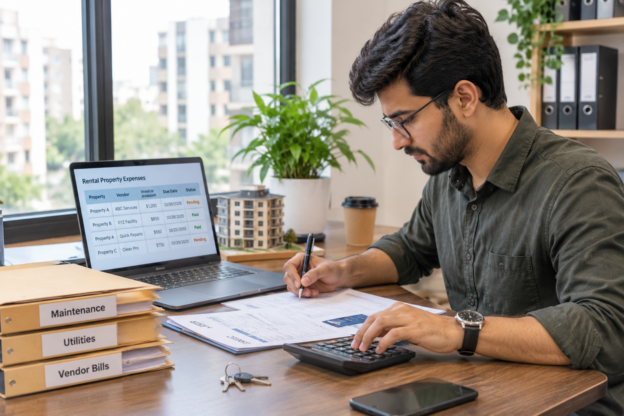
Managing multiple rental properties involves more than collecting rent and tracking income. Property managers must also handle vendor invoices, maintenance expenses, utility bills, contractor payments, insurance premiums, and other recurring costs. When these transactions come from different properties, keeping payments organized can become challenging.
A structured property management accounts payable process helps property managers pay vendors on time, control expenses, avoid duplicate payments, and maintain accurate financial records. With the right procedures and accounting systems, managing bills across multiple rental properties becomes more efficient and transparent.
What Is Accounts Payable in Property Management?
Accounts payable refers to the money a property management business owes to vendors, suppliers, contractors, and service providers for goods or services already received.
For rental properties, these obligations may include:
- Plumbing, electrical, and HVAC repair invoices
- Landscaping and cleaning service payments
- Water, electricity, gas, and other utility bills
- Property insurance premiums
- Pest control and waste removal charges
- Building maintenance and renovation expenses
- Property management software subscriptions
- Contractor and supplier invoices
When multiple rental properties are involved, each expense must be assigned to the correct property and recorded in the appropriate accounting category. Without a consistent process, property managers may struggle to identify which property incurred an expense, whether an invoice has been paid, or how much is owed to each vendor.
1. Organize Expenses by Property
The first step toward managing accounts payable effectively is to maintain separate financial records for each rental property.
Even when several properties belong to the same owner, their expenses should be tracked individually. For example, a plumbing repair at Property A should not accidentally be recorded as a maintenance expense for Property B.
Create a property-wise expense structure that includes:
- Property name or identification number
- Vendor or service provider
- Invoice number and date
- Expense category
- Amount due
- Payment due date
- Payment status
- Approval status
This structure makes it easier to review individual property expenses and prepare accurate financial reports. It also helps owners understand how much each property costs to maintain.
If you manage several rental units, using a property management accounting system can simplify expense allocation and reduce manual data entry.
2. Centralize Vendor Invoices
Receiving invoices through multiple email accounts, paper documents, messaging apps, and online portals can make payment management difficult. Important bills may be overlooked, while the same invoice could accidentally be entered more than once.
A centralized invoice management system helps prevent these problems.
Set up one designated process for receiving and recording vendor invoices. Every invoice should be stored digitally, labeled clearly, and entered into the accounting system as soon as it is received.
A useful invoice record should include the vendor’s name, invoice number, service description, property assignment, total amount, approval status, and payment deadline.
Digital invoice storage also makes it easier to retrieve supporting documents during financial reviews, owner reporting, or tax preparation.
3. Establish a Consistent Invoice Approval Process
Not every invoice should be paid immediately after it arrives. Property managers should first confirm that the service was authorized, completed, and billed correctly.
An effective approval process may include the following steps:
- Receive the invoice: Record the invoice in the accounts payable system.
- Verify the service: Confirm that the maintenance work or service was completed.
- Check the amount: Compare the invoice with the approved estimate, purchase order, or service agreement where applicable.
- Assign the property: Ensure the expense belongs to the correct rental property.
- Obtain approval: Request approval from the responsible property manager or owner when required.
- Schedule payment: Add the approved invoice to the payment calendar.
Clear approval rules reduce the risk of unauthorized expenses and help ensure that property funds are used appropriately.
For larger portfolios, you can also establish approval limits based on the invoice amount or type of work.
4. Track Payment Due Dates Carefully
Late payments can damage vendor relationships, interrupt essential services, and sometimes result in additional fees. When managing several properties, keeping track of every deadline manually can become unreliable.
A payment calendar provides a simple solution.
Record all upcoming payment deadlines and review them at least once a week. Categorize invoices according to their urgency, such as payments due within seven days, payments due later in the month, and overdue invoices requiring immediate attention.
Consider using automated reminders to notify the responsible team before a payment becomes overdue.
A well-maintained property management accounts payable workflow should also distinguish between invoices that have been received, approved, scheduled, paid, and reconciled. This makes the actual payment status clear to everyone involved.
5. Use Accounting Software to Improve Efficiency
Spreadsheets may work for a small number of rental units, but managing a growing portfolio often requires more structured tools.
Property management and accounting software can help centralize invoices, track payment obligations, assign expenses to individual properties, and generate financial reports.
When evaluating software, look for features such as:
- Property-wise expense tracking
- Vendor and invoice management
- Payment reminders and approval workflows
- Bank reconciliation capabilities
- Recurring bill management
- Digital document storage
- Accounts payable reports
- Integration with bookkeeping and accounting systems
Choose a solution that matches the size and complexity of your portfolio. Before adopting new software, review your current workflow and identify the tasks that consume the most time or create the most errors.
Automation can reduce repetitive administrative work, but invoices and payment records should still be reviewed for accuracy.
6. Prevent Duplicate Payments and Invoice Errors
Duplicate payments can occur when an invoice is submitted through multiple channels, recorded by different employees, or processed again because its payment status was not updated.
To reduce these risks, establish a few basic controls.
First, use invoice numbers to identify duplicate entries. If a vendor does not provide a unique invoice number, create a consistent reference based on the vendor, invoice date, and amount.
Second, update payment records immediately after a transaction is completed. Third, assign clear responsibility for invoice entry, approval, and payment wherever staffing allows.
Before paying an invoice, verify the vendor details, amount, property assignment, and previous payment history.
Regular reviews of outstanding invoices and vendor statements can also help identify discrepancies before they become larger accounting problems.
7. Reconcile Payments with Bank Statements
Recording a payment in accounting software does not automatically mean that the transaction has cleared the bank. Payments can be delayed, rejected, reversed, or recorded incorrectly.
Bank reconciliation helps confirm that the payments in your accounting records match the transactions shown on your bank statements.
During reconciliation, review outstanding payments, bank fees, duplicate transactions, missing entries, and any differences between recorded and actual balances.
For rental portfolios, property-level expense reports should also be checked against the supporting invoices and payment records.
Consistent reconciliation improves the reliability of financial information and helps property managers identify issues before preparing owner statements or monthly reports.
8. Monitor Vendor Costs and Recurring Expenses
Accounts payable records provide useful information about the operating costs of each rental property.
Review expenses regularly to identify increasing maintenance costs, unexpected invoices, repeated repairs, and opportunities to negotiate better vendor rates.
For example, if landscaping expenses rise significantly at one property, investigate whether the increase is related to additional services, seasonal requirements, or incorrect billing.
Recurring bills should also be reviewed periodically. Confirm that services are still required, contract rates remain accurate, and invoices match the agreed terms.
Comparing expenses across similar properties can help identify unusual costs. However, consider differences in property size, age, location, and maintenance needs before deciding that an expense is excessive.
9. Maintain Clear Records for Property Owners
Property owners need accurate information about the expenses associated with their investments. Organized accounts payable records make it easier to explain maintenance costs, vendor payments, and outstanding obligations.
Maintain supporting documentation for every significant transaction, including invoices, approvals, payment confirmations, and relevant service agreements.
Prepare regular reports showing expenses by property, vendor, and category. Include outstanding invoices and upcoming obligations where relevant.
Clear reporting helps owners understand where their money is being spent and supports more informed decisions about maintenance budgets and property investments.
For professional support with bookkeeping and financial reporting, explore Accountant Anywhere, which provides accounting-related services for businesses.
10. Review Accounts Payable Performance Every Month
A monthly review helps property managers identify issues and improve their payment processes.
Useful metrics include:
- Total outstanding invoices
- Number of overdue payments
- Average time taken to process invoices
- Duplicate or incorrect invoices identified
- Total maintenance and operating expenses by property
- Payments due during the next month
- Differences identified during bank reconciliation
Reviewing these figures regularly can reveal bottlenecks in invoice approvals, recurring vendor issues, or properties with unusually high operating expenses.
Use the findings to improve approval procedures, update payment schedules, and strengthen financial controls.
Common Accounts Payable Mistakes to Avoid
Even an organized process can fail when basic accounting practices are overlooked. Avoid these common mistakes:
- Recording expenses without assigning them to the correct property
- Paying invoices before verifying the work
- Missing payment deadlines
- Entering the same invoice more than once
- Failing to update payment statuses
- Mixing personal and property-related expenses
- Neglecting bank reconciliation
- Keeping incomplete invoice documentation
- Ignoring recurring increases in vendor costs
Addressing these issues early helps maintain accurate records and reduces unnecessary administrative work.
Frequently Asked Questions
1. What is the best way to manage accounts payable for multiple rental properties?
The best approach is to centralize invoices, maintain property-wise expense records, establish approval procedures, track payment deadlines, and reconcile payments regularly. Accounting software can make these tasks easier as the portfolio grows.
2. How often should rental property accounts payable be reviewed?
Upcoming payments should ideally be reviewed weekly, while a more detailed review of outstanding invoices, expenses, and reconciliations should take place monthly. High-volume portfolios may require more frequent monitoring.
3. How can property managers prevent duplicate vendor payments?
Use unique invoice references, maintain a centralized invoice register, verify payment status before processing bills, and reconcile vendor statements regularly. Clear responsibilities for invoice entry and payment approval also help reduce errors.
4. Why is property-wise expense tracking important?
Property-wise expense tracking helps owners understand the operating costs of each rental unit, supports accurate financial reporting, and makes it easier to identify unusual expenses or recurring maintenance issues.
5. When should a property manager outsource accounts payable?
Outsourcing may be worth considering when invoice volume increases, payment deadlines are frequently missed, bookkeeping errors become common, or internal staff cannot manage financial administration efficiently. The right choice depends on the portfolio’s size, complexity, and budget.
Conclusion
Managing vendor bills across multiple rental properties requires consistent processes, accurate records, and regular financial reviews. By organizing expenses by property, centralizing invoices, verifying approvals, tracking payment deadlines, and reconciling bank transactions, property managers can maintain better control over their financial obligations.
A reliable property management accounts payable process also improves vendor relationships, supports transparent owner reporting, and helps identify unnecessary operating costs. As a rental portfolio expands, standardized workflows and appropriate accounting technology can make financial management more accurate and efficient.
If your business needs support with bookkeeping and accounting processes, visit Accountant Anywhere or contact the team to explore suitable services.
