Common Property Management Bookkeeping Mistakes and How to Avoid Them
ArrayManaging rental properties involves much more than collecting rent and coordinating maintenance. Property managers must also track rental income, record operating expenses, process vendor invoices, reconcile bank accounts, and prepare accurate financial reports for property owners. When these financial activities are not managed properly, small bookkeeping errors can develop into larger financial problems.
Accurate bookkeeping helps property management companies understand their financial position, maintain transparent records, and make informed business decisions. It also helps property owners understand how their investments are performing and how their money is being managed.
However, managing financial records across multiple properties can become complicated, particularly when businesses rely on spreadsheets, inconsistent procedures, or delayed transaction recording. Understanding common property management bookkeeping mistakes can help property managers improve their accounting processes and avoid unnecessary financial discrepancies.
In this guide, we explore the most common bookkeeping errors in property management, explain why they happen, and provide practical strategies to prevent them.
Why Accurate Bookkeeping Matters in Property Management
Property management bookkeeping involves recording and organizing the financial transactions associated with rental properties. These transactions may include rental payments, maintenance expenses, property management fees, insurance payments, utility bills, and vendor invoices.
Maintaining accurate records provides several important benefits.
Better financial visibility: Property managers can monitor rental income, expenses, outstanding balances, and available cash.
Improved owner communication: Organized financial statements help property owners understand property performance and financial activity.
Stronger expense control: Accurate records make it easier to identify unexpected costs and investigate unusual transactions.
Reliable financial reporting: Proper bookkeeping provides a stronger foundation for monthly statements, budgeting, tax preparation, and financial analysis.
Better decision-making: Property managers can use reliable financial information to evaluate rental performance, plan maintenance spending, and identify opportunities for improvement.
Without consistent bookkeeping procedures, property managers may struggle to understand where money is coming from, where it is going, and whether financial records accurately reflect actual transactions.
1. Mixing Financial Records From Different Properties
One of the most common bookkeeping problems occurs when transactions from multiple properties are recorded incorrectly or combined without proper identification.
Property management companies may oversee several rental units, residential buildings, or commercial properties. If income and expenses are not assigned to the correct property, financial reports can become inaccurate.
Why Does This Happen?
Common reasons include inconsistent transaction descriptions, incorrect account coding, manual data-entry errors, and inadequate bookkeeping systems.
For example, a property manager may accidentally record a maintenance invoice for Property A under Property B. Although the overall expense may be recorded, the individual property reports will be incorrect.
How to Avoid It
- Maintain separate financial records for each property.
- Use consistent property names and identification codes.
- Assign every transaction to the appropriate property.
- Review property-level income and expense reports monthly.
- Use accounting software that supports property-level tracking.
Accurate property identification helps managers evaluate each property’s financial performance and provide reliable reports to owners.
2. Recording Rental Income Incorrectly
Rental income is one of the most important financial components of property management. Errors in recording rent payments can affect cash balances, tenant ledgers, and financial statements.
Problems may occur when payments are entered twice, received payments are not recorded, or rent is assigned to the wrong tenant or accounting period.
Example
Suppose a tenant pays $1,500 in monthly rent, but the payment is accidentally recorded twice. The accounting system may show more rental income than the property actually received.
Similarly, a payment received through an online portal may be missing from the accounting records if the transaction is not imported or reviewed correctly.
How to Avoid It
Property managers should establish a consistent rent-recording process.
- Compare recorded payments with bank deposits and payment processor reports.
- Match each payment to the correct tenant account.
- Investigate duplicate transactions.
- Review outstanding rent balances regularly.
- Reconcile payment records with bank statements.
Automated payment records can reduce manual entry, but transactions should still be reviewed for accuracy.
3. Failing to Reconcile Bank Accounts Regularly
Bank reconciliation involves comparing accounting records with bank statements to identify differences and confirm that transactions have been recorded correctly.
When reconciliation is delayed, missing payments, duplicate entries, bank fees, and unexplained discrepancies may remain undetected.
Why Is Bank Reconciliation Important?
Consider a property management company that records a vendor payment of $800. If the payment is entered incorrectly as $80, the accounting balance will not match the bank statement.
A regular reconciliation helps identify the discrepancy so the accounting team can investigate and correct it.
How to Avoid It
- Reconcile relevant bank accounts at least monthly.
- Compare deposits and withdrawals with accounting entries.
- Identify outstanding checks and deposits in transit.
- Record applicable bank fees and interest.
- Investigate unexplained differences before closing the books.
Property managers should also follow applicable requirements for trust accounts and tenant security deposit accounts.
Regular reconciliation improves the reliability of financial records and helps identify problems before they affect reporting.
4. Misclassifying Property Expenses
Property management businesses handle many different expenses, including repairs, utilities, insurance, cleaning, management fees, and capital improvements.
When expenses are assigned to incorrect categories, financial reports may not accurately represent the property’s operating performance.
For example, recording a significant capital improvement as an ordinary repair expense may distort operating expenses and affect how the property’s financial performance is evaluated.
The appropriate accounting treatment depends on the nature of the expenditure and the applicable accounting and tax rules.
How to Avoid It
Create a consistent chart of accounts that clearly identifies common property-related expenses.
Property managers should:
- Establish clear expense categories.
- Maintain documentation for invoices and payments.
- Review unusual or high-value transactions.
- Apply consistent classification procedures.
- Consult a qualified accounting professional when treatment is uncertain.
Consistent expense classification makes budgeting, financial reporting, and year-over-year comparisons more useful.
5. Ignoring Accounts Payable and Vendor Invoices
Property managers regularly receive invoices from contractors, maintenance companies, cleaning services, utility providers, and other vendors.
If invoices are not recorded promptly, the business may overlook payment deadlines, incur late fees, or lose track of outstanding obligations.
Duplicate invoices can also lead to unnecessary payments.
How to Avoid It
Establish a structured invoice management process that includes:
- Recording each invoice when received.
- Verifying vendor details and invoice amounts.
- Assigning the expense to the correct property.
- Obtaining the required approval.
- Tracking payment deadlines.
- Confirming that payments are recorded correctly.
An accounts payable report can help property managers identify upcoming payments and overdue invoices.
Maintaining organized vendor records also makes it easier to investigate disputed charges and confirm that payments relate to legitimate services.
6. Overlooking Tenant Security Deposits
Security deposits require careful bookkeeping because refundable deposits generally represent amounts owed to tenants rather than rental income.
Recording a refundable deposit as ordinary rental income can distort financial statements and create problems when the deposit must be returned.
The handling of security deposits may also be subject to specific state or local requirements.
How to Avoid It
- Record security deposits using the appropriate liability accounts.
- Maintain detailed records for each tenant and property.
- Reconcile deposit balances with relevant bank accounts.
- Document authorized deductions and refunds.
- Follow applicable legal requirements for holding and returning deposits.
Property managers should ensure that security deposit records remain separate from ordinary rental income and that any deductions are properly documented.
7. Delaying Bookkeeping Until the End of the Month
Postponing bookkeeping tasks can create unnecessary pressure and increase the likelihood of errors.
When transactions are entered weeks after they occur, invoices may be misplaced, payment details may be forgotten, and discrepancies can become more difficult to investigate.
Delayed bookkeeping also makes it harder for property managers to understand current financial performance.
How to Avoid It
Develop a recurring schedule for financial administration.
For example:
- Record rental payments as they are received.
- Enter vendor invoices promptly.
- Categorize expenses throughout the month.
- Review outstanding tenant balances regularly.
- Reconcile bank accounts monthly.
- Prepare and review financial reports after the accounting period closes.
Consistent transaction recording makes month-end reporting more efficient and reduces the need for extensive corrections.
8. Failing to Track Accounts Receivable
Accounts receivable represents amounts owed to the property management business. In rental property accounting, this may include unpaid rent, tenant charges, and other outstanding balances.
When overdue amounts are not monitored, property managers may overlook collection issues or fail to identify discrepancies in tenant accounts.
How to Avoid It
Use an accounts receivable aging report to organize outstanding balances according to how long they have remained unpaid.
Review the report regularly to identify:
- Recently overdue payments.
- Long-outstanding tenant balances.
- Disputed charges.
- Payments that have not been applied correctly.
- Accounts requiring additional follow-up.
Before taking collection action, verify that each balance is accurate and that any recorded payments have been applied to the appropriate account.
Regular monitoring improves financial visibility and supports more consistent rent collection procedures.
9. Preparing Inaccurate Financial Reports for Property Owners
Property owners rely on financial reports to understand rental income, operating expenses, management fees, and available funds.
If reports contain missing transactions, incorrect expense classifications, or unexplained balances, owners may lose confidence in the management process.
Inaccurate reports can also make it difficult to compare property performance across different periods.
How to Avoid It
Before issuing owner statements, property managers should:
- Verify rental income and recorded expenses.
- Reconcile relevant bank accounts.
- Review outstanding invoices and tenant balances.
- Confirm that transactions belong to the correct property.
- Investigate unusual changes in financial results.
- Maintain supporting documentation.
Owner statements should follow a consistent format and clearly explain income, expenses, fees, reserves, and distributions as applicable.
Accurate and timely reporting helps property managers maintain transparent relationships with property owners.
10. Relying Entirely on Spreadsheets or Manual Processes
Spreadsheets can be useful for basic tracking, but they may become difficult to manage as a property portfolio grows.
Manual systems can increase the risk of duplicate entries, formula errors, missing transactions, inconsistent records, and unauthorized changes.
These problems become more significant when several employees handle financial information across multiple properties.
How to Avoid It
Consider using property management accounting software that supports:
- Property-level income and expense tracking.
- Rent collection and payment records.
- Bank reconciliation.
- Vendor invoice management.
- Accounts receivable and payable reporting.
- Financial statements and owner reports.
- Appropriate user permissions and audit trails.
Software should match the size and complexity of the business. Even with automation, property managers must maintain proper procedures, review reports, and verify financial information.
Best Practices to Improve Property Management Bookkeeping
Preventing bookkeeping errors requires more than correcting individual transactions. Property managers should establish consistent procedures that support accuracy throughout the accounting process.
Maintain Standard Operating Procedures
Document how transactions should be recorded, categorized, reviewed, and approved. Consistent procedures help reduce errors when responsibilities are shared across a team.
Schedule Regular Financial Reviews
Review income, expenses, outstanding balances, and cash flow at defined intervals. Monthly reviews help identify unusual activity before it becomes a larger problem.
Keep Supporting Documents Organized
Store invoices, receipts, bank statements, lease records, and payment confirmations in an organized system. Supporting documents make it easier to verify transactions and resolve discrepancies.
Separate Duties Where Practical
Where staffing allows, separate transaction entry, approval, payment authorization, and reconciliation responsibilities. This helps strengthen internal controls and reduce the risk of errors or unauthorized transactions.
Seek Professional Accounting Support
As property portfolios grow, managing bookkeeping internally can become increasingly time-consuming. Professional accounting support can help businesses maintain organized records, reconcile accounts, and prepare financial reports.
By following these practices, property managers can reduce recurring errors and establish a more reliable accounting process.
How Professional Property Management Accounting Services Can Help
Managing the finances of multiple properties requires consistent transaction recording, careful reconciliation, accurate expense classification, and timely financial reporting.
For property management companies experiencing increasing workloads, professional accounting support can help organize recurring tasks and improve the consistency of financial records.
Accountant Anywhere provides property management accounting support for businesses that need assistance with bookkeeping and related financial processes.
Explore our Property Management Accounting Services to learn more about the available services and how professional accounting support may fit your business requirements.
The right accounting workflow can help property managers spend less time correcting errors and more time focusing on tenants, property owners, and daily operations.
Frequently Asked Questions
1. What are the most common property management bookkeeping mistakes?
Common mistakes include mixing financial records between properties, recording rental income incorrectly, failing to reconcile bank accounts, misclassifying expenses, overlooking security deposits, and delaying financial reporting.
2. How often should property management accounts be reconciled?
Monthly reconciliation is a common practice. Businesses with higher transaction volumes or specific contractual and regulatory requirements may need more frequent reviews.
3. Why is it important to separate financial records for each property?
Separate property-level records help managers track income and expenses accurately, evaluate individual property performance, and prepare reliable owner statements.
4. How can accounting software reduce bookkeeping errors?
Accounting software can help organize transactions, automate certain recurring tasks, generate financial reports, and maintain transaction histories. However, accurate results still depend on proper configuration, correct data entry, and regular review.
5. Should property management companies outsource bookkeeping?
Outsourcing may be useful for businesses that need additional accounting capacity or support with recurring tasks. Before choosing a provider, evaluate its property accounting experience, service scope, data security, reporting procedures, and quality controls.
6. How can property managers improve financial reporting accuracy?
Property managers can improve accuracy by recording transactions promptly, reconciling bank accounts, maintaining supporting documents, reviewing expense classifications, and verifying financial statements before distributing them to owners.
Conclusion
Accurate bookkeeping is essential for managing rental properties effectively. From recording rental income and classifying expenses to reconciling bank accounts and preparing owner statements, every financial task contributes to the reliability of a property’s accounting records.
Understanding property management bookkeeping mistakes helps property managers identify weaknesses in their existing processes and take practical steps to prevent recurring problems.
By maintaining property-level records, using appropriate accounting software, reviewing transactions regularly, and establishing consistent financial procedures, businesses can improve reporting accuracy and strengthen financial control.
For property managers handling growing portfolios, professional accounting support may also help reduce administrative pressure and maintain organized financial records.
Ultimately, preventing property management bookkeeping mistakes is about building reliable systems that support accurate reporting, transparent owner communication, and better long-term property management.
Explore Property Management Accounting Services
Looking to improve your property bookkeeping and financial reporting processes? Visit Accountant Anywhere to explore accounting services for businesses.
Need professional accounting support? Contact Accountant Anywhere to discuss your bookkeeping requirements and explore suitable solutions for your property management business.

Related Posts
Medical Practice Bookkeeping: A Guide to Financial Reporting
Learn More
Outsourced Accounting Services for US Small Businesses: What to Evaluate
Learn More
Rental Income vs Operating Expenses: A Property Manager’s Guide
Learn More
How to Manage Accounts Payable for Multiple Rental Properties
Learn More
Common Property Management Bookkeeping Mistakes and How to Avoid Them
Learn More
When Should a Growing Business Hire a Fractional CFO?
Learn More
Real Estate Accounting Reports Every Property Manager Should Track
Learn More
How CPA Firms Can Scale with White-Label Accounting Services
Learn More
Property Management Accounting Software: Yardi vs AppFolio Workflows
Learn More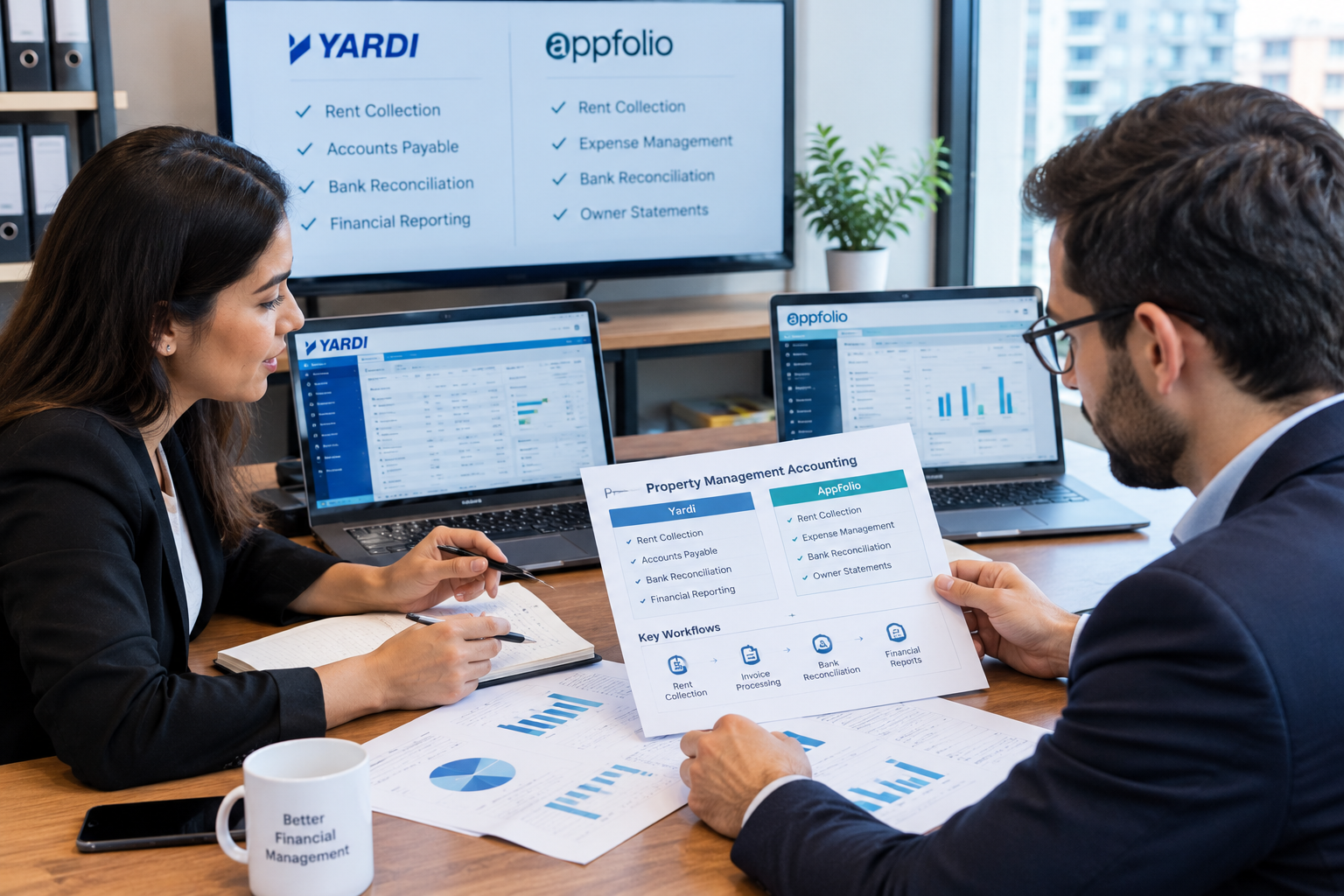
In-House vs Outsourced Real Estate Bookkeeping: Cost and Benefits
Learn More