All posts by Vaibhav G. Karve

Vaibhav G. Karve

About Vaibhav G. Karve

SENIOR MANAGER (OPERATIONS)

Manager – Operations. Working since October 2003.

• Senior Manager - Operations. Working since October 2007.

• Handling a team of 17 providing back office support to USA clients

• Experience includes providing accounts and income tax services to individuals, small and mid-sized companies and co-operative societies.

• 3+ years of audit experience with a total 25 years of experience in financial accounting, auditing and taxation

• 20+ years’ experience in BPO industry.

• Holds a Diploma in Co-operation and Accountancy of Maharashtra State

• Master’s degree of Commerce in Advanced Accounting and Audit

• Loves swimming, horse riding and trekking. Actively involved in arranging large group treks and mountaineering.

When Should a Growing Business Hire a Fractional CFO?

fractional CFO services for small business

Growing a business requires more than increasing sales and acquiring new customers. As a company expands, financial decisions become more complex. Business owners must manage cash flow, control operating expenses, plan budgets, monitor profitability, and make informed decisions about future investments. Without a clear financial strategy, even a profitable business can experience financial difficulties.

Many small and medium-sized businesses reach a stage where basic bookkeeping and traditional accounting services are no longer enough to support their growth. They need financial insights, forecasting, and strategic guidance but may not have the budget or workload to justify hiring a full-time Chief Financial Officer (CFO).

This is where a fractional CFO can make a difference. A fractional CFO provides financial leadership on a part-time, contract, or flexible basis, helping businesses make informed decisions without the expense of maintaining a full-time executive.

For companies seeking fractional CFO services for small business, this approach can provide access to strategic financial expertise while allowing owners to focus on operations, customers, and long-term growth.

In this guide, we explain what a fractional CFO does, the signs that your business may need one, the benefits of hiring one, and how to determine the right time to bring financial leadership into your organization.

What Is a Fractional CFO?

A fractional CFO is an experienced financial professional who works with a business on a part-time or contract basis. Instead of being employed full-time, the CFO provides financial leadership according to the company’s requirements.

Their responsibilities extend beyond recording transactions and preparing financial statements. They help business owners understand financial performance, evaluate risks, develop budgets, forecast cash flow, and create strategies for sustainable growth.

Depending on the agreement, a fractional CFO may assist with:

  • Financial planning and forecasting
  • Cash flow management
  • Budget preparation and monitoring
  • Profitability analysis
  • Financial performance reporting
  • Business expansion planning
  • Cost optimization
  • Fundraising and financing preparation
  • Financial risk management
  • Strategic decision-making

A bookkeeper typically records financial transactions, while an accountant helps prepare and analyze financial records. A CFO uses financial information to guide business strategy and future planning.

For growing companies, this additional perspective can help connect everyday financial activities with broader business objectives.

7 Signs Your Growing Business Needs a Fractional CFO

Not every business needs a CFO immediately. However, certain challenges indicate that additional financial leadership may be valuable.

1. Your Cash Flow Has Become Difficult to Manage

Cash flow is one of the most important factors affecting business stability.

Even when sales are increasing, a company may experience cash shortages because customers pay late, operating expenses rise, or inventory and staffing require significant upfront investment.

A fractional CFO can analyze cash inflows and outflows, develop cash flow forecasts, and identify potential funding gaps before they become urgent problems.

For example, a business may receive large customer orders but need to pay suppliers several weeks before collecting customer payments. A cash flow forecast can help the owner prepare for this timing difference.

If your business frequently struggles to determine how much cash will be available in the coming months, it may be time to consider professional financial leadership.

2. Your Business Is Growing but Profitability Is Unclear

Revenue growth does not always translate into higher profits.

A company may increase sales while experiencing rising payroll costs, marketing expenses, supplier charges, or other operating costs. Without detailed financial analysis, it can be difficult to identify which products, services, or customer segments generate the strongest margins.

A fractional CFO can review financial performance, analyze expenses, and help identify opportunities to improve profitability.

They may also develop key performance indicators (KPIs) that allow management to track profit margins, operating costs, customer acquisition expenses, and other important measures.

This information helps business owners make decisions based on actual financial performance rather than revenue figures alone.

3. You Are Planning to Expand Your Business

Expansion can create new opportunities, but it also introduces financial risks.

Opening another location, hiring additional employees, entering a new market, or launching a new product may require significant investment.

Before committing resources, business owners need to understand the expected costs, potential returns, funding requirements, and possible risks.

A fractional CFO can prepare financial projections, evaluate different growth scenarios, and estimate how expansion may affect cash flow and profitability.

This allows business owners to compare opportunities and establish realistic financial targets before making major commitments.

4. Financial Decisions Are Taking Too Much of Your Time

Many small-business owners manage financial decisions alongside sales, customer service, operations, hiring, and marketing.

As the company grows, reviewing reports, preparing budgets, monitoring expenses, and evaluating investments can become increasingly time-consuming.

A fractional CFO can help organize financial information and provide structured recommendations, allowing business owners to focus more effectively on their primary responsibilities.

The objective is not to remove the owner from financial decision-making. Instead, it is to provide the analysis and guidance needed to make decisions with greater confidence.

5. You Need Better Budgeting and Financial Forecasting

Historical financial statements show what has already happened, but growing businesses also need to understand what may happen next.

Without reliable forecasts, companies may struggle to estimate future expenses, plan hiring, manage seasonal demand, or determine when additional funding will be required.

A fractional CFO can help create budgets, prepare rolling forecasts, compare actual results against expectations, and update financial plans when business conditions change.

For example, if sales are expected to increase significantly over the next six months, financial forecasting can help estimate the additional staffing, inventory, technology, and working capital required to support that growth.

6. You Are Preparing for Funding or Investment

Businesses seeking loans, investors, or other financing often need organized financial information and a clear explanation of their growth strategy.

Potential lenders and investors may want to review financial statements, cash flow projections, profitability trends, business risks, and future funding requirements.

A fractional CFO can help prepare financial models, evaluate financing options, organize supporting documentation, and explain the company’s financial position.

Although a CFO cannot guarantee funding approval, professional financial preparation can help a business present its financial information more clearly.

7. Your Existing Accounting Support Is No Longer Enough

Bookkeeping and accounting services are essential for maintaining accurate records and meeting financial reporting requirements.

However, as a company becomes more complex, it may also need strategic guidance on pricing, profitability, budgeting, financing, and long-term planning.

If your current accounting process tells you what happened financially but does not provide enough insight into what to do next, additional financial leadership may be beneficial.

Fractional CFO services for small business can bridge this gap by combining financial analysis with forward-looking planning and strategic recommendations.

What Does a Fractional CFO Actually Do?

A fractional CFO’s responsibilities depend on the company’s size, industry, financial position, and goals. Their work generally focuses on improving financial visibility and supporting better business decisions.

Financial Planning and Forecasting

The CFO develops financial projections based on expected revenue, operating expenses, cash flow, and planned investments.

These forecasts help management prepare for upcoming financial requirements and evaluate different business scenarios.

Cash Flow Optimization

A fractional CFO examines payment cycles, receivables, supplier terms, and recurring expenses to identify opportunities to improve cash flow.

They may recommend changes to payment schedules, collection processes, or working capital management.

Budget Development

The CFO works with management to establish financial targets and allocate resources effectively.

Regular budget reviews help identify unexpected expenses and determine whether the business needs to adjust its spending plans.

Financial Performance Analysis

A fractional CFO reviews financial statements and KPIs to understand the company’s performance.

This may include analyzing profit margins, operating expenses, revenue trends, and department-level performance.

Strategic Business Advice

Financial information can help management evaluate pricing changes, expansion opportunities, hiring plans, and investments.

A fractional CFO provides financial analysis to support these decisions while helping the business understand the potential risks and rewards.

Fractional CFO vs. Full-Time CFO: Which Is Better?

The right choice depends on your company’s financial complexity, budget, and need for executive support.

A full-time CFO works within the organization and provides ongoing financial leadership as part of the internal management team. This arrangement may suit larger companies with complex operations, extensive financing requirements, or substantial daily financial management needs.

A fractional CFO provides similar types of strategic financial support on a more flexible basis. The engagement may involve a set number of hours, specific projects, or recurring advisory sessions.

For a growing business that needs forecasting, cash flow planning, and profitability analysis but does not require a full-time executive, a fractional arrangement may be more practical.

However, businesses should compare the actual scope of work, availability, experience, and total cost rather than assuming that every fractional engagement is automatically less expensive.

How Much Does a Fractional CFO Cost?

The cost of a fractional CFO depends on several factors, including the professional’s experience, the complexity of the business, the number of hours required, and the scope of services.

Some arrangements use a monthly retainer, while others charge hourly rates or project-based fees.

A business requiring occasional financial reviews may need a different level of support from a company preparing for a major acquisition or fundraising process.

Before selecting a service, consider:

  • The number of hours or meetings included
  • The financial reports and forecasts to be prepared
  • The level of strategic involvement required
  • Whether implementation support is included
  • The frequency of performance reviews
  • Any additional project fees

The goal should be to find a service arrangement that addresses your financial challenges and delivers value relative to its cost.

How to Choose the Right Fractional CFO for Your Business

Choosing the right professional is important because financial recommendations can influence major business decisions.

Consider the following factors before making a decision.

Relevant experience: Look for experience with businesses of a similar size, industry, or growth stage.

Financial expertise: Evaluate the professional’s knowledge of budgeting, cash flow management, forecasting, profitability analysis, and financial planning.

Communication: Choose someone who can explain financial information clearly and translate complex data into practical recommendations.

Technology and reporting: Confirm compatibility with your accounting systems and reporting processes.

Service scope: Establish the responsibilities, expected deliverables, meeting schedule, and level of ongoing involvement.

Business alignment: Make sure the professional understands your company’s goals, financial challenges, and long-term plans.

Measurable objectives: Define what success should look like, such as improved forecasting accuracy, clearer reporting, stronger cash flow visibility, or better cost control.

A well-defined engagement helps both parties understand their responsibilities and measure progress over time.

Frequently Asked Questions

1. When should a small business hire a fractional CFO?

A small business should consider hiring a fractional CFO when financial decisions become more complex, cash flow is difficult to predict, profitability is unclear, or the company needs strategic financial guidance but does not require a full-time CFO.

2. Are fractional CFO services suitable for startups?

Yes. Startups may benefit from financial forecasting, budgeting, cash flow planning, and funding preparation. The appropriate level of support depends on the startup’s financial complexity, available budget, and growth plans.

3. What is the difference between a fractional CFO and an accountant?

An accountant generally focuses on financial records, reporting, compliance, and related accounting responsibilities. A fractional CFO focuses more on financial strategy, forecasting, profitability, cash flow planning, and business decision support. The responsibilities can overlap depending on the engagement.

4. Can a fractional CFO help improve profitability?

A fractional CFO can analyze margins, operating expenses, pricing, and financial performance to identify potential improvements. Actual results depend on the business’s circumstances and the implementation of recommended changes.

5. How often does a fractional CFO work with a business?

The frequency varies according to the agreement. Some businesses require regular monthly reviews, while others need more frequent involvement during expansion, fundraising, or significant financial changes.

6. Is hiring a fractional CFO better than hiring a full-time CFO?

A fractional arrangement may suit businesses that need strategic financial guidance without requiring a full-time executive. Larger or more complex organizations may benefit from a dedicated internal CFO. The right choice depends on workload, budget, and business requirements.

Conclusion

Hiring a fractional CFO can be an important step for a growing business that needs stronger financial planning and strategic guidance.

When cash flow becomes difficult to manage, profitability is unclear, expansion requires careful planning, or financial decisions consume too much management time, a fractional CFO can help bring structure and clarity to the process.

Rather than relying only on historical financial statements, businesses can use forecasting, budgeting, performance analysis, and financial planning to prepare for future challenges and opportunities.

The key is to identify your company’s financial needs, establish clear objectives, and choose a professional whose experience matches your business goals.

For growing companies that need experienced financial guidance without immediately hiring a full-time executive, fractional CFO services for small business can provide a flexible approach to improving financial visibility and supporting sustainable growth.

Explore Accounting and Financial Support

Looking for professional accounting support to help your business maintain accurate financial records and improve financial visibility? Visit Accountant Anywhere to explore its accounting services.

You can also learn more about its Property Management Accounting Services to understand how professional accounting support can help businesses manage financial records, reporting, and bookkeeping requirements.

Ready to discuss your business needs? Contact Accountant Anywhere to discuss your accounting requirements and explore suitable support options.

Real Estate Accounting Reports Every Property Manager Should Track

eal Estate Accounting Reports Every Property Manager

Managing real estate properties requires more than collecting rent and coordinating maintenance. Property managers must also monitor rental income, control operating expenses, manage vendor payments, track outstanding balances, and prepare accurate financial statements. Without organized financial reporting, it becomes difficult to understand whether a property is performing well or requires operational improvements.

Accounting reports help property managers understand where money comes from, how it is spent, and how much cash remains available. They also provide property owners with a clearer picture of their investments and support better financial decision-making.

For businesses managing multiple residential, commercial, or multifamily properties, property management financial reports are essential for monitoring performance, identifying financial discrepancies, and maintaining transparent records.

In this guide, we explore the most important real estate accounting reports every property manager should track, explain what each report reveals, and share practical tips for improving financial reporting.

Why Are Accounting Reports Important for Property Managers?

Accounting reports transform financial transactions into useful information. Instead of reviewing individual receipts, invoices, and bank transactions, property managers can use structured reports to evaluate the financial position of each property.

Here are some key benefits of maintaining accurate accounting reports.

1. Better Financial Visibility

Financial reports help property managers understand rental income, operating expenses, outstanding payments, and available cash. This information makes it easier to identify potential problems before they affect day-to-day operations.

2. Improved Expense Management

Regular reporting helps managers identify properties with unusually high maintenance costs, increasing utility expenses, or other unexpected charges. Investigating these changes can reveal opportunities to control spending.

3. Transparent Owner Communication

Property owners want to understand how their investments are performing. Clear financial statements help explain income, expenses, outstanding obligations, and distributions without requiring owners to examine every transaction individually.

4. More Informed Business Decisions

Financial reports support decisions about rental pricing, maintenance budgets, property improvements, and future investments. Accurate data allows property managers to evaluate options using actual financial performance rather than assumptions.

1. Profit and Loss Statement

A profit and loss statement, also known as an income statement, summarizes a property’s income and expenses over a specific period.

It helps property managers determine whether rental operations generated a profit or a loss during the reporting period.

What Does It Include?

A typical property-level profit and loss statement includes:

  • Rental income
  • Late fees and other applicable income
  • Maintenance and repair expenses
  • Property management fees
  • Insurance expenses
  • Utilities and cleaning costs
  • Property taxes
  • Other operating expenses
  • Net operating income or net profit, depending on the report’s format

Why Should You Track It?

Reviewing this report monthly helps property managers identify changes in operating costs and rental income.

For example, if rental income remains stable but maintenance expenses increase significantly, the manager can investigate whether the change results from recurring repairs, an unexpected issue, or incorrect expense coding.

It is important to understand the report’s format. Net operating income generally excludes certain items, such as debt service and income taxes, while net profit may include additional income and expenses.

2. Cash Flow Statement

A cash flow statement tracks money entering and leaving a business during a particular period. It helps property managers understand whether sufficient cash is available to meet upcoming financial obligations.

A property can appear profitable on an income statement while experiencing cash shortages because of unpaid rent, debt payments, capital improvements, or the timing of vendor payments.

What Should You Monitor?

Important cash flow items include:

  • Rental payments received
  • Payments made to vendors
  • Operating expenses paid
  • Mortgage or loan payments
  • Capital improvement spending
  • Owner distributions
  • Transfers between relevant accounts

How Does It Help?

Suppose a property generates consistent rental income but requires a major roof repair. The expense may create a temporary cash shortage even if the property remains profitable over the longer term.

A cash flow report helps managers understand the timing of receipts and payments, plan upcoming expenses, and determine whether additional funds may be required.

Property managers should also distinguish between operating cash and funds held for specific purposes, such as tenant security deposits or required reserves.

3. Rent Roll Report

A rent roll provides a property-level summary of tenants, rental units, lease information, and rental amounts.

It is particularly useful for residential and multifamily property managers who need to monitor occupancy, rental income, and tenant balances.

What Does a Rent Roll Show?

Depending on the system, a rent roll may include:

  • Unit numbers and tenant names
  • Lease start and end dates
  • Contracted rental amounts
  • Occupancy status
  • Vacant units
  • Outstanding tenant balances
  • Lease expiration information
  • Other relevant rental details

Why Is It Important?

The rent roll helps property managers compare expected rental income with actual collection results.

For example, if a building contains 20 rental units but three are vacant, the manager can investigate how those vacancies affect potential income.

The report can also help identify leases approaching expiration, unpaid rent, and inconsistencies between lease records and accounting data.

However, a rent roll does not always show the full financial picture. Managers should compare it with collection reports and accounting records to understand actual cash received.

4. Balance Sheet

A balance sheet shows a property’s or business’s financial position at a specific point in time. It summarizes assets, liabilities, and equity.

Unlike a profit and loss statement, which covers a period, a balance sheet represents a financial snapshot as of a particular date.

What Does It Include?

Common balance sheet items include:

  • Cash and bank balances
  • Accounts receivable
  • Other recorded assets
  • Accounts payable
  • Loans and mortgage liabilities
  • Tenant security deposit liabilities
  • Other outstanding obligations
  • Owner’s equity or other applicable equity balances

Why Should Property Managers Review It?

The balance sheet helps managers identify outstanding liabilities, monitor receivables, and verify that recorded balances are supported by appropriate documentation.

For example, if a business has a significant accounts payable balance, the manager can investigate upcoming obligations and determine whether sufficient funds are available to meet them.

Security deposits also require careful attention. Refundable tenant deposits generally represent liabilities rather than rental income, and their accounting treatment should follow applicable requirements.

5. Accounts Receivable Aging Report

An accounts receivable aging report shows unpaid amounts and how long they have remained outstanding.

In property management, this report commonly helps track overdue rent, tenant charges, and other amounts owed to the business.

Common Aging Categories

An aging report may organize balances into categories such as:

  • Current
  • 1–30 days overdue
  • 31–60 days overdue
  • 61–90 days overdue
  • More than 90 days overdue

The exact categories may vary depending on the accounting system.

How Does It Help?

The report helps property managers identify overdue balances and prioritize follow-up activities.

For example, a tenant with an unpaid balance that has remained outstanding for 60 days may require additional attention compared with a tenant whose payment is only a few days late.

Managers should investigate disputed charges, unapplied payments, and accounting errors before treating every outstanding balance as a collection problem.

Regular review can improve collection visibility and help reduce the risk of uncollectible amounts.

6. Accounts Payable Report

An accounts payable report summarizes amounts owed to vendors, contractors, service providers, and other suppliers.

Property managers regularly receive invoices for repairs, landscaping, cleaning, utilities, insurance, and other property-related services.

What Should You Review?

A useful accounts payable report may show:

  • Vendor names
  • Invoice numbers
  • Invoice dates
  • Outstanding amounts
  • Payment due dates
  • Overdue invoices
  • Property or expense classifications
  • Payment status

Why Is It Important?

Reviewing accounts payable helps property managers plan payments, avoid unnecessary late fees, and maintain good relationships with vendors.

It also helps identify duplicate invoices, incorrectly assigned expenses, and invoices that require additional approval.

Managers should establish clear procedures for invoice verification and payment authorization. Accounting reports should support these controls rather than replace them.

7. Budget vs. Actual Report

A budget vs. actual report compares planned income and expenses with the amounts recorded during a specific period.

This report helps property managers understand whether a property is performing according to its financial plan.

What Does It Show?

A typical report compares:

  • Budgeted rental income with actual income
  • Planned maintenance costs with actual expenses
  • Expected utility costs with recorded charges
  • Budgeted management expenses with actual costs
  • Forecast spending with current financial results

It may also show the amount and percentage of variance.

How Can It Improve Property Performance?

Suppose a property has a monthly maintenance budget of $3,000 but records $4,500 in actual maintenance expenses.

The report highlights a $1,500 unfavorable variance. The property manager can investigate whether the increase resulted from emergency repairs, recurring maintenance problems, or expenses that were not included in the original budget.

Not every unfavorable variance indicates poor management. Unexpected repairs may be necessary, while some favorable variances may simply reflect delayed spending.

The goal is to understand the reason for each significant difference and determine whether the budget or operating plan needs adjustment.

8. Bank Reconciliation Report

A bank reconciliation report helps confirm that accounting records agree with bank activity after accounting for valid timing differences and other reconciling items.

Regular reconciliation is essential because even small transaction errors can affect financial reporting when they remain unresolved.

What Should Be Checked?

Property managers and accounting teams should review:

  • Recorded deposits
  • Cleared payments
  • Outstanding checks
  • Deposits in transit
  • Bank fees and interest
  • Duplicate transactions
  • Missing entries
  • Unexplained differences

Why Does It Matter?

For example, an accounting system may show a payment that has not yet cleared the bank. This may represent a normal timing difference.

However, if the difference cannot be explained by outstanding transactions or other valid items, the accounting team should investigate it before finalizing the reconciliation.

Bank reconciliations should also be completed for relevant property and trust accounts according to applicable requirements.

9. Owner Statement

An owner statement summarizes the financial activity associated with a property over a particular period. It helps owners understand rental income, expenses, fees, and distributions.

The statement’s exact format depends on the management agreement and the reporting system.

What Is Typically Included?

An owner statement may contain:

  • Opening balance
  • Rental income received
  • Other property income
  • Operating expenses
  • Management fees
  • Reserve contributions or withdrawals
  • Owner distributions
  • Closing balance

Why Is It Important?

Property owners need accurate information to evaluate their investments and understand how their funds are being used.

Before distributing an owner statement, property managers should verify the supporting transactions, confirm that expenses are assigned to the correct property, and ensure that distributions reflect available funds and applicable obligations.

Clear owner statements can improve communication and reduce questions about unexplained deductions or balances.

10. Occupancy and Property Performance Report

Financial reporting becomes more useful when it is combined with operational information.

An occupancy and property performance report helps managers understand how vacancies, rental rates, and operating costs affect the financial performance of a property.

Key Metrics to Track

Depending on the property type, managers may monitor:

  • Occupancy rate
  • Vacancy rate
  • Average rental income per occupied unit
  • Rental income lost through vacancies
  • Operating expenses per unit
  • Net operating income
  • Lease renewal activity

For example, a property with increasing vacancy rates may experience lower rental income even when operating expenses remain stable.

By reviewing occupancy alongside financial reports, property managers can identify whether performance issues relate to rental pricing, tenant turnover, maintenance delays, or other operational factors.

Different property types require different performance measures, so managers should choose metrics that reflect their portfolio and business objectives.

Best Practices for Managing Property Accounting Reports

Maintaining accurate reports requires consistent accounting procedures and regular financial reviews.

Review Reports Monthly

Monthly reviews help identify discrepancies, overdue balances, unexpected expenses, and cash flow concerns before they become more difficult to resolve.

Maintain Separate Records for Each Property

Use consistent property identifiers and accounting categories to prevent transactions from being assigned to the wrong property.

Reconcile Bank Accounts Regularly

Compare bank statements with accounting records and document unresolved differences.

Use Appropriate Accounting Software

Property management and accounting platforms can simplify transaction tracking, financial reporting, and recurring reconciliations. Businesses should choose systems that support their portfolio and reporting requirements.

Document Significant Variances

Investigate unusual changes in income, expenses, occupancy, and cash balances. Record the reason for significant differences and any action taken.

Protect Financial Information

Limit system access according to job responsibilities and use appropriate safeguards when storing or sharing financial documents.

Following these practices makes property management financial reports more reliable and helps property managers use accounting information effectively.

How Professional Accounting Support Can Help

Preparing accurate reports requires organized bookkeeping, timely transaction recording, regular reconciliations, and consistent review procedures.

As property portfolios grow, these responsibilities can place additional pressure on internal teams. Professional property accounting support may help businesses manage recurring tasks such as accounts payable processing, bank reconciliations, journal entries, monthly financial statements, and annual budgeting.

Accountant Anywhere provides outsourced accounting support for property management companies handling residential, commercial, and other property types.

Learn more about its Property Management Accounting Services to explore the available support for your accounting operations.

The right accounting process can help property managers spend less time resolving financial discrepancies and more time improving property operations.

Frequently Asked Questions

1. What financial reports should property managers review monthly?

Property managers commonly review profit and loss statements, cash flow reports, rent rolls, balance sheets, accounts receivable aging reports, accounts payable reports, bank reconciliations, and owner statements. Budget comparisons and occupancy reports can provide additional insight.

2. Why are property management financial reports important?

These reports help property managers monitor income and expenses, identify overdue balances, evaluate property performance, maintain accurate financial records, and provide transparent information to property owners.

3. What is the difference between a profit and loss statement and a cash flow statement?

A profit and loss statement summarizes income and expenses over a period, while a cash flow statement tracks cash entering and leaving the business. The two reports provide different but complementary financial information.

4. How often should property accounts be reconciled?

Monthly reconciliation is a common practice. Businesses with high transaction volumes or specific contractual or regulatory requirements may need more frequent reviews.

5. Can accounting software generate property management reports automatically?

Many property management platforms can generate reports using recorded financial and operational data. However, report accuracy depends on correct transaction entry, account setup, configuration, and appropriate review.

6. Should property managers outsource financial reporting?

Outsourcing may help businesses that need additional accounting capacity or want support with recurring financial tasks. Before selecting a provider, evaluate its property accounting experience, service scope, reporting procedures, security practices, and quality controls.

Conclusion

Accurate accounting reports help property managers understand financial performance, maintain control over expenses, monitor cash flow, and provide clear information to property owners.

From profit and loss statements and cash flow reports to rent rolls, bank reconciliations, and owner statements, each report serves a specific purpose. Reviewing them together provides a more complete picture of a property’s financial and operational condition.

By establishing consistent reporting schedules, maintaining organized records, and investigating discrepancies promptly, property management businesses can make better-informed decisions and improve financial accountability.

Ultimately, property management financial reports are not simply documents prepared for recordkeeping. They are practical tools that help property managers identify risks, evaluate opportunities, and support the long-term performance of their real estate portfolios.

Explore Property Management Accounting Services

Looking to improve your property accounting and financial reporting processes? Visit Accountant Anywhere to explore accounting solutions designed for property management businesses.

Need professional accounting support? Contact Accountant Anywhere to discuss your bookkeeping, reconciliation, and financial reporting requirements.

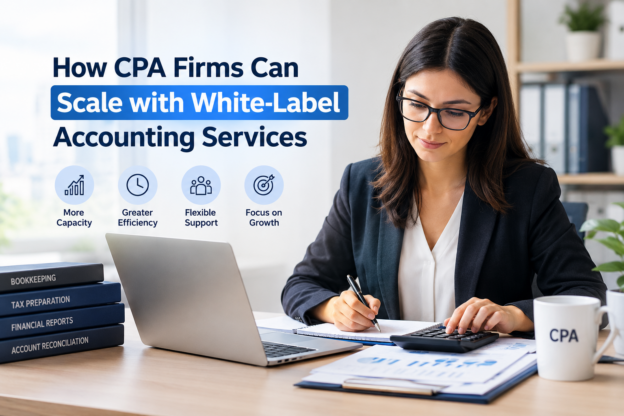
How CPA Firms Can Scale with White-Label Accounting Services

Certified Public Accountant (CPA) firms face increasing pressure to manage growing client portfolios, meet reporting deadlines, maintain accounting accuracy, and deliver consistent service. As client demands increase, internal teams may struggle to balance routine bookkeeping, financial reporting, tax preparation, and higher-value advisory work.

Hiring additional employees can help, but recruitment, training, salaries, and employee retention require time and investment. For firms experiencing seasonal workload increases or steady client growth, expanding the internal team may not always be the most flexible solution.

This is where white-label accounting partnerships can help. They allow CPA firms to delegate selected accounting tasks to an external team while maintaining their own brand, client relationships, and review procedures.

With white label accounting services for CPA firms, businesses can increase their delivery capacity, manage workloads more effectively, and focus internal resources on client service and strategic growth.

In this guide, we explain how white-label accounting works, its key benefits, the services CPA firms can delegate, and the practical steps required to build a scalable accounting workflow.

What Are White-Label Accounting Services?

White-label accounting is a business arrangement in which an external accounting team completes agreed financial tasks that a CPA firm delivers to its clients under its own brand.

The external provider works according to the firm’s instructions, accounting procedures, software requirements, and reporting standards. The CPA firm generally retains control over the client relationship, final review, professional judgment, and client-facing communication.

Depending on the agreement, outsourced tasks may include bookkeeping, account reconciliation, accounts payable, accounts receivable, financial statement preparation, and tax-preparation support.

For example, a CPA firm managing 100 client accounts may find that monthly bookkeeping and reconciliation consume a significant portion of its employees’ time. An external team can help prepare the recurring accounting work, allowing the firm’s qualified professionals to review the results and focus on more complex client requirements.

The exact responsibilities must be defined in advance. Outsourcing preparation work does not automatically transfer professional obligations, approval authority, or regulatory responsibilities to the external provider.

Why CPA Firms Need Scalable Accounting Support

Growing an accounting practice requires more than attracting new clients. Firms must also ensure they have sufficient capacity to deliver accurate work within agreed deadlines.

Several challenges can make expansion difficult.

1. Increasing Client Workloads

As a CPA firm acquires more clients, the volume of transactions, financial records, reconciliations, and reporting requirements increases.

Without additional capacity or improved workflows, employees may struggle to complete recurring tasks on time. This can affect productivity and reduce the time available for client communication.

2. Rising Staffing Costs

Recruiting experienced accounting professionals involves salary expenses, training, onboarding, and ongoing employee management.

Smaller firms may find it difficult to maintain a large internal team when their workload changes throughout the year.

3. Seasonal Workload Fluctuations

Tax season and year-end reporting periods can create temporary increases in accounting workloads. A firm may need additional preparation capacity for several months without requiring the same level of staffing throughout the year.

4. Limited Time for Advisory Services

When experienced accountants spend most of their time on routine bookkeeping and data processing, they have fewer opportunities to focus on financial analysis, planning, and client relationships.

Delegating suitable preparation tasks can help firms make better use of their internal expertise.

How White-Label Accounting Helps CPA Firms Scale

White label accounting services for CPA firms can provide additional production capacity without requiring the firm to recruit every additional employee internally.

Here are several ways this approach can support business growth.

1. Increase Capacity Without Immediately Expanding Headcount

An external accounting team can handle agreed recurring tasks, helping firms manage additional client work when internal resources are limited.

For example, a CPA firm onboarding several small-business clients may assign routine bookkeeping and bank reconciliations to an external team. Its internal accountants can then review the work and address issues that require professional judgment.

The benefits depend on the provider’s capacity, service quality, and the firm’s ability to review completed work efficiently.

2. Improve Operational Efficiency

A clearly defined outsourcing workflow can help reduce repetitive tasks and improve the organization of accounting records.

When both teams follow consistent procedures, the firm can establish standard deadlines, documentation requirements, review checklists, and escalation processes.

This structure makes recurring work easier to manage as the client portfolio grows.

3. Manage Seasonal Demand

White-label partnerships can provide additional support during busy periods, depending on the provider’s availability and the agreed service arrangement.

CPA firms may use this support for bookkeeping backlogs, account reconciliations, workpaper preparation, and other defined tasks.

Planning capacity in advance helps firms avoid last-minute staffing pressure and establish realistic delivery schedules.

4. Focus on Higher-Value Client Services

Delegating routine preparation work can create more time for internal accountants to focus on activities such as financial analysis, business planning, and client advisory services.

However, the time saved depends on how effectively the firm manages the handoff, review, and communication processes.

5. Support Business Growth

With an appropriate delivery model, CPA firms may be able to accept additional clients without immediately expanding their internal team for every new engagement.

Before increasing the client portfolio, firms should confirm that their external provider has sufficient capacity and that internal reviewers can maintain quality standards.

Which Accounting Tasks Can CPA Firms Outsource?

The best tasks to outsource are generally repeatable, clearly defined, and supported by appropriate documentation.

Bookkeeping and Transaction Recording

External teams may record transactions, categorize expenses, maintain ledgers, and organize financial records according to the firm’s accounting procedures.

Consistent coding rules and documentation requirements help ensure that the work is ready for review.

Bank and Credit Card Reconciliation

Account reconciliation involves comparing accounting records with bank or credit card statements and identifying differences.

A preparation team can investigate unmatched transactions, document outstanding items, and prepare reconciliations for internal review.

Accounts Payable and Accounts Receivable

Depending on the agreed scope, outsourced staff may help record vendor invoices, maintain payment schedules, track customer balances, and prepare accounts receivable reports.

Payment approvals and other sensitive responsibilities should remain with the individuals authorized by the firm.

Financial Statement Preparation

External accountants may prepare draft financial statements, supporting schedules, and month-end reports for review.

The CPA firm’s reviewer should verify the figures, investigate unusual balances, and approve the final deliverables before they are provided to clients.

Tax-Preparation Support

Some providers offer tax-preparation assistance, including organizing source documents, preparing supporting schedules, and assembling draft returns.

Tax work requires particular care. Firms must confirm applicable confidentiality, disclosure, consent, licensing, and filing requirements before assigning these tasks. Final tax positions, professional review, signing, and filing responsibilities must be clearly allocated to appropriately authorized individuals.

How to Implement a White-Label Accounting Workflow

Successful outsourcing requires a structured process rather than simply transferring files to an external team.

Step 1: Identify Your Business Requirements

Start by reviewing the tasks consuming the most internal time. Identify recurring workloads, current bottlenecks, deadlines, and areas where additional support would be most useful.

Choose an initial scope that is manageable and easy to evaluate.

Step 2: Define Roles and Responsibilities

Establish who will prepare transactions, investigate discrepancies, review work, approve adjustments, and communicate with clients.

Document which activities the external team can perform independently and which require approval from the CPA firm.

Step 3: Establish Software and Access Requirements

Confirm which accounting platforms, document management systems, and communication tools will be used.

Provide access according to each person’s responsibilities. Use appropriate authentication, permissions, secure file-sharing processes, and procedures for removing access when it is no longer required.

Step 4: Create Standard Operating Procedures

Document the firm’s accounting methods, chart of accounts, reporting formats, deadlines, and review requirements.

Standard operating procedures help external staff understand how work should be completed and reduce inconsistencies between different client files.

Step 5: Start With a Pilot Project

Before transferring a large volume of work, test the arrangement with a limited number of client accounts or a defined accounting task.

Evaluate accuracy, turnaround time, communication, documentation quality, and the amount of internal review required.

Step 6: Monitor Quality and Expand Gradually

Track recurring issues, missing documents, correction requests, and reporting delays.

Once the initial workflow operates consistently, consider expanding the scope to additional clients or accounting tasks.

How to Choose the Right White-Label Accounting Partner

Choosing a suitable provider is essential for protecting client relationships and maintaining accounting quality.

Before entering an agreement, evaluate the following factors:

  • Relevant experience: Check the provider’s experience with your accounting tasks, client types, and software.
  • Service scope: Confirm which tasks are included and which remain the firm’s responsibility.
  • Quality control: Understand how work is reviewed before it reaches your internal team.
  • Communication: Establish response times, escalation procedures, and reporting schedules.
  • Data security: Review confidentiality agreements, access controls, data handling, and incident-response procedures.
  • Capacity: Confirm that the provider can manage your expected workload and accommodate future changes.
  • Pricing: Compare service fees with the total cost of internal review, corrections, software, and coordination.
  • Compliance: Determine the applicable professional and legal requirements, particularly when handling sensitive tax information or working across jurisdictions.

A strong partnership should support the firm’s processes rather than force the firm to change its entire operating model unnecessarily.

How Accountant Anywhere Can Support Accounting Firms

Accountant Anywhere provides outsourced accounting support for accounting firms, including bookkeeping, financial statement compilation, tax-return preparation support, payroll processing, and management accounting services, depending on the agreed scope.

Its accounting-firm services are designed to help businesses address staffing and operational capacity challenges while allowing their internal teams to focus on client service and growth.

If your firm is evaluating external accounting support, review the available services, software compatibility, delivery procedures, data-security arrangements, and review responsibilities before selecting a provider.

Frequently Asked Questions

1. What are white-label accounting services for CPA firms?

These services involve an external team completing agreed accounting tasks that a CPA firm delivers under its own brand. The CPA firm generally retains the client relationship, final review, and professional responsibilities assigned to it.

2. Can white-label accounting help a CPA firm serve more clients?

It can provide additional preparation capacity for recurring accounting tasks. The number of additional clients a firm can serve depends on transaction volume, provider capacity, internal review resources, and the complexity of each engagement.

3. Which accounting tasks are suitable for outsourcing?

Common options include bookkeeping, bank reconciliations, accounts payable, accounts receivable, financial statement preparation, and selected tax-preparation support. The appropriate scope depends on the firm’s needs and applicable requirements.

4. How can CPA firms maintain quality when outsourcing?

Firms can establish documented procedures, assign clear responsibilities, use review checklists, monitor turnaround times, and investigate recurring errors. A pilot project can help evaluate the provider before the arrangement expands.

5. Is white-label accounting suitable for small CPA firms?

It may be suitable for small firms that need additional accounting capacity but do not want to hire a full internal team. Firms should compare the total cost and management effort with the benefits of additional support.

6. What should a CPA firm check before outsourcing tax work?

The firm should verify the provider’s experience, confidentiality arrangements, data-security procedures, applicable disclosure and consent requirements, and the responsibilities for review, signing, and filing. Requirements vary depending on the type of work and relevant jurisdiction.

Conclusion

Scaling a CPA firm requires a balance between client acquisition, operational efficiency, accounting accuracy, and professional oversight.

White-label partnerships can help firms manage recurring workloads, improve capacity planning, and free internal professionals to focus on client relationships and higher-value services.

The most effective approach begins with a clearly defined scope, secure systems, documented procedures, and a reliable review process. Firms should test the workflow, measure its performance, and expand only when quality and turnaround meet their expectations.

By choosing the right partner and establishing clear responsibilities, white label accounting services for CPA firms can become a practical part of a long-term growth strategy.

Explore Accounting Support for Your Firm

If your accounting practice needs additional capacity, explore Accountant Anywhere’s accountants for accounting firms service page to learn more about its outsourced accounting support.

You can also visit Accountant Anywhere to explore its wider accounting services and solutions.

Ready to discuss your requirements? Contact Accountant Anywhere to arrange a conversation about your firm’s accounting workload, support requirements, and potential next steps.

Property Management Accounting Software: Yardi vs AppFolio Workflows

Property Management Accounting Software

Managing rental properties involves much more than collecting rent and handling tenant requests. Property management companies must also track income, process vendor invoices, reconcile bank accounts, monitor property expenses, and prepare accurate financial statements for property owners. As a portfolio grows, managing these activities manually can become time-consuming and increase the risk of accounting errors.

This is where property management technology becomes valuable. Accounting platforms help businesses organize financial transactions, maintain property-level records, and streamline recurring accounting tasks. Two widely used platforms in this industry are Yardi and AppFolio. Both support property management operations, but their workflows and suitability can differ depending on the type of properties managed, portfolio complexity, and business requirements.

Choosing the right property management accounting software requires understanding how each platform supports daily financial operations. Rather than comparing features alone, property managers should evaluate how rent collection, invoice approvals, bank reconciliation, and financial reporting fit into their existing processes.

In this guide, we compare Yardi and AppFolio workflows, explain their key differences, and discuss how property management companies can improve accounting efficiency.

What Is Property Management Accounting Software?

Property management accounting software helps businesses manage the financial activities associated with residential, commercial, and multifamily properties. Depending on the platform and configuration, it may connect accounting records with tenant information, leases, payment records, vendor invoices, and property reports.

Common accounting functions include:

  • Recording rental income and tenant payments
  • Tracking property operating expenses
  • Processing accounts payable and vendor invoices
  • Reconciling bank accounts
  • Maintaining general ledger records
  • Preparing financial statements and owner reports
  • Monitoring outstanding balances
  • Supporting month-end accounting procedures

By organizing these activities within a structured system, property managers can reduce repetitive data entry and improve visibility into property finances.

However, software alone does not guarantee accurate accounting. Businesses still need clear procedures, appropriate approvals, regular reconciliation, and qualified staff to review financial records.

Understanding Yardi Accounting Workflows

Yardi offers property management solutions designed for different property types and operational requirements. Its product options include solutions for residential, commercial, and larger real estate portfolios.

The exact workflow depends on the Yardi product, modules, configuration, and permissions used by the business.

1. Rent Collection and Accounts Receivable

Rent collection begins with maintaining accurate tenant, lease, and billing information. Once rent charges are established, the accounting workflow records payments and updates the corresponding tenant balances.

Property management teams can review outstanding balances, identify overdue payments, and monitor receivables through available reports.

For example, if a tenant has an outstanding balance of $2,000, the accounting team can investigate whether the amount relates to unpaid rent, additional charges, or a payment that has not been recorded correctly.

Keeping tenant ledgers accurate helps property managers monitor collections and prepare reliable financial reports.

2. Invoice Processing and Accounts Payable

Property managers regularly receive invoices for maintenance, utilities, cleaning, insurance, and other services.

A typical Yardi accounts payable workflow involves entering or importing an invoice, assigning it to the appropriate vendor and property, checking the expense category, and routing it for approval where configured.

Once approved, the invoice can proceed through the organization’s payment process.

For companies managing multiple properties, consistent coding and approval procedures help ensure that expenses are assigned to the correct property and recorded in the appropriate accounting period.

3. Bank Reconciliation

Bank reconciliation is an essential part of maintaining accurate financial records.

Accounting staff compare transactions recorded in Yardi with bank statement activity. They investigate missing transactions, duplicate entries, outstanding payments, and differences caused by timing.

For example, a payment may appear in the accounting system before it clears the bank. The reconciliation process helps identify whether the difference is a normal timing issue or requires further investigation.

Regular reconciliation supports more dependable cash balances and financial reporting.

4. Financial Reporting and Month-End Close

Yardi workflows can support property-level financial reporting and month-end accounting activities, depending on the solution and configuration.

Accounting teams may review income and expense reports, reconcile accounts, investigate unusual balances, record appropriate adjustments, and prepare financial statements.

A documented month-end process helps ensure that important tasks are completed consistently across properties.

Understanding AppFolio Accounting Workflows

AppFolio Property Manager combines property management functions with accounting tools. Its workflows can help property managers coordinate rent collection, expenses, vendor payments, and financial reporting within a connected platform.

The precise capabilities available depend on the product, subscription, configuration, and user permissions.

1. Rent Collection and Payment Tracking

AppFolio supports rental payment and accounting workflows that help property managers track tenant charges and payments.

When payments are processed and recorded, the corresponding financial records can be updated according to the configured workflow.

Property managers can use available reports to review balances, identify outstanding rent, and monitor collection activity.

Connecting payment information with tenant records helps reduce the need to maintain separate manual tracking systems.

2. Vendor Invoices and Expense Management

Property management companies must keep vendor expenses organized to maintain accurate property financials.

A typical invoice workflow includes receiving an invoice, checking vendor details, assigning the expense to the correct property, obtaining any required approval, and recording or processing the payment.

AppFolio offers accounting and vendor-management capabilities that can support these activities.

For example, when a maintenance company submits an invoice for repairs at a rental property, the accounting team should confirm that the work relates to the correct property, review the amount, and ensure that the expense is appropriately categorized.

Clear documentation and approval controls remain important even when parts of the workflow are automated.

3. Bank Reconciliation and Financial Review

AppFolio provides accounting functionality that supports financial tracking and account reconciliation.

Accounting staff should compare recorded transactions with bank activity, review unmatched items, and investigate differences before completing the reconciliation.

Automated matching can help reduce manual effort, but unusual transactions and unresolved discrepancies still require human review.

A consistent reconciliation schedule helps businesses maintain reliable financial records throughout the year.

4. Owner Statements and Financial Reports

Property owners need understandable reports showing how their properties are performing financially.

Depending on the configuration, AppFolio can support owner statements and property financial reporting that reflect rental income, expenses, and other relevant transactions.

Before distributing a statement, the accounting team should verify the underlying balances, review recorded expenses, and confirm that owner distributions agree with the available funds and applicable management agreements.

Accurate reports help property managers communicate financial performance more clearly.

Yardi vs AppFolio: Key Workflow Differences

Although both platforms support property management and accounting, their suitability depends on business requirements.

Portfolio Complexity

Yardi offers solutions for a broad range of real estate operations, including complex commercial and multifamily portfolios. It may be suitable for businesses requiring detailed accounting structures and workflows across multiple properties or entities.

AppFolio provides an integrated property management experience that can suit residential property managers and other operators whose needs align with its available product capabilities.

The best fit depends on the specific products being evaluated rather than the platform names alone.

Invoice and Payment Workflows

Both platforms can support accounts payable and payment-related processes, but the available automation and approval options depend on configuration.

Businesses should examine how invoices enter the system, how approvals are assigned, how payments are recorded, and how supporting documents are retained.

Financial Reporting

Both platforms support financial reporting, but report availability and customization may vary.

Before selecting a platform, identify the reports your business requires, including property-level income statements, balance sheets, rent rolls, accounts payable reports, and owner statements.

Confirm that the chosen solution can generate the required reports with an appropriate level of detail.

Ease of Use and Training

A system’s usefulness depends partly on how easily employees can learn and follow its workflows.

Property managers should evaluate the interface, training requirements, user permissions, and daily tasks performed by accounting staff.

A platform with extensive capabilities may require more configuration and training, while a simpler workflow may be sufficient for a business with less complex requirements.

Scalability

The right system should support the company’s current operations and anticipated growth.

Consider the number of properties, transaction volume, reporting requirements, number of users, and expected changes to the portfolio.

Businesses should also evaluate migration requirements and the effort involved in maintaining accurate data as operations expand.

How to Choose the Right Software for Your Property Management Business

Selecting property management accounting software requires a practical assessment of your accounting processes rather than relying on feature lists alone.

Consider these factors before making a decision:

Property portfolio: Identify whether you manage residential, multifamily, commercial, or mixed-use properties.

Accounting complexity: Determine whether your business needs multiple entities, specialized reporting, detailed approval procedures, or complex expense allocations.

Transaction volume: Evaluate how many rent payments, vendor invoices, and other transactions your team processes each month.

Reporting needs: List the financial statements and operational reports required by management and property owners.

Integration requirements: Check compatibility with your existing payment systems, document tools, and accounting processes.

Training and support: Assess implementation assistance, employee training, technical support, and ongoing system maintenance.

Total cost: Compare subscription or licensing costs, implementation, training, integrations, and the time required to manage the system.

A structured evaluation helps businesses select software that supports their actual workflow instead of paying for capabilities they may not need.

Best Practices for Improving Accounting Workflows

Regardless of the platform you choose, a consistent accounting process is essential.

  • Standardize expense categories: Use consistent coding rules across properties.
  • Establish approval procedures: Define who can approve invoices and authorize payments.
  • Reconcile accounts regularly: Review bank accounts and investigate discrepancies every month.
  • Review financial reports: Check unusual balances, outstanding liabilities, and property-level expenses.
  • Maintain supporting documentation: Keep invoices, receipts, payment confirmations, and adjustment records organized.
  • Control user access: Assign permissions according to employees’ responsibilities.
  • Document month-end procedures: Maintain a checklist to ensure recurring accounting tasks are completed.
  • Review automated transactions: Verify automated entries and matching results rather than assuming every transaction is correct.

These practices help property management companies maintain dependable records and reduce avoidable accounting problems.

How Accounting Support Can Improve Software Workflows

Implementing accounting software is only one part of building an efficient financial operation. Businesses also need trained personnel who understand property-level accounting, transaction review, reconciliation, and financial reporting.

An experienced accounting team can help maintain records, process invoices, review transactions, reconcile bank accounts, and prepare monthly financial reports.

Property management companies that lack sufficient internal capacity may consider outsourcing selected accounting activities. Before engaging an external provider, they should confirm the provider’s experience with the chosen platform, reporting responsibilities, security procedures, and review process.

Combining suitable technology with consistent accounting procedures can help businesses maintain accurate records while allowing property managers to focus on daily operations and portfolio growth.

Frequently Asked Questions

1. What is property management accounting software?

It is software that helps property management businesses record rental income, track expenses, manage financial transactions, reconcile accounts, and prepare financial reports.

2. Is Yardi better than AppFolio?

Neither platform is automatically better for every business. Yardi may suit businesses with complex commercial or multifamily requirements, while AppFolio may suit operators whose needs align with its integrated property management workflows. The right choice depends on portfolio complexity, features, cost, and reporting needs.

3. Can Yardi and AppFolio automate accounting tasks?

Both platforms support workflows that can reduce manual effort in areas such as payment tracking, accounts payable, and financial reporting. The specific automation available depends on the product, configuration, and subscription.

4. How often should property managers reconcile bank accounts?

Monthly reconciliation is a common practice. Businesses with higher transaction volumes or specific operational requirements may benefit from more frequent reviews.

5. Can accounting software eliminate bookkeeping errors?

Software can help reduce manual data entry and improve transaction tracking, but it cannot eliminate every error. Accurate records still require appropriate controls, supporting documentation, reconciliation, and human review.

6. What should businesses evaluate before choosing a platform?

Businesses should consider property types, portfolio size, accounting requirements, reporting capabilities, integrations, training, security, and total ownership costs.

Conclusion

Yardi and AppFolio can both support property management accounting, but the right choice depends on how well each platform fits your business’s financial workflows.

Yardi may be a strong candidate for operations requiring extensive property accounting structures and complex portfolio management. AppFolio may be suitable for businesses seeking connected property management and accounting processes within its available feature set.

Before choosing a platform, evaluate your existing workflows for rent collection, invoice processing, bank reconciliation, and financial reporting. Test important processes, confirm reporting requirements, and assess the time and resources needed for implementation.

Ultimately, effective property management accounting software should do more than record transactions. It should support accurate financial information, consistent accounting procedures, and informed business decisions as your property portfolio grows.

Looking to simplify your property accounting workflows? Explore our Property Management Accounting Services to learn how professional accounting support can help improve financial accuracy, streamline bookkeeping, and simplify property-level reporting.

In-House vs Outsourced Real Estate Bookkeeping: Cost and Benefits

In-House vs Outsourced Real Estate Bookkeeping

Managing real estate finances requires accurate bookkeeping, organized financial records, and regular reporting. Property management companies, real estate investors, and rental property owners must track rental income, operating expenses, vendor payments, maintenance costs, and owner distributions. As a real estate business grows, managing these financial responsibilities can become increasingly complex.

One important decision is whether to hire an in-house bookkeeper or work with an external accounting service. Both options offer advantages, but the right choice depends on the size of the property portfolio, transaction volume, available budget, and level of financial support required.

For many real estate businesses, outsourced real estate bookkeeping offers a flexible way to manage accounting tasks without maintaining a full-time bookkeeping department. However, in-house bookkeeping can also be beneficial for businesses that require daily financial oversight and direct access to accounting staff.

In this guide, we compare in-house and outsourced real estate bookkeeping, examine their costs and benefits, and explain how to choose the right approach for your business.

What Is In-House Real Estate Bookkeeping?

In-house real estate bookkeeping involves hiring an employee or maintaining an internal accounting team to manage financial records and transactions. The bookkeeper works directly for the business and generally follows its internal procedures, reporting structure, and accounting policies.

Typical responsibilities include recording rental income, tracking property expenses, reconciling bank accounts, processing vendor payments, maintaining financial records, and preparing regular reports.

An in-house bookkeeper may also coordinate with property managers, investors, vendors, and other employees to resolve accounting questions.

Benefits of In-House Bookkeeping

Direct communication: Employees can communicate with property managers and other team members throughout the working day. This can be useful when financial questions require immediate attention.

Greater operational familiarity: An internal bookkeeper can develop a detailed understanding of the company’s properties, management agreements, reporting preferences, and financial procedures.

Immediate access to records: Businesses may find it easier to discuss transactions and review financial information when the accounting employee is directly available.

Customized workflows: Internal teams can follow processes designed around the company’s specific requirements and adapt their work as operational needs change.

Challenges of In-House Bookkeeping

Despite these advantages, maintaining an internal bookkeeping function involves several responsibilities.

Businesses must account for salaries, employee benefits, recruitment, training, software subscriptions, and other employment-related expenses. Additional costs may arise when the company needs more than one accounting employee or requires specialized expertise.

An internal team may also struggle to manage increasing transaction volumes during busy periods. If the only bookkeeper takes leave or leaves the company, financial reporting and reconciliation tasks may be delayed.

For smaller real estate businesses, maintaining a dedicated employee can be expensive relative to the amount of bookkeeping work available.

What Is Outsourced Real Estate Bookkeeping?

Outsourced bookkeeping involves hiring an external service provider to manage some or all of a company’s bookkeeping responsibilities. Depending on the agreement, the provider may handle transaction recording, bank reconciliation, accounts payable, expense categorization, and monthly financial reporting.

Businesses can select services according to their requirements rather than hiring an employee for every accounting function.

With outsourced real estate bookkeeping, property management companies and real estate investors can access bookkeeping support while reducing the administrative responsibilities associated with managing an internal team.

The exact services, pricing structure, communication process, and reporting schedule depend on the provider and the scope of work.

Benefits of Outsourced Bookkeeping

Flexible service arrangements: Businesses can select support based on their accounting workload and operational needs. This flexibility can be helpful when managing multiple properties or expanding a portfolio.

Potential cost savings: Outsourcing may reduce the need to pay a full-time employee’s salary and employment-related expenses. The actual savings depend on service fees, transaction volume, and the amount of internal oversight required.

Access to specialized experience: An external provider with relevant real estate accounting experience may be familiar with rental income tracking, property-level expense reporting, bank reconciliation, and owner statements.

Scalable support: As the business grows, bookkeeping services may be adjusted to accommodate additional properties, transactions, and reporting requirements.

More time for core operations: Property managers and business owners can spend less time handling routine bookkeeping tasks and more time focusing on tenant relationships, property maintenance, acquisitions, and business development.

Challenges of Outsourced Bookkeeping

Outsourcing also requires careful planning. External providers may not be available immediately for every question, especially when communication schedules and response times are not clearly defined.

Businesses must also share relevant financial information with the provider, making data security, access controls, confidentiality, and documented procedures important considerations.

Additionally, outsourcing does not eliminate the need for management oversight. Business owners should review financial reports, approve appropriate transactions, and ensure that the provider’s work meets their requirements.

In-House vs. Outsourced Bookkeeping: Cost Comparison

Cost is one of the most important factors when choosing a bookkeeping arrangement. However, businesses should compare the total cost of each option rather than looking only at the monthly salary or service fee.

1. Employee Salaries and Service Fees

An in-house bookkeeper typically receives a salary, while an outsourced provider generally charges according to an agreed service package, transaction volume, hourly rate, or other pricing arrangement.

The best comparison considers the actual work required and the total cost of obtaining that support.

2. Recruitment and Training

Hiring an employee may involve recruitment expenses, onboarding time, training, and ongoing professional development.

An outsourced provider generally manages the recruitment and training of its own staff. However, the client may still need to invest time in explaining its accounting procedures, property structure, and reporting expectations.

3. Software and Technology

An internal accounting team may require bookkeeping software, property management systems, document storage, and other digital tools.

An external provider may use its own technology or work within the client’s existing systems. Businesses should clarify software licensing, integration requirements, and any additional technology charges before signing an agreement.

4. Capacity and Additional Support

As transaction volumes increase, an in-house team may need additional employees or overtime capacity.

An outsourced arrangement may offer access to additional resources, depending on the provider’s staffing model and contract. However, businesses should confirm how extra workloads affect service fees and turnaround times.

5. Cost of Errors and Delays

Incorrect entries, unreconciled accounts, and delayed financial reports can create additional work and make financial decisions more difficult.

Both internal and outsourced teams require appropriate review procedures. Businesses should assess the provider’s quality-control process, reconciliation schedule, reporting standards, and accountability for correcting errors.

The most cost-effective option is the one that delivers accurate, timely financial records at a sustainable total cost.

When Should You Choose In-House Bookkeeping?

In-house bookkeeping may be suitable for businesses that need frequent, direct accounting support and have enough ongoing work to justify an internal employee or team.

Consider an in-house arrangement if:

  • Your company processes a high volume of daily transactions.
  • Property managers regularly need immediate assistance with financial questions.
  • You have complex internal approval procedures.
  • You prefer employees to work directly within your office or operational team.
  • Your business has sufficient resources to manage recruitment, training, and employee costs.

Larger property management companies with established accounting departments may benefit from maintaining internal staff who work closely with finance leaders and operational teams.

When Should You Choose Outsourced Bookkeeping?

Outsourcing may be a practical option for businesses that want reliable bookkeeping support without building a large internal accounting department.

It may be suitable if:

  • You manage a growing portfolio of rental properties.
  • Your current team spends too much time on routine accounting tasks.
  • You need regular bank reconciliations and financial reports.
  • Hiring a full-time bookkeeper is not financially practical.
  • You want access to additional bookkeeping expertise.
  • Your business requires flexible support as transaction volumes change.

For companies evaluating outsourced real estate bookkeeping, it is important to select a provider that understands property-related transactions and can deliver clear, consistent reporting.

Before making a decision, ask about experience with real estate accounting, supported software, service-level expectations, data protection, pricing, and the process for resolving discrepancies.

Key Factors to Consider Before Making a Decision

The right bookkeeping model depends on more than the size of your business. Consider the following factors before choosing a solution.

Property portfolio size: Businesses managing several properties may have different needs from companies overseeing hundreds of units.

Transaction volume: Frequent rent payments, maintenance invoices, vendor transactions, and owner distributions can increase the bookkeeping workload.

Reporting requirements: Determine whether you need monthly financial statements, property-level reports, owner statements, or additional customized reporting.

Budget: Compare salaries, employment expenses, outsourced service fees, software costs, and management time.

Data security: Review confidentiality agreements, user permissions, secure document-sharing methods, and the provider’s procedures for handling financial information.

Communication and accountability: Establish who will answer questions, approve transactions, review reports, and resolve accounting discrepancies.

Growth plans: Choose an arrangement that can accommodate future changes without creating unnecessary costs or operational disruption.

Can You Combine In-House and Outsourced Bookkeeping?

Yes. Some real estate businesses use a hybrid bookkeeping model that combines internal oversight with external accounting support.

For example, an internal property manager or finance employee may approve expenses, coordinate with vendors, and review reports, while an external bookkeeping team handles transaction entries, bank reconciliations, and monthly reporting.

This approach can provide operational control while reducing the amount of routine accounting work handled internally.

However, a hybrid arrangement works best when responsibilities are clearly defined. Businesses should establish who records transactions, who approves payments, who reconciles accounts, and who reviews the final financial statements.

Clear procedures help prevent duplicate work, missed transactions, and confusion over accountability.

How to Choose the Right Bookkeeping Partner

If you decide to outsource, selecting the right provider is essential for maintaining accurate financial records.

Look for a provider with relevant real estate bookkeeping experience and a clear understanding of rental income, property expenses, bank reconciliation, and financial reporting.

Ask potential providers about their onboarding process, supported accounting platforms, turnaround times, reporting frequency, security measures, and quality-control procedures.

It is also useful to understand how they handle missing documents, unreconciled transactions, unexpected expenses, and corrections to previously recorded entries.

Review the service agreement carefully to confirm which tasks are included, which services cost extra, and what responsibilities remain with your company.

A dependable bookkeeping partner should provide consistent records, transparent communication, and reports that support informed business decisions.

Frequently Asked Questions

1. Is outsourced real estate bookkeeping cheaper than hiring an in-house bookkeeper?

It can be, particularly for small and medium-sized businesses that do not require a full-time bookkeeping employee. However, the cost difference depends on transaction volume, service scope, employee expenses, software requirements, and the level of support needed.

2. What services are included in real estate bookkeeping?

Services may include recording rental income, categorizing expenses, reconciling bank accounts, processing accounts payable, maintaining property-level records, and preparing monthly financial reports. The exact services depend on the provider and agreement.

3. Is outsourced bookkeeping suitable for small property management companies?

Yes. Outsourcing may help smaller companies maintain organized financial records without hiring a full-time accounting employee. It is important to choose a service package that matches the company’s transaction volume and reporting needs.

4. Can I keep control of my financial records when outsourcing?

Yes. Businesses can retain ownership and appropriate access to their accounting systems while assigning specific bookkeeping responsibilities to an external provider. Clear access permissions, approval procedures, and reporting arrangements help maintain control.

5. How do I decide between in-house and outsourced bookkeeping?

Compare your budget, transaction volume, property portfolio, reporting needs, and preferred level of direct oversight. An in-house team may suit businesses requiring frequent internal support, while outsourcing may suit companies seeking flexible accounting assistance.

6. Can outsourced bookkeeping support business growth?

It can help businesses manage increasing bookkeeping workloads without immediately expanding their internal accounting team. The effectiveness of this approach depends on the provider’s capacity, service quality, technology, and ability to meet changing requirements.

Conclusion

Choosing between in-house and outsourced real estate bookkeeping requires a careful evaluation of cost, operational control, workload, and long-term business goals.

In-house bookkeeping offers direct communication, familiarity with internal processes, and immediate access to accounting staff. However, it also involves employee costs, recruitment, training, and responsibility for maintaining the required accounting capacity.

Outsourcing can provide flexible support, access to specialized experience, and the opportunity to reduce routine administrative work. For growing real estate businesses, it may offer a practical way to maintain accurate financial records without building a large internal accounting department.

Ultimately, the right choice depends on your business’s individual requirements. By comparing total costs, reviewing service quality, and establishing clear accounting procedures, you can choose a bookkeeping arrangement that supports accurate reporting and sustainable growth.

For businesses considering outsourced real estate bookkeeping, the priority should be finding a solution that delivers reliable financial records, transparent reporting, and consistent support as the property portfolio expands.

Visit Accountant Anywhere to explore professional property management accounting and bookkeeping services tailored to your business needs.

Property Management Bookkeeping Checklist for Monthly Financial Close


What is a property management bookkeeping checklist?

A property management bookkeeping checklist is a repeatable list of tasks that takes your books from raw bank and tenant activity to reviewed, owner-ready financials every month. For most US property managers it comes down to five steps: confirm the inputs, reconcile every account, process payables, review owner ledgers and statements, and lock the period.

Without a checklist, month-end depends on whoever remembers what. Tasks get skipped, owner statements go out late, and small errors roll into the next month. This guide gives you the five steps, a business-day calendar, a manual vs structured comparison, and the metrics worth tracking. If you want the bigger picture first, read what US property managers need to know about property management accounting services.

Key takeaways

  • Close the books the same way, in the same order, every month.
  • Reconcile every bank account, including security deposit trust accounts, before you review any report.
  • Review owner ledgers before statements go out, not after owners ask questions.
  • Track days to close and unreconciled items. They show problems early.
  • Trust accounting rules differ by state. Confirm yours with your state real estate commission or a licensed professional.

Why does the monthly close matter for property managers?

Because you handle other people’s money. Owner funds, tenant security deposits and operating cash must stay separate and traceable, and a clean monthly close is how you show they are.

  • Owner trust: Owners judge you by the accuracy and timing of their statements.
  • Compliance: Many states require regular reconciliation of trust accounts and record retention. Requirements vary, so check your state’s rules.
  • Cash decisions: Owner distributions, reserves and repair approvals all depend on knowing the real balances.
  • Fewer year-end surprises: Vendor payments and expenses coded correctly all year make tax-season cleanup much smaller.

Where do monthly bookkeeping errors usually come from?

Most are timing and coding errors, not math errors. That is why a fixed order of work catches them.

Cause What it looks like Caught in
Rent receipts not recorded or applied to the wrong tenant Ledger shows a balance due, but the bank shows the payment Step 1 and 2
Uncleared items left open for months Reconciliation differences nobody can explain Step 2
Security deposits mixed with operating cash Trust balance does not match tenant ledgers Step 2
Bills coded to the wrong property or owner An owner is charged for another property’s expense Step 3 and 4
Missing or unapproved invoices Expense with no support Step 3
Management fees or owner draws posted late Statement does not tie to the payout Step 4
Period reopened after statements go out Numbers change after the owner has seen them Step 5

Want a deeper list? See common bookkeeping mistakes property managers make and how to avoid them.

The five-step monthly close checklist

Work through the steps in order. Each task is one line you can tick off.

Diagram of the five-step monthly close: confirm inputs, reconcile every account, process payables and accruals, review owner ledgers, review lock and distribute
The five steps in order. If you can only fix one thing this month, start with Step 2.

Step 1: Confirm the inputs

  • All rent and fee receipts for the month are posted, including online payments and checks deposited
  • Every deposit batch matches a bank deposit
  • New leases, renewals, move-ins, move-outs and rent changes are entered in your property software
  • Late fees and other charges are posted according to each lease
  • Vendor invoices received through month-end are logged

Step 2: Reconcile every account

  • Operating account(s) reconciled to the bank statement
  • Security deposit trust account reconciled
  • Separate owner or reserve accounts reconciled
  • Trust accounts pass a three-way check: bank balance, general ledger balance and the total of individual tenant and owner ledgers all agree
  • Uncleared items listed with dates, and anything old investigated
  • Payment processor and credit card clearing accounts reconciled
Three-way reconciliation: bank balance equals general ledger trust balance equals sum of tenant and owner ledgers
A three-way check is the core of trust account reconciliation.

Step 3: Process payables and accruals

  • Bills approved and coded to the correct property, owner and expense category
  • Support (invoice or work order) attached to each bill
  • Month-end payables recorded in the correct period
  • Vendor W-9s on file and payments tracked for 1099 reporting (confirm current IRS thresholds)
  • Owner-chargeable expenses kept separate from management company expenses

Step 4: Review owner ledgers and statements

  • Management and leasing fees calculated as the management agreement says
  • Owner distributions reflect any required reserve
  • Negative owner balances investigated before any payout
  • Each statement ties out: opening balance + income – expenses – distributions = ending balance
  • Large variances against last month explained in a short note

Step 5: Review, lock and distribute

  • Income statement, balance sheet and delinquency report reviewed
  • A second person signs off on the close
  • Period locked so later changes need approval
  • Owner statements sent and copies filed
  • Open issues logged for next month

↑ Back to top

What does a sample business-day close calendar look like?

A target calendar gives the team deadlines. This one is illustrative; adjust it to your portfolio size, bank statement timing and owner agreements.

Gantt chart of a sample monthly close calendar from business day 1 to business day 10, ending with owner statements sent on day 10
Sample schedule, not a benchmark.
Business day Step Output
Day 1 Step 1: Confirm the inputs All receipts and lease changes posted
Days 2–3 Step 2: Reconcile every account Signed-off reconciliations
Days 3–5 Step 3: Process payables and accruals Approved, correctly coded bills
Days 5–7 Step 4: Review owner ledgers Draft owner statements
Day 8 Step 5: Review and lock Locked period
Day 10 Step 5: Distribute Statements sent to owners

How does a checklist-based close compare with an ad hoc one?

The difference is less about speed than about predictability.

Area Ad hoc close Checklist-based close
Task ownership Whoever remembers Named owner for each task
Order of work Changes month to month Same sequence every month
Reconciliations Done when time allows Done before any report is reviewed
Error detection Owner questions after statements go out Internal review before statements go out
Sign-off Often none Second-person review
Timing Drifts later over time Target business days
Audit trail Files scattered across email and drives Support attached and period locked

Which metrics show whether your close is working?

Measure your current month first, then set targets from your own baseline. There is no universal benchmark.

Metric How to measure it What it tells you
Days to close Business days from month-end to locked period Where the bottlenecks are
Unreconciled items Count and dollar value older than 30 days Whether stale items are hiding errors
Statements sent on time Percent of owner statements sent by your target day Owner experience
Post-close adjustments Entries made after the period is locked Gaps in the review step
Delinquency Rent unpaid beyond 30 days as a percent of rent billed Cash flow risk

Track these in the same place every month so trends are easy to spot.

When should you consider outsourced property management accounting?

Consider it when the checklist is sound but your team cannot finish it on time. Common signs:

  • The close regularly slips past your target day.
  • Reconciliations are behind, or stale items keep growing.
  • One person holds all the knowledge, and the close stalls when they are out.
  • Your portfolio is growing faster than your back office.
  • Owners keep questioning their statements.

Curious why others are making the move? Read why property management companies are turning to outsourced accounting services.

Need help closing the month on time?

Our property management accounting services cover monthly reconciliations, owner reporting and close support, so your team can focus on residents and properties.

Explore property management accounting services   Book a free strategy call

Frequently asked questions

How often should property managers reconcile bank accounts?

At least monthly, as soon as the bank statement is available. Some states set specific trust account reconciliation requirements, so check your state’s rules.

What is a three-way reconciliation?

It compares three totals for a trust account: the bank balance, the general ledger balance and the sum of the individual tenant or owner ledgers. All three should agree after outstanding items are accounted for.

How long should the monthly close take?

It depends on the number of units, your software and how clean the data is. A common internal goal is the first 10 business days, but set yours from your own baseline and your owner agreements.

Who should review the close?

Someone other than the person who prepared it. In a small company, that can be the principal broker or owner.

Can I run the close in spreadsheets?

For a very small portfolio, yes. As the number of units grows, property management software with trust accounting reports reduces manual matching. Either way, keep every reconciliation and its supporting documents.

Do I need a CPA as well as a bookkeeper?

Bookkeeping keeps the records accurate each month. A CPA is typically involved for tax filings and advice, so ask yours how they want the records delivered.

Conclusion

A good monthly close is the same five steps in the same order every month: confirm the inputs, reconcile, process payables, review owner ledgers, then lock and send. If you can only fix one thing this month, start with Step 2 and reconcile every account before you look at any report. For a broader view of period-end work, see mastering the art of closing your books.

This article is general information, not legal, tax or accounting advice. Trust accounting and licensing rules vary by state, so confirm requirements with your state real estate commission or a licensed professional.


Property Management Accounting Services: What US Property Managers Need to Know

Property management accounting services for US property managers

Managing rental properties involves more than collecting rent and coordinating maintenance. Property managers in the United States must also track income and expenses, reconcile bank accounts, monitor operating costs, and prepare accurate financial reports.

As a property portfolio grows, managing these financial responsibilities can become increasingly time-consuming. Organized accounting processes help property managers understand their financial position, identify discrepancies, and make informed business decisions.

In this guide, we explain what property management accounting services include, why they matter, which accounting tasks require regular attention, and how property managers can evaluate accounting support.

Table of Contents

What Is Property Management Accounting?

Property management accounting is the process of recording, organizing, reviewing, and reporting the financial activities associated with rental properties and property management operations.

It helps property managers track rental income, operating expenses, vendor payments, bank transactions, and property-level financial performance. Accurate records also make it easier to prepare reports for property owners and evaluate the financial performance of individual properties.

Property management accounting may include:

  • Recording rental income and property-related expenses.
  • Processing accounts payable and vendor invoices.
  • Reconciling bank and accounting records.
  • Preparing monthly financial statements.
  • Tracking budgets and operating expenses.
  • Maintaining organized financial records for owner reporting.

Why Is Accounting Important for Property Managers?

Reliable accounting gives property managers a clearer view of how their properties are performing financially. It also helps create consistent reporting processes as the portfolio expands.

1. Better Financial Visibility

Organized financial records help property managers understand rental income, operating expenses, and the overall financial position of each property. This information supports better budgeting and planning.

2. More Reliable Financial Records

Regular transaction reviews and bank reconciliations help identify missing entries, duplicate transactions, and other discrepancies. Maintaining accurate records also makes financial information easier to review.

3. Improved Expense Monitoring

Categorizing expenses consistently helps property managers understand where money is being spent. Reviewing vendor costs, maintenance expenses, and other operating costs can highlight areas that need closer attention.

4. Consistent Owner Reporting

Property owners often need clear information about income, expenses, and property performance. Consistent financial reporting helps property managers communicate this information in an organized format.

5. More Time for Property Operations

Accounting can take up significant time when records are maintained manually or across disconnected systems. Well-defined processes and appropriate accounting support can help property managers focus more on tenant communication, maintenance coordination, and portfolio operations.

Essential Property Management Accounting Tasks

A consistent accounting workflow helps keep property-level financial information organized. The exact tasks and reporting frequency depend on the portfolio, management agreement, and business requirements.

1. Bank Reconciliation

Bank reconciliation involves comparing bank statements with accounting records to identify differences and confirm that transactions have been recorded correctly. Regular reconciliations can help uncover missing entries, duplicate payments, and unexpected transactions.

2. Accounts Payable and Vendor Payments

Property managers regularly receive invoices for repairs, maintenance, utilities, landscaping, and other property-related services. Accounts payable processes help organize invoices, verify supporting information, track due dates, and maintain payment records.

3. Rental Income and Expense Tracking

Recording rental income and property expenses consistently helps managers evaluate financial performance. Transactions should be categorized by property where appropriate so reports provide a useful view of each property’s financial activity.

4. Monthly Financial Statements

Monthly reporting can help property managers and owners review income, expenses, account balances, and operating results. Reports may include an income statement, balance sheet, and other property-specific financial summaries.

5. Budgeting and Expense Monitoring

Budgets help property managers estimate expected income and expenses. Comparing actual results with budgeted figures can reveal unexpected costs and help teams plan for maintenance, repairs, and other operating needs.

6. Property Owner Reporting

Clear owner reports help communicate financial activity and property performance. A consistent reporting schedule and well-organized records can make it easier to answer questions and review important transactions.

Common Property Management Accounting Challenges

Property management businesses can encounter accounting difficulties as the number of units, properties, vendors, and transactions increases.

Managing Multiple Properties

Each property may have different income streams, expenses, vendors, and reporting needs. Without consistent accounting procedures, financial information can become difficult to organize and compare.

Delayed Financial Reporting

When transactions are recorded late or account reconciliations are postponed, monthly reports may take longer to prepare. Delayed reporting can make it harder to identify and respond to financial issues promptly.

Inconsistent Expense Categorization

Recording similar expenses under different categories can make financial reports less useful. Consistent categorization improves reporting clarity and makes comparisons across reporting periods easier.

Limited Internal Capacity

Smaller property management teams may not have enough time or dedicated accounting resources to keep every record updated. As workloads grow, they may need to improve their processes or consider additional accounting support.

In-House vs. Outsourced Property Management Accounting

Property managers can handle accounting internally or work with an external accounting service provider. The right approach depends on the portfolio’s size, transaction volume, budget, software, and reporting requirements.

Factor In-House Accounting Outsourced Accounting
Staffing Requires internal employees or dedicated accounting capacity. Provides external accounting support under an agreed scope.
Workload Tasks are handled by the internal team. Selected accounting tasks can be assigned to a provider.
Processes Managed through internal workflows and controls. Requires clear procedures, responsibilities, and review arrangements.
Scalability May require additional internal capacity as operations expand. Flexibility depends on the provider’s services and capacity.
Oversight Direct day-to-day supervision by the business. Requires communication, access controls, and quality checks.

Outsourcing does not remove the need for management oversight. Property managers should define responsibilities, review financial reports, protect sensitive information, and confirm which tasks remain their responsibility.

How to Choose a Property Management Accounting Partner

Before selecting an accounting provider, property managers should evaluate the provider’s experience, service scope, communication practices, and ability to work with existing systems.

1. Review Relevant Experience

Ask whether the provider understands property-related accounting workflows, including rental income, vendor invoices, bank reconciliations, and property-level reporting.

2. Confirm the Service Scope

Clarify which tasks are included, how frequently they will be completed, what reports will be delivered, and who will review or approve transactions. Confirm whether payroll, tax preparation, or other specialist services are included rather than assuming they are part of a standard package.

3. Check Software Compatibility

Discuss the accounting and property management software your business currently uses. Confirm the provider’s familiarity with the relevant systems, access requirements, and data-sharing procedures before starting work.

4. Understand Security and Access Controls

Financial records may contain confidential business, owner, tenant, and vendor information. Ask about user permissions, secure file sharing, confidentiality procedures, and how access is managed when responsibilities change.

5. Establish Quality-Control Procedures

Agree on review schedules, reconciliation deadlines, reporting timelines, escalation procedures, and how discrepancies will be resolved. Clear controls help both parties understand their responsibilities.

6. Consider Future Growth

If you expect to add properties or increase transaction volume, choose a process that can accommodate changing workloads and reporting needs. Review the provider’s capacity and terms before expanding the scope of work.

How Accountant Anywhere Can Help

Accountant Anywhere provides outsourced accounting support for property management businesses. Its property management accounting service page describes support for tasks such as accounts payable processing, bank reconciliations, journal entries, monthly financial statements, annual budgeting, and other property-related accounting activities.

The exact services required will depend on your portfolio, accounting systems, and internal workflow. Before engaging a provider, discuss your requirements and confirm the scope, responsibilities, reporting schedule, and applicable fees.

Learn more about
property management accounting services
offered by Accountant Anywhere.

If you operate an accounting firm and need a different type of support, explore
outsourced accounting support for accounting firms.

Frequently Asked Questions

1. What do property management accounting services include?

Depending on the provider and agreed scope, services may include transaction recording, accounts payable, bank reconciliations, financial reporting, budgeting support, and property-level expense tracking. Confirm the specific services included in an engagement.

2. Why is bookkeeping important for property managers?

Bookkeeping helps property managers maintain organized records of rental income, expenses, vendor payments, and other transactions. Accurate records support financial reporting, account reconciliation, and day-to-day decision-making.

3. Should property managers outsource accounting?

Outsourcing may be useful when a business needs additional accounting capacity, more consistent processes, or support with recurring financial tasks. The decision depends on workload, cost, internal expertise, data-security requirements, and the provider’s capabilities.

4. Can outsourced accountants work with property management software?

Some providers support accounting tasks through property management and accounting software. Before engaging a provider, confirm compatibility with your current platform, required access permissions, and how information will be transferred and reviewed.

5. How often should property accounts be reconciled?

Many businesses reconcile bank accounts monthly, although the appropriate frequency depends on transaction volume, internal controls, contractual requirements, and business needs.

6. How can I get property management accounting support?

Start by listing your current accounting tasks, software, reporting requirements, and main challenges. Then
contact Accountant Anywhere
to discuss your requirements and available support options.

Final Thoughts

Accurate accounting is an important part of managing rental properties effectively. Consistent bookkeeping, bank reconciliations, expense tracking, budgeting, and financial reporting can help property managers maintain better visibility into their operations.

Whether you manage a small portfolio or multiple properties, review your accounting processes regularly and choose a level of support that matches your business needs.

Bookkeeping for Property Managers: Common Mistakes and How to Avoid Them

Managing rental properties isn’t just about tenants and maintenance—it’s also about keeping your finances clean, compliant, and scalable. Yet, bookkeeping for property managers is one of the most overlooked areas, often leading to costly errors, tax issues, and cash flow confusion.

If you want to stay ahead in today’s competitive U.S. property market, mastering your books (or outsourcing them smartly) is essential. Let’s break down the most common mistakes—and how to avoid them.

Why Bookkeeping Matters for Property Managers

Accurate bookkeeping helps property managers:

  • Track rental income and expenses clearly
  • Stay compliant with U.S. tax regulations
  • Make data-driven investment decisions
  • Avoid financial disputes with owners or tenants

Without a proper system, even profitable properties can turn into financial headaches.

Common Bookkeeping Mistakes Property Managers Make

1. Mixing Personal and Business Finances

One of the biggest mistakes is failing to separate accounts. This leads to:

  • Confusing financial records
  • Tax complications
  • Reduced credibility with investors

How to avoid it:
Open dedicated business bank accounts and use property-specific ledgers.

2. Poor Expense Tracking

Missing or misclassified expenses can distort your financial reports.

How to avoid it:
Use digital bookkeeping tools or outsourced services to categorize expenses like:

  • Maintenance
  • Property management fees
  • Utilities
  • Insurance

3. Inconsistent Record Keeping

Many property managers only update books during tax season—this is risky.

How to avoid it:
Maintain weekly or monthly bookkeeping routines to ensure accuracy and real-time insights.

4. Not Reconciling Accounts Regularly

Failing to reconcile bank statements can lead to unnoticed discrepancies.

How to avoid it:
Reconcile accounts monthly to catch:

  • Duplicate entries
  • Missing transactions
  • Fraud risks

5. Ignoring Cash Flow Management

Even profitable properties can suffer from poor cash flow.

How to avoid it:
Track:

  • Rent collection timelines
  • Late payments
  • Upcoming expenses

This ensures liquidity and operational stability.

6. Lack of Property-Level Accounting

Managing multiple properties without separate records creates chaos.

How to avoid it:
Use property-wise accounting systems to track income and expenses individually.

Best Practices for Efficient Property Management Bookkeeping

To streamline your financial processes:

  • Automate rent tracking and invoicing
  • Use cloud-based accounting software
  • Maintain digital records of receipts and invoices
  • Work with professional bookkeeping services

Why Outsourcing Bookkeeping is a Smart Move

Handling bookkeeping in-house can be time-consuming and error-prone. That’s why many U.S. property managers are turning to outsourcing.

Benefits include:

  • Cost-effective solutions
  • Expert financial management
  • Scalability as your portfolio grows
  • Compliance with U.S. regulations

Accountant Anywhere offers specialized outsourced accounting solutions tailored for property managers, ensuring accuracy and efficiency.

Final Thoughts

Avoiding these common mistakes in bookkeeping for property managers can save you time, money, and stress. Whether you manage a few units or a large portfolio, clean financial records are the backbone of your success.

Struggling with property management finances? Let experts handle it for you.

👉 Get in touch now: https://accountant-anywhere.com/contact-us/

FAQs

1. What is bookkeeping for property managers?

It involves tracking rental income, expenses, and financial records for managed properties to ensure accuracy and compliance.

2. Why is bookkeeping important for property managers?

It helps maintain financial clarity, ensures tax compliance, and supports better decision-making.

3. Can I manage bookkeeping myself?

Yes, but it can be time-consuming and prone to errors. Many prefer outsourcing for accuracy and efficiency.

4. What tools are best for property management bookkeeping?

Cloud-based tools like QuickBooks, Buildium, and AppFolio are commonly used in the U.S.

5. How often should bookkeeping be updated?

Ideally, weekly or monthly to maintain accurate and up-to-date financial records.

Choosing the Best Small Business Accountant: What You Need to Know

Running a business in the U.S. today isn’t just about selling products or services—it’s about making smart financial decisions. Whether you’re a startup founder or managing a growing company, hiring the right small business accountant can directly impact your profitability, compliance, and long-term success.

In this guide, you’ll learn exactly how to choose the best accountant, what to look for, and how modern businesses are leveraging virtual accounting to stay ahead.

Why a Small Business Accountant Is Essential in 2026

Search trends show a major shift: business owners are no longer just looking for bookkeeping—they want strategic financial partners.

A qualified small business accountant helps you:

  • Stay compliant with U.S. tax laws
  • Reduce tax liabilities legally
  • Manage cash flow effectively
  • Prepare for audits and funding rounds
  • Make data-driven decisions

If you’re still handling finances yourself, you may be missing out on significant savings and growth opportunities.

Key Qualities to Look for in a Small Business Accountant

Not all accountants are created equal. Here’s what separates an average accountant from a high-performing one:

1. Industry Experience

Choose someone who understands your niche—whether it’s eCommerce, SaaS, real estate, or retail. Industry-specific insights can save thousands in taxes and inefficiencies.

2. Tech-Savvy Approach

Modern accounting is digital. Your accountant should be proficient in tools like QuickBooks, Xero, and cloud-based reporting systems.

3. Proactive Communication

A great accountant doesn’t just respond—they anticipate. Look for someone who offers regular updates, insights, and financial advice.

4. Scalability

Your business will grow—your accountant should grow with you. Make sure they can handle increased complexity over time.

Traditional vs. Virtual Accounting: What’s Better?

The biggest trend in the U.S. right now is the rise of virtual accountants.

Traditional Accountant

  • Local, in-person meetings
  • Higher costs
  • Limited availability

Virtual Accountant

  • Remote, flexible support
  • Cost-effective pricing
  • Access to a broader talent pool

If you’re considering modern solutions, explore this:
👉 https://accountant-anywhere.com/virtual-accountant-for-small-business-owners/

Virtual accounting is especially beneficial for startups and remote-first businesses looking to scale efficiently.

How to Choose the Right Small Business Accountant (Step-by-Step)

Step 1: Define Your Needs

Do you need bookkeeping, tax planning, CFO-level strategy, or all of the above?

Step 2: Check Credentials

Look for certified professionals (CPA, EA, or equivalent qualifications).

Step 3: Ask the Right Questions

  • How do you help reduce taxes?
  • What industries do you specialize in?
  • What tools do you use?

Step 4: Evaluate Pricing Structure

Avoid vague pricing. Transparent, scalable pricing models are ideal.

Step 5: Look for Long-Term Value

Don’t just hire for compliance—hire for growth.

Common Mistakes to Avoid

  • Hiring based on price alone
  • Ignoring industry experience
  • Not checking client reviews
  • Choosing outdated, manual processes

Avoiding these mistakes can save your business from costly financial errors.

Why Businesses Are Outsourcing Accounting in the U.S.

Outsourced accounting is booming—and for good reason.

Companies like Accountant Anywhere provide:

  • Certified accounting professionals
  • Cost savings up to 60%
  • Scalable services
  • Global expertise with U.S. compliance

Outsourcing allows you to focus on what matters most—growing your business.

Final Thoughts

Choosing the right small business accountant is one of the most important decisions you’ll make as a business owner. The right partner doesn’t just manage your books—they help you build a financially strong and scalable business.

If you’re ready to streamline your finances and unlock growth:

👉 Get expert help today: https://accountant-anywhere.com/contact-us/

FAQs

1. What does a small business accountant do?

A small business accountant handles bookkeeping, tax filing, financial reporting, and strategic planning to help businesses stay compliant and profitable.

2. How much does a small business accountant cost in the U.S.?

Costs vary, but typically range from $500 to $5,000+ annually depending on services. Virtual accountants are usually more affordable.

3. Is hiring a virtual accountant safe?

Yes, as long as you choose a reputable provider with secure systems and certified professionals.

4. When should I hire a small business accountant?

Ideally, from the start of your business to ensure proper financial setup and compliance.

5. Can an accountant help reduce my taxes?

Absolutely. A skilled accountant uses legal tax strategies to minimize liabilities and maximize savings.